
Old Trafford and the Etihad Stadium sit only a few miles apart. For a footballer, that short journey has always been one of the most uncomfortable in the English game.
A transfer between Manchester United and Manchester City still feels personal. It has happened less often than outsiders expect, and some of the names who did it are argued over to this day.
Others made the switch after a spell elsewhere, or appeared only a handful of times for one club before becoming a favourite of the other. A few even managed, eventually, to be accepted on both sides of the city.
This list includes only players who made senior first-team appearances for both Manchester United and Manchester City. Reserve, youth and unused-substitute spells do not count. You can check unusual club pairings in GuessBaller’s Did they play together tool.
Nobody has played for both clubs since Owen Hargreaves in 2011–12. Here are 20 players who did.
1. Carlos Tevez — Manchester United, 2007–2009; Manchester City, 2009–2013
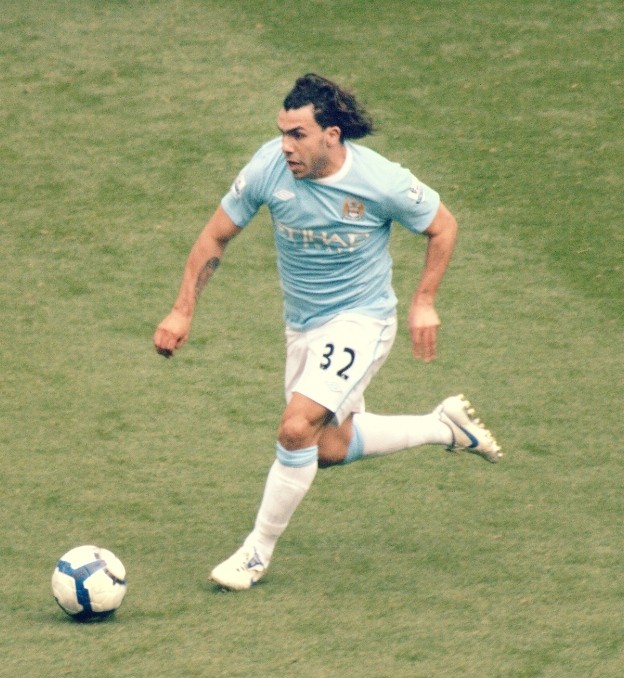
Carlos Tevez in a Manchester City shirt, 2009. Photo: Alfonso Jimenez / Wikimedia Commons, CC BY-SA 2.0.
Carlos Tevez is the transfer that still defines this crossing.
He joined Manchester United on loan from West Ham United in August 2007, after a deal complicated by his third-party ownership. In two seasons he made 99 appearances, scored 34 goals, and won two Premier League titles, the Champions League in 2008, the Club World Cup and the League Cup. He was never a permanent United player. When the loan expired in the summer of 2009, he did not stay.
On 14 July 2009, after protracted negotiations, he signed a five-year contract with Manchester City. The fee was widely reported, and just as widely disputed. City marked the occasion with a blue billboard that read “Welcome to Manchester”. In 148 appearances he scored 73 goals, shared the Premier League Golden Boot in 2010–11 with Dimitar Berbatov, on 20 league goals, lifted the FA Cup in 2011, and added another Premier League title in 2011–12.
It was not a quiet stay. In September 2011 he refused to come on as a substitute against Bayern Munich in the Champions League, was suspended by the club, and spent months back in Argentina. He later returned and was part of the side that won the title on the final day. He left for Juventus in 2013. No modern move between the two clubs has cut quite so deep.
2. Denis Law — Manchester City, 1960–1961 and 1973–1974; Manchester United, 1962–1973
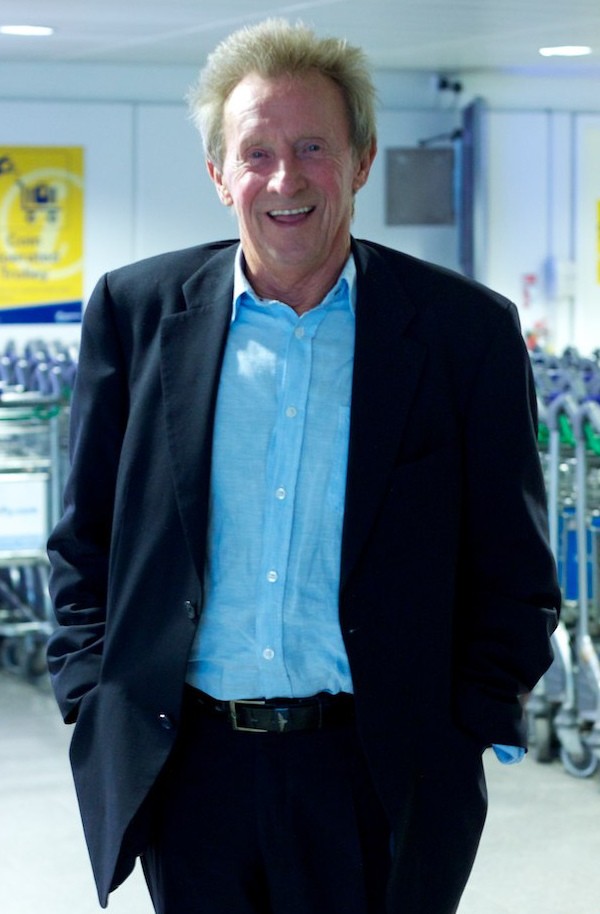
Denis Law in later years. Photo: Danny Molyneux / Wikimedia Commons, CC BY 2.0.
Denis Law is a Manchester United great who began, and finished, at Manchester City.
City signed him from Huddersfield Town in 1960. In his first spell he made 50 appearances and scored 25 goals, then left for Torino in a British record transfer. United brought him back to Manchester in 1962, again for a British record fee, and he became “The King”. In 404 appearances he scored 237 goals, won the Ballon d’Or in 1964, lifted the FA Cup in 1963 and the league title in 1965 and 1967. Injury kept him out of the 1968 European Cup final.
United released him in the summer of 1973. He returned to City and, on the last day of 1973–74, scored with a back-heel against United at Old Trafford. He did not celebrate. He was substituted immediately, and never played again. United were relegated that afternoon, though results elsewhere meant they would have gone down anyway. Across both spells he made 79 appearances and scored 37 goals for City.
3. Peter Schmeichel — Manchester United, 1991–1999; Manchester City, 2002–2003
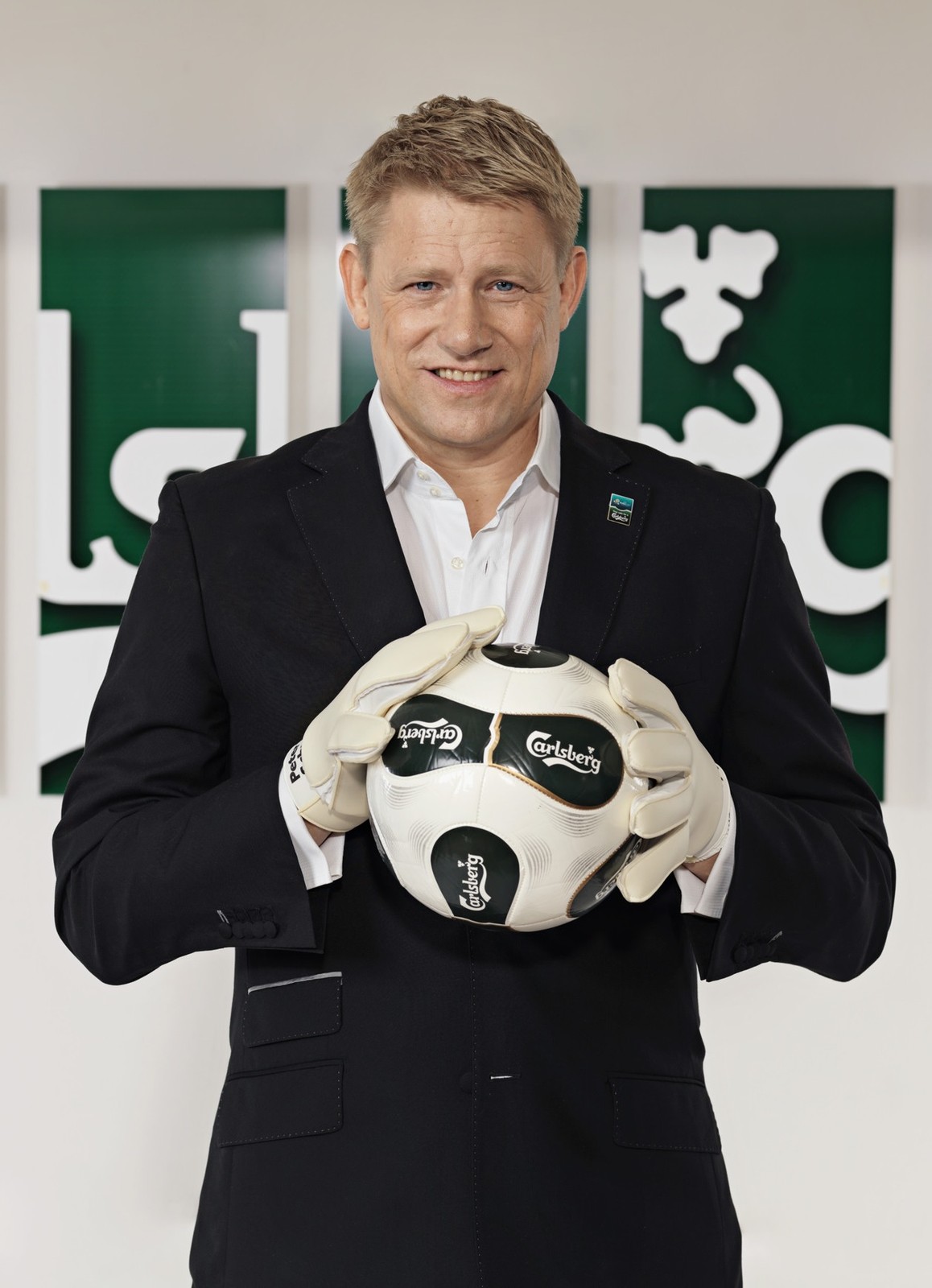
Peter Schmeichel in 2012. Photo: Carlsberg / Wikimedia Commons, CC BY 3.0.
Peter Schmeichel spent eight seasons as Manchester United’s first-choice goalkeeper, and left as a treble winner.
Signed from Brøndby in 1991, he made 398 appearances, scored once, and won five Premier League titles, three FA Cups, a League Cup and the Champions League in 1999. His last act in a United shirt was the treble. He then joined Sporting CP, and later Aston Villa, where he even scored a Premier League goal.
In 2002 he crossed the city. In 31 appearances for Manchester City he kept goal in the last Manchester derby staged at Maine Road, a 3–1 win over United on 9 November 2002. He retired at the end of that season. For a generation of United supporters, seeing him in sky blue was a strange sight. It still is.
How Well Do You Know Manchester United and Manchester City Players?
Some of these footballers spent years at both clubs. Others appeared only a handful of times. Play GuessBaller and identify players from their clubs, careers and biggest achievements.
Play GuessBaller Now →4. Andy Cole — Manchester United, 1995–2001; Manchester City, 2005–2006
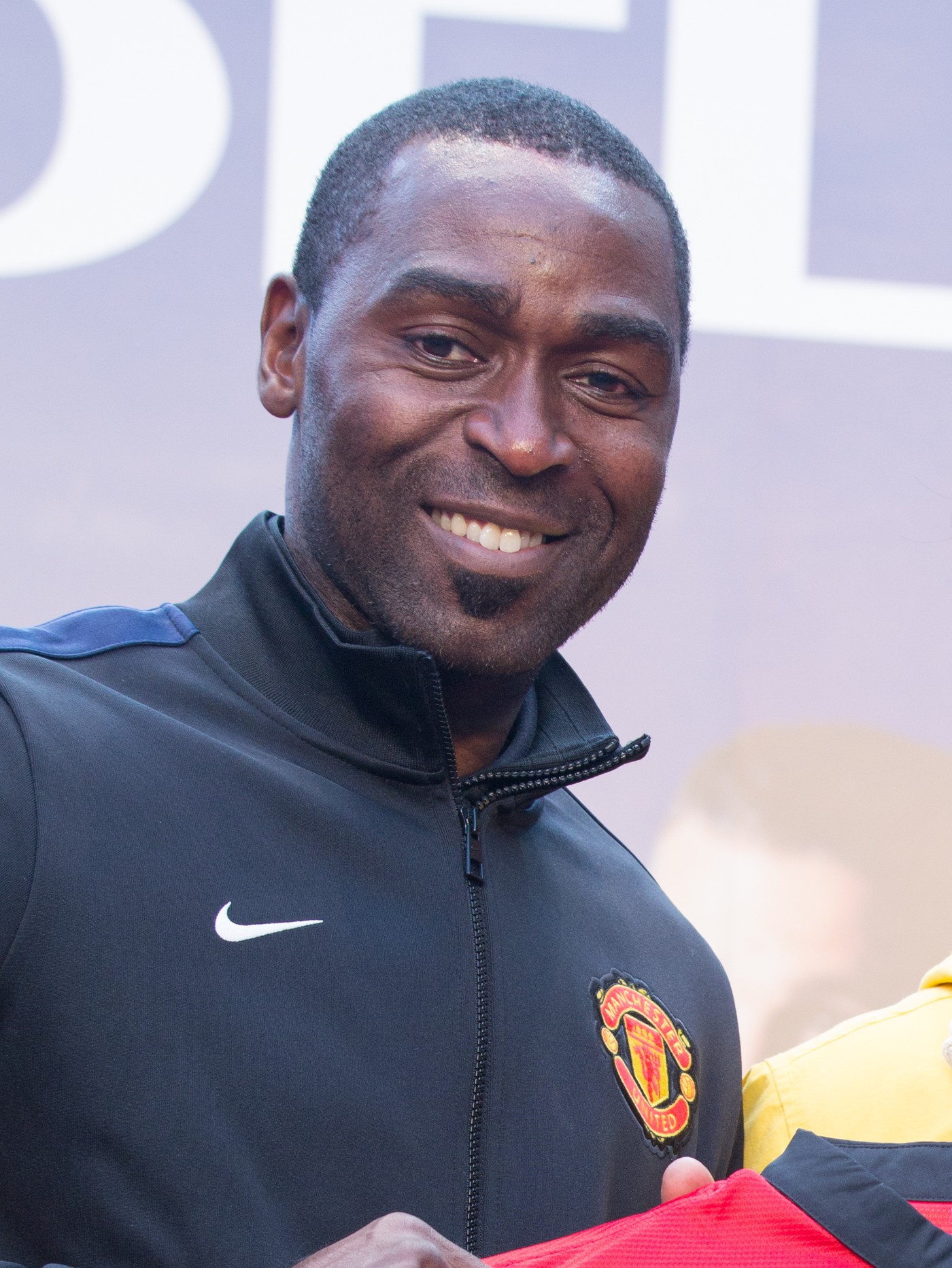
Andy Cole on a Manchester United trophy tour in Tokyo, 9 March 2014. Photo: Norio Nakayama / Wikimedia Commons, CC BY-SA 2.0.
Andy Cole arrived at Old Trafford in January 1995 for a British record fee of £7 million, from Newcastle United. In six seasons he made 275 appearances, scored 121 goals, and won five Premier League titles plus the treble of 1998–99. His partnership with Dwight Yorke became one of the most productive in the club’s modern history.
United sold him to Blackburn Rovers in December 2001. After a season at Fulham he joined Manchester City on a free transfer at the start of 2005–06. He made 23 appearances and scored 10 goals under Stuart Pearce, before a knee injury in March ended his season and, in effect, his time at the club.
Cole is remembered as a United striker first. The City season is the part of the journey that still catches people out.
5. Owen Hargreaves — Manchester United, 2007–2011; Manchester City, 2011–2012
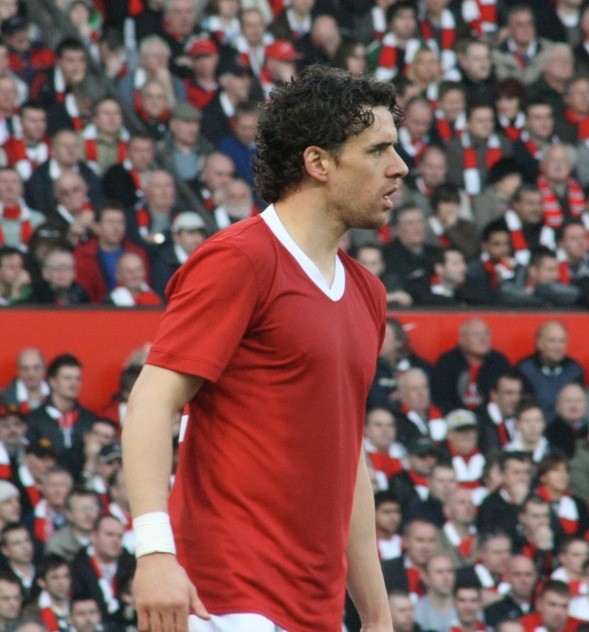
Owen Hargreaves in a Manchester United shirt during a Manchester derby, 10 February 2008. Photo: Gordon Flood / Wikimedia Commons, CC BY 2.0.
Owen Hargreaves joined Manchester United from Bayern Munich in 2007 for around £17 million. In his first season he made a genuine contribution, winning the Premier League and the Champions League. Then the injuries took over. In four years he made only 39 appearances and scored twice.
Released in 2011, he signed for Manchester City on 31 August, on a free transfer, hoping to prove his fitness. He made four appearances and scored once, in the League Cup. He played only a single Premier League match, which was not enough to qualify for a title medal when City won the league in 2011–12, though he did take part in the on-pitch celebrations.
He retired in the summer of 2012. As of November 2026, he remains the last footballer to have played for both Manchester clubs.
6. Andrei Kanchelskis — Manchester United, 1991–1995; Manchester City, 2001 (loan)
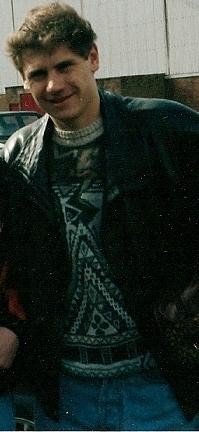
Andrei Kanchelskis at Manchester United’s training ground, The Cliff, in March 1992. Photo: Wikimedia Commons, public domain.
Andrei Kanchelskis was one of the most exciting wingers of Manchester United’s early Premier League years. Signed from Shakhtar Donetsk in 1991, he made 161 appearances, scored 36 goals, and won two league titles, the FA Cup, the League Cup and the European Super Cup.
His departure in 1995 was messy. After a falling-out with Sir Alex Ferguson he was sold to Everton, and later played for Fiorentina and Rangers. In March 2001 Rangers loaned him to Manchester City, then fighting in the Premier League under Joe Royle. He made 11 appearances and scored once, in the FA Cup.
It was a brief, late cameo, a long way from the wide player who had torn down the Old Trafford touchline a decade earlier. It still puts him on a very short list.
7. Billy Meredith — Manchester City, 1894–1906 and 1921–1924; Manchester United, 1906–1921
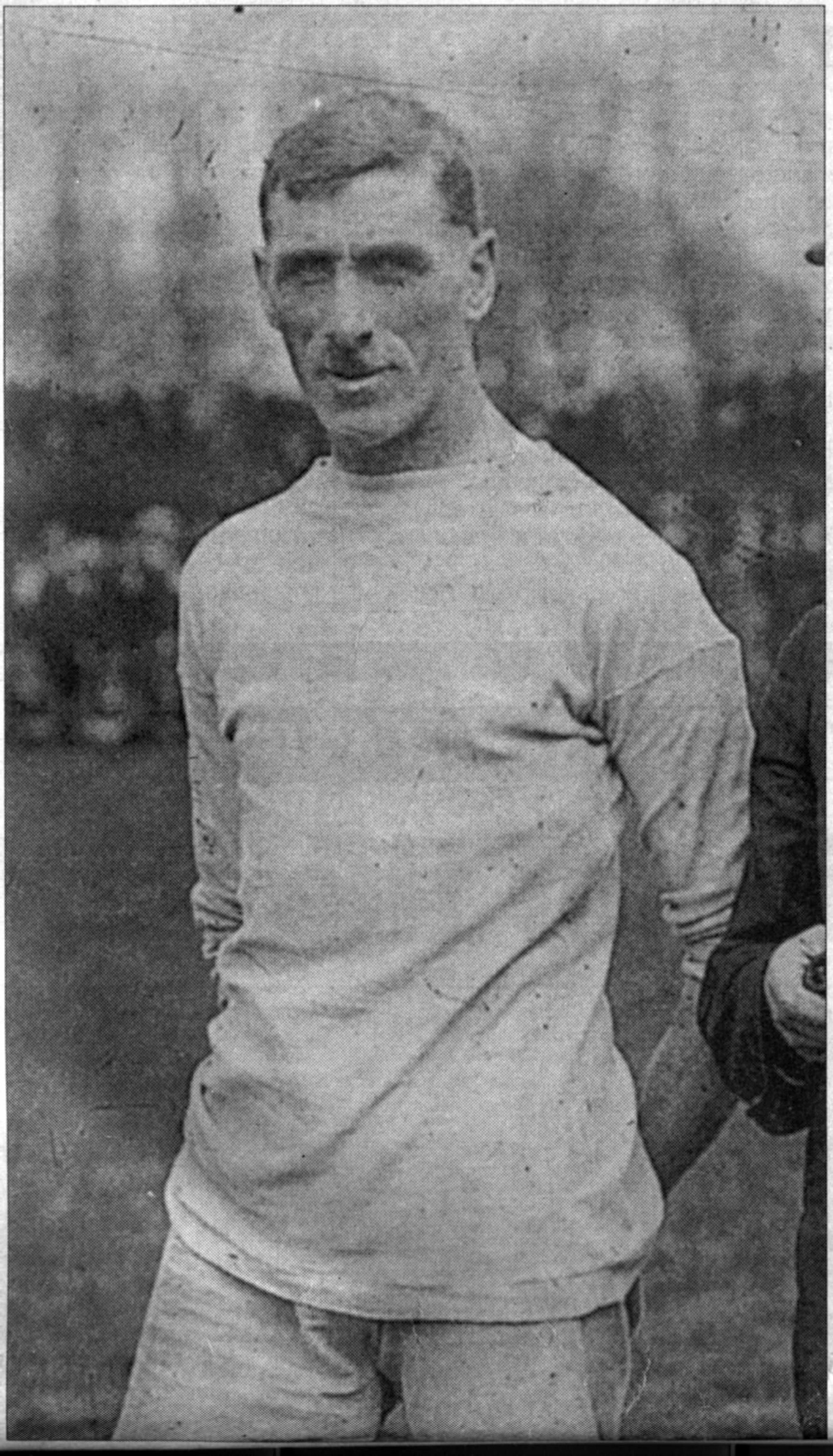
Billy Meredith in a Manchester City shirt. Photo: Wikimedia Commons, public domain.
Billy Meredith is the original Manchester crossing, and still the most complete.
The Welsh winger joined Manchester City in 1894 and became one of the first superstars of the English game, instantly recognisable for the toothpick he chewed during matches. In his first spell he made 362 appearances, scored 151 goals, and captained City to the club’s first major honour, the 1904 FA Cup. He scored in the first league Manchester derby, against Newton Heath, the club that later became United.
In 1905 he was banned for allegedly bribing Aston Villa’s Alex Leake £10 to lose a match. While serving the suspension he moved to Manchester United in May 1906, on a free transfer, and made his debut on 1 January 1907. In 335 appearances he scored 36 goals and won two league titles, the 1909 FA Cup and two Charity Shields. He also helped to set up the Players’ Union, a forerunner of the PFA.
In 1921, at the age of 47, he returned to City on a free transfer and played 32 more times, scoring twice, before retiring in 1924. He remains the oldest player to have appeared for City, for United, and for Wales. Across both City spells he made 394 appearances and scored 153 goals.
8. Brian Kidd — Manchester United, 1967–1974; Manchester City, 1976–1979
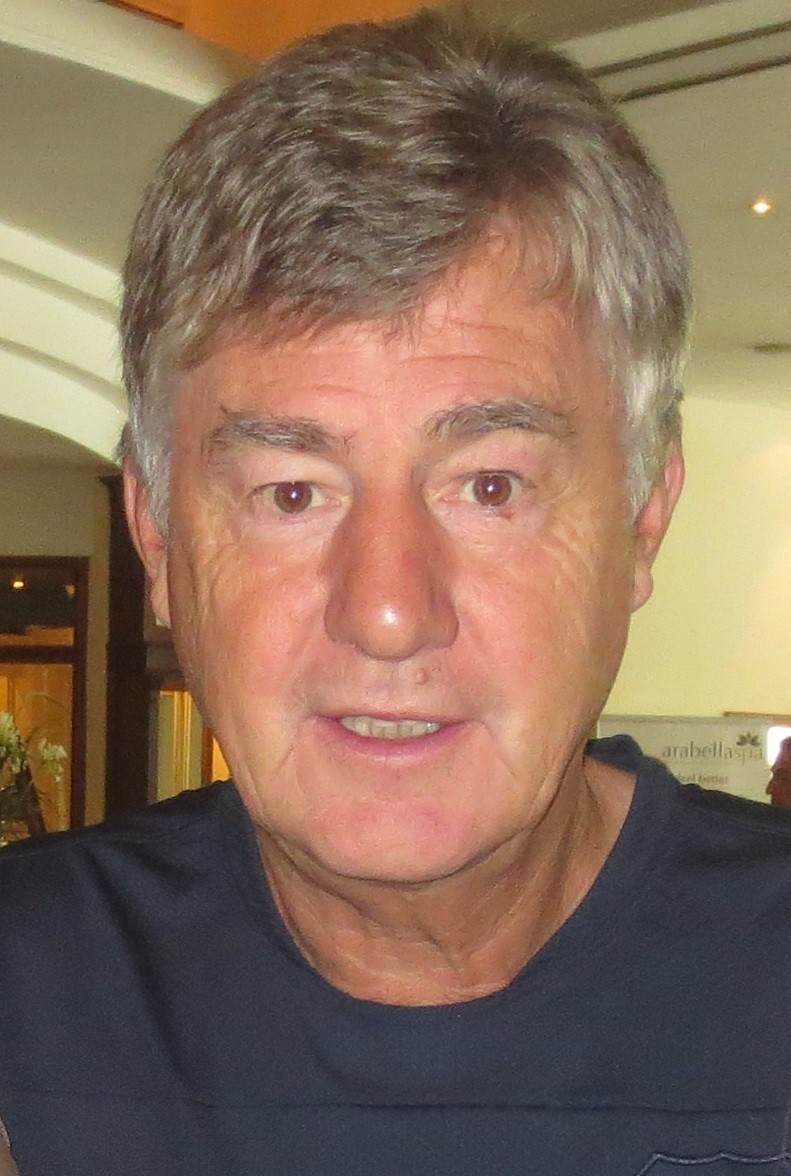
Brian Kidd with Manchester City at the 2013 Audi Cup. Photo: Christophe95 / Wikimedia Commons, CC BY-SA 3.0.
Brian Kidd is a Manchester story twice over: once as a player, and later as a coach at both clubs.
He came through at United and, on his 19th birthday, scored in the 1968 European Cup final as United beat Benfica 4–1. In 272 appearances he scored 70 goals. After two years at Arsenal he came home again, this time to Maine Road, and in 128 appearances for City he scored 57 goals.
That would have been a substantial crossing on its own. What followed made it more so. Kidd later served as Sir Alex Ferguson’s assistant at United, including through the treble season, and then spent years on the coaching staff at City. Few people have seen this rivalry from quite so many dressing rooms.
9. Sammy McIlroy — Manchester United, 1971–1982; Manchester City, 1985–1986

Sammy McIlroy after a Manchester United Legends match, 6 July 2013. Photo: Stew jones / Wikimedia Commons, CC BY-SA 3.0.
Sammy McIlroy was Matt Busby’s final signing. Born in Belfast, he joined United in 1969 and made his debut on 6 November 1971, as a 17-year-old, in the Manchester derby. He scored in a 3–3 draw.
He stayed for more than a decade. In 419 appearances he scored 71 goals, and he was part of the side that won the FA Cup in 1977, against Liverpool. He also played in the FA Cup finals of 1976 and 1979. United sold him to Stoke City in February 1982.
In 1985 he joined Manchester City. It was a short stay: 16 appearances, one goal, and a club then sliding towards relegation from the First Division. He left the following year. The debut in a derby remains the more famous Manchester memory.
10. Mark Robins — Manchester United, 1988–1992; Manchester City, 1999 (loan)
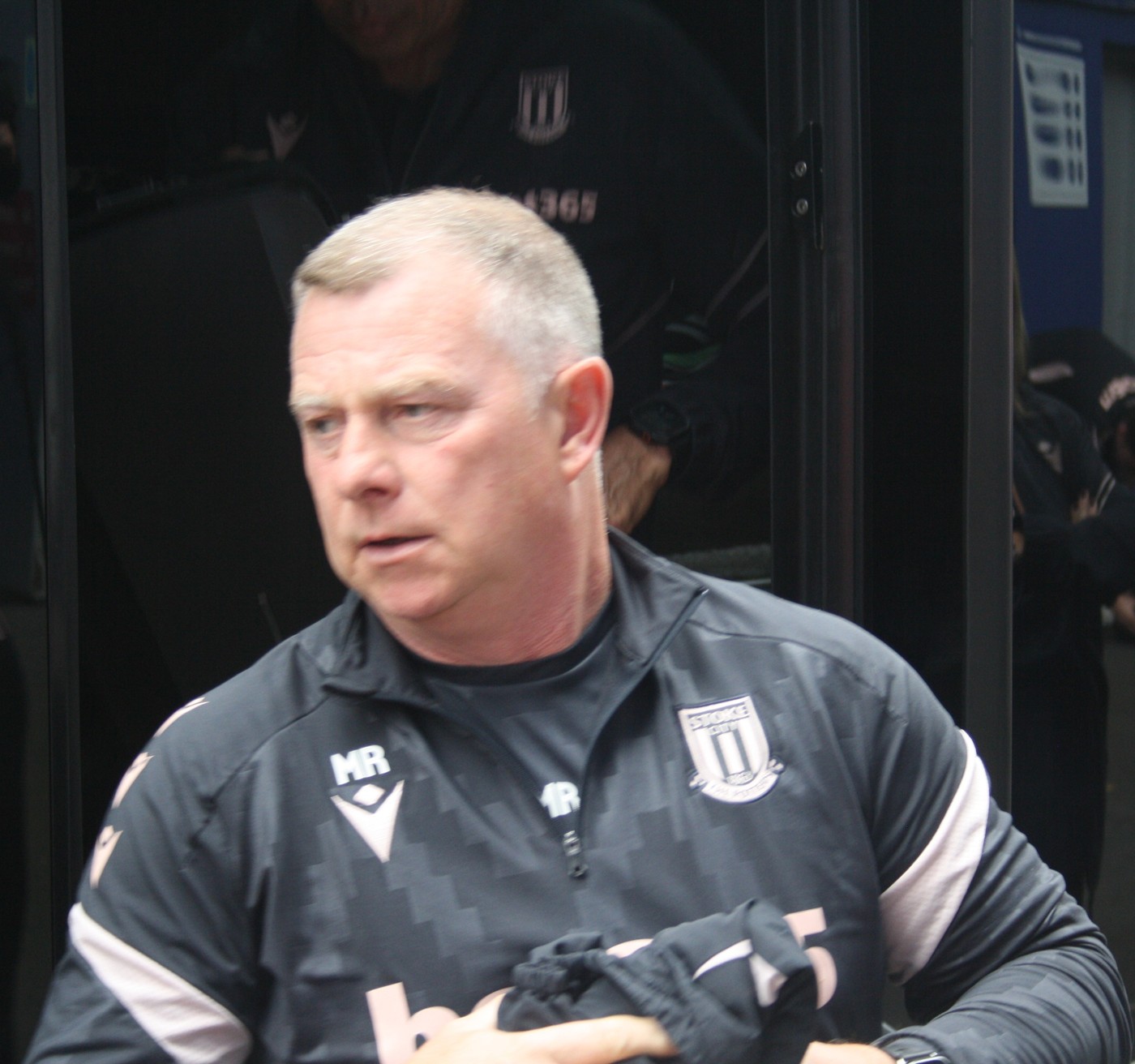
Mark Robins as Stoke City manager, arriving at Loftus Road on 20 September 2025. Photo: Timmy96 / Wikimedia Commons, CC0.
Mark Robins will always be associated with one afternoon at the City Ground.
On 7 January 1990 he scored the only goal of Manchester United’s FA Cup third-round win at Nottingham Forest. The story attached to that header — that it helped to save Sir Alex Ferguson’s job — has been told often enough to become part of club folklore. Whether or not it really kept Ferguson in post, Robins was a useful young forward. In 72 appearances he scored 19 goals, and he collected an FA Cup winner’s medal later that season.
After leaving United he had a long career elsewhere, including a prolific spell at Norwich City. In 1999, with City in the Second Division, he joined them on loan and made two appearances without scoring. It is a footnote. The Forest goal is not.
11. Peter Barnes — Manchester City, 1974–1979 and 1987–1988; Manchester United, 1985–1987
Peter Barnes was a City boy who later pulled on a United shirt, and then came back again.
He made his first-team debut in a League Cup derby at Old Trafford on 9 October 1974, and quickly became one of the most exciting young wingers in the country. He won the League Cup in 1976, against Newcastle United, and was named PFA Young Player of the Year the same season. In his first spell he made 151 appearances and scored 22 goals before City sold him to West Bromwich Albion.
After a wandering mid-career that took him to Leeds United, Real Betis and Coventry City, among others, he signed for Manchester United in 1985, following a loan the previous year in which he did not play a league match. In 27 appearances he scored four goals. In 1987 he returned to City for a brief second spell of 10 appearances without scoring. Across both City stays he made 161 appearances and scored 22 goals.
12. Terry Cooke — Manchester United, 1994–1999; Manchester City, 1999–2002
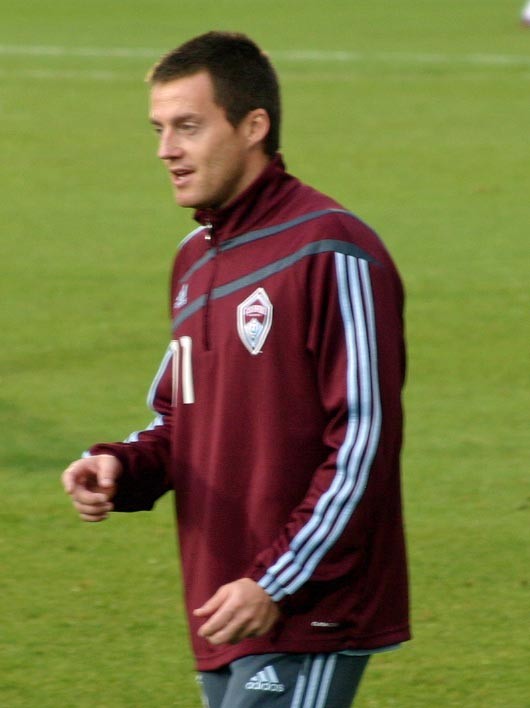
Terry Cooke with the Colorado Rapids in 2009. Photo: MOldenburg / Wikimedia Commons, CC BY-SA 3.0.
Terry Cooke came through the Manchester United youth system and scored the penalty that won the FA Youth Cup in 1995. Breaking into the first team was another matter. David Beckham played in the same position, and Cooke made only eight senior appearances, though he did provide an assist for Ryan Giggs on his Premier League debut against Bolton Wanderers, and scored in a League Cup tie at York City.
After loans at Sunderland, Birmingham City and Wrexham, he joined Manchester City, first on loan and then permanently in April 1999, for an initial £600,000. He was part of the side that won promotion from the Second Division in 1998–99. In all he made 33 appearances for City and scored eight goals, but he lost his place during the following season’s second successive promotion and was loaned out again.
City released him in 2002. Wikipedia later noted that when Carlos Tevez signed for City in 2009, he was the first player to move between the two Manchester clubs since Cooke.
13. John Gidman — Manchester United, 1981–1986; Manchester City, 1986–1988
John Gidman was Ron Atkinson’s first signing as Manchester United manager, arriving from Everton in 1981 in a £450,000 swap that sent Mickey Thomas the other way.
The right-back made 123 appearances, scored four goals, and won the FA Cup in 1985. In 1986, with his place under pressure, he moved across the city to Manchester City. In two seasons he made 71 appearances and scored one league goal. The first of those seasons ended in relegation to the Second Division.
He later had brief spells at Stoke City and Darlington. The United years are the ones that tend to be remembered. The City years are why he belongs on this list.
14. Wyn Davies — Manchester City, 1971–1972; Manchester United, 1972–1973
Wyn Davies, known as “Wyn the Leap” for his heading, had already had a substantial career at Bolton Wanderers and Newcastle United, where he won the Inter-Cities Fairs Cup in 1969, before he arrived in Manchester.
City signed him for £60,000 ahead of the 1971–72 season. He made 52 appearances, scored nine goals, and played as City won the 1972 Charity Shield. In September 1972, Frank O’Farrell took him the short distance to Old Trafford, where he was often paired with fellow new signing Ted MacDougall. He made 17 appearances and scored four goals, all in the league, before leaving for Blackpool in 1973.
It was a rare crossing that ran from City to United, rather than the other way. Davies died on 17 July 2025, aged 83.
15. Sandy Turnbull — Manchester City, 1902–1906; Manchester United, 1906–1915
Sandy Turnbull. Photo: Wikimedia Commons, public domain.
Sandy Turnbull was part of the group who left Manchester City for Manchester United after the 1906 illegal-payments scandal, along with Billy Meredith, Herbert Burgess and Jimmy Bannister.
At City, the Scottish inside forward scored 53 goals in 110 league appearances. At United he became still more important. Meredith provided the assist on Turnbull’s United debut, and in April 1909 Turnbull scored the only goal of the FA Cup final against Bristol City, United’s first victory in the competition. In 220 league appearances he scored 90 goals, and he won two league titles as well as that cup.
He was killed in action near Arras on 3 May 1917, aged 32. The crossing, and the final, are only part of the story.
16. Peter Beardsley — Manchester United, 1982–1983; Manchester City, 1998 (loan)
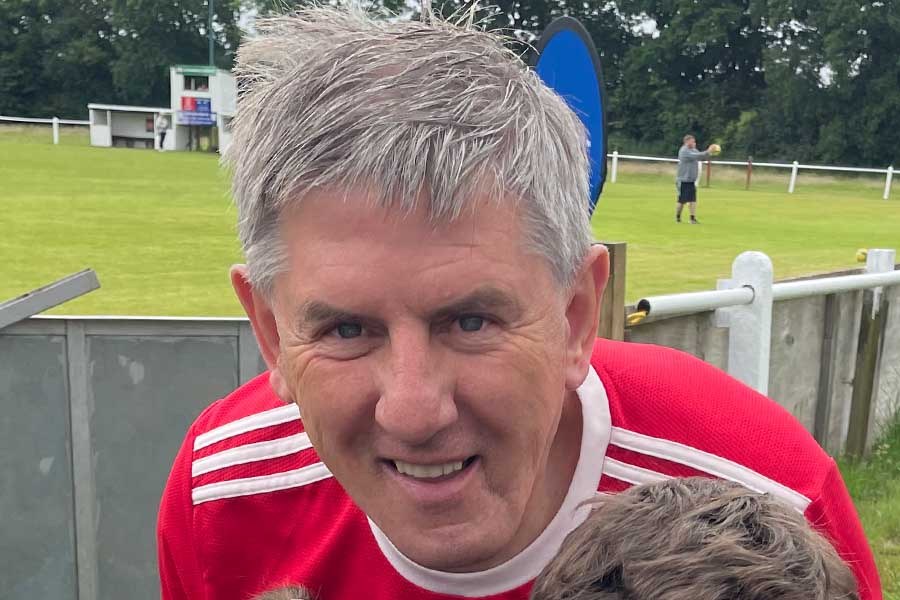
Peter Beardsley in later years. Photo: Skippo10 / Wikimedia Commons, CC BY-SA 3.0.
Peter Beardsley is already on GuessBaller’s list of players who played for both Liverpool and Everton. He also, briefly, appeared for both Manchester clubs.
Ron Atkinson signed him from Vancouver Whitecaps in September 1982. He made a single senior appearance, starting a League Cup tie against Bournemouth at Old Trafford on 6 October 1982, a 2–0 win, before being replaced by Norman Whiteside. He did not play in the league, and by the following year he was back in Vancouver, then on his way to Newcastle United and the career everyone remembers.
In 1998, late in that career, he joined Manchester City on loan from Bolton Wanderers and made six league appearances without scoring. He remains the only player to have made senior appearances for both Merseyside clubs and both Manchester clubs.
17. Bill Dale — Manchester United, 1928–1931; Manchester City, 1931–1938
Bill Dale is one of the few footballers who can claim a long career at both clubs, rather than a famous spell at one and a postscript at the other.
Born in Manchester, he joined United as an amateur in 1925, turned professional in 1926, and made his debut at right-back in a 1–1 draw with Leicester City on 25 August 1928. In 68 appearances he did not score. In December 1931 he moved to Manchester City, and there he stayed. He made 271 appearances, still without a goal, and won the 1937 FA Charity Shield against Sunderland.
A full-back who played more than 300 times across the two Manchester clubs does not generate the arguments that Tevez or Law still do. He may be the most substantial shared career of all.
18. Herbert Burgess — Manchester City, 1903–1906; Manchester United, 1906–1910
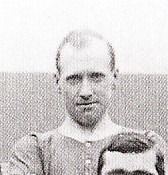
Herbert Burgess in a Manchester United shirt, 1908–09. Photo: Wikimedia Commons, public domain.
Herbert Burgess was the left-back in that same 1906 exodus from City to United.
He made 85 league appearances and scored twice for City, then followed Meredith, Turnbull and Bannister to United, where he played 49 league games without scoring. He was part of the side that won the league in 1907–08 and the FA Cup in 1909.
After leaving United he later played in Hungary for MTK Budapest. The scandal that moved him across Manchester also, in a way, helped to build the first great United team of the 20th century.
19. Jimmy Bannister — Manchester City, 1902–1906; Manchester United, 1906–1909
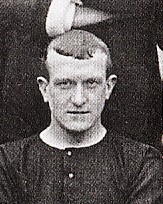
Jimmy Bannister in a Manchester United shirt, 1908–09. Photo: Wikimedia Commons, public domain.
Jimmy Bannister was the fourth member of the 1906 group, an inside forward who had scored freely for City.
In 45 league appearances for City he scored 21 goals. At United he made 57 league appearances, scored seven times, and, like Turnbull and Meredith, collected a winner’s medal in the 1909 FA Cup. He later played for Preston North End.
On his own, the career would be a solid footnote. Taken with Meredith, Turnbull and Burgess, it is something else: a whole corner of a dressing room packing up and crossing the city together.
20. Mickey Hamill — Manchester United, 1910–1914; Manchester City, 1920–1924
Mickey Hamill was an Irish international midfielder who gave both Manchester clubs a proper stint, with the First World War in between.
He joined United from Belfast Celtic in 1910 and scored twice in 57 league appearances before the war took him back to Ireland. After a further spell with Belfast Celtic, and a loan at Celtic, he signed for Manchester City in 1920. This time he stayed. He made 118 league appearances and scored once, before finishing his career in the American Soccer League.
He is not a household name in the way Tevez, Law or Schmeichel are. He is, though, one of the few men who can say he had a real career in both shirts, and that is enough to belong here.
Why Crossing from United to City Still Matters
A transfer between Manchester United and Manchester City is never just another move down the road.
Some of the players on this list became central to both clubs. Meredith did it in both directions and won major honours in each shirt. Law and Kidd had serious careers on both sides of the city. Dale quietly played more than 300 times across the two. Others, including Hargreaves, Robins and Beardsley, barely settled at the second club. Tevez left United and became the face of City’s rise, and the bitterness of that move has not faded.
It is also, still, a very short list. Nobody has played for both clubs since Hargreaves in 2011–12. In June 2025, Liam Delap, who had made a handful of senior appearances for City before leaving for Ipswich Town, held talks with United, then signed for Chelsea instead. The crossing remains rare, and it can still feel personal. That is why these careers stay in the memory, and why they remain such good material for an argument.
If you want to test how well you remember who shared a pitch, or which surprising club combinations actually happened, play the GuessBaller daily game — you get eight tries to identify a retired player from clues including clubs, teammates and honours — or try Did they play together and practice mode. There is also Football Wordle and Guess the Footballer if you want another way to put a Manchester career to the test. Similar crossings are covered in our lists of players who played for both Liverpool and Everton and for both Arsenal and Chelsea.
Enjoyed this? Put your football knowledge to the test.
Play Guessballer →