
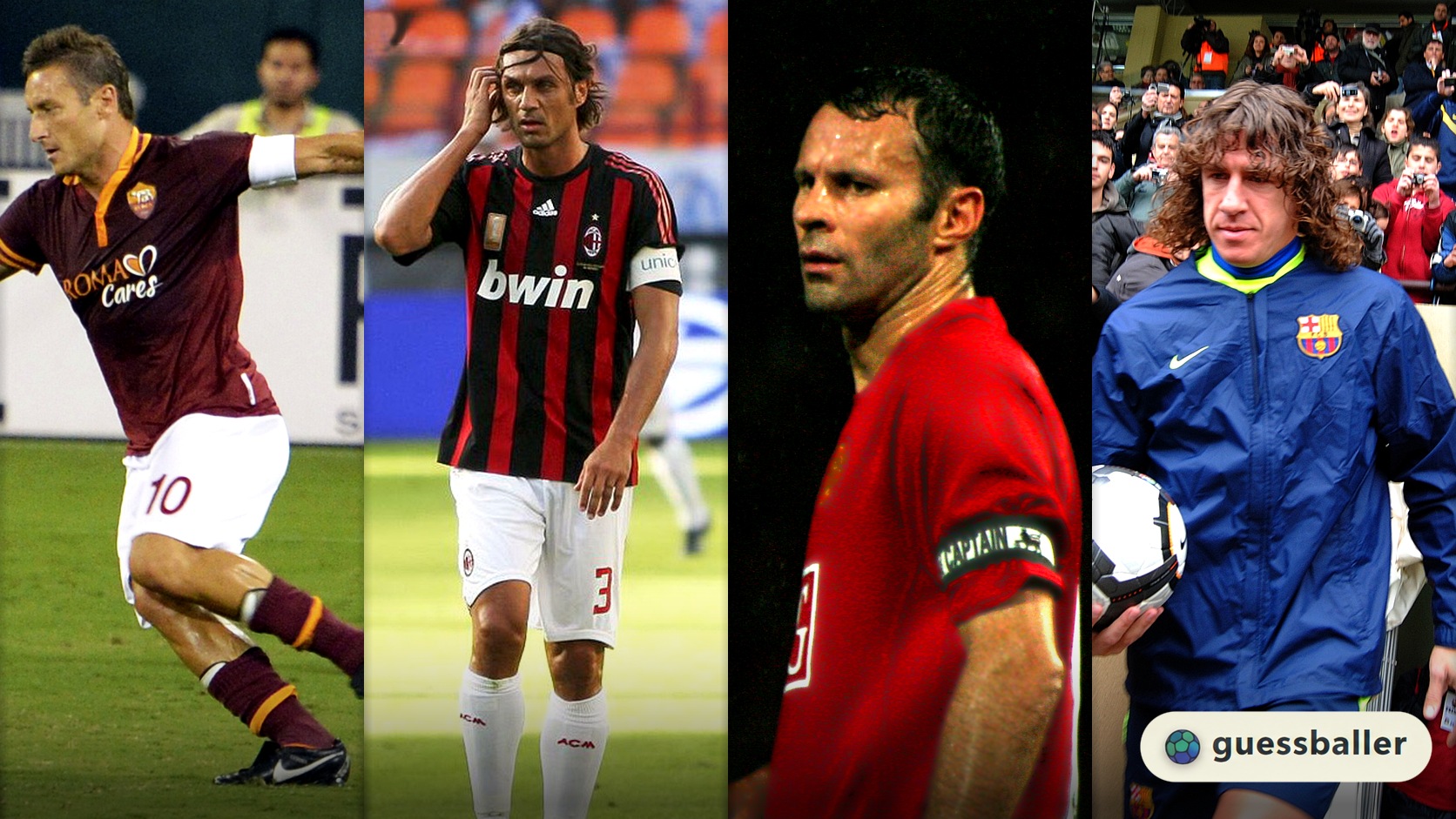
Loyalty in football is rarer than it used to be. Most modern careers run through two, three or four clubs, and a player who stays in one shirt for twenty years now feels almost old-fashioned.
That is what makes one club players so useful in a guessing game. In GuessBaller’s daily game, you have eight attempts to name a retired footballer. The clues include country, position, Champions League winners, national-team titles, teammates and common clubs. If the common-clubs clue names only one side, the field shrinks immediately.
Some of those careers belong to the most famous footballers of all. Paolo Maldini never left Milan. Francesco Totti never left Roma. Ryan Giggs and Paul Scholes never left Manchester United. Others are easier to miss: Julen Guerrero at Athletic Club, Lars Ricken at Borussia Dortmund, Ledley King at Tottenham.
A true one-club career, for this list, means senior first-team football for only one club. Reserve and B-team appearances at the same club count as staying put. A loan to another side does not. A later professional spell elsewhere does not. A few names below had a youth spell somewhere else, or a handful of amateur games after they retired; those are flagged clearly.
Here are 20 footballers who never left.
1. Francesco Totti — Roma, 1993–2017
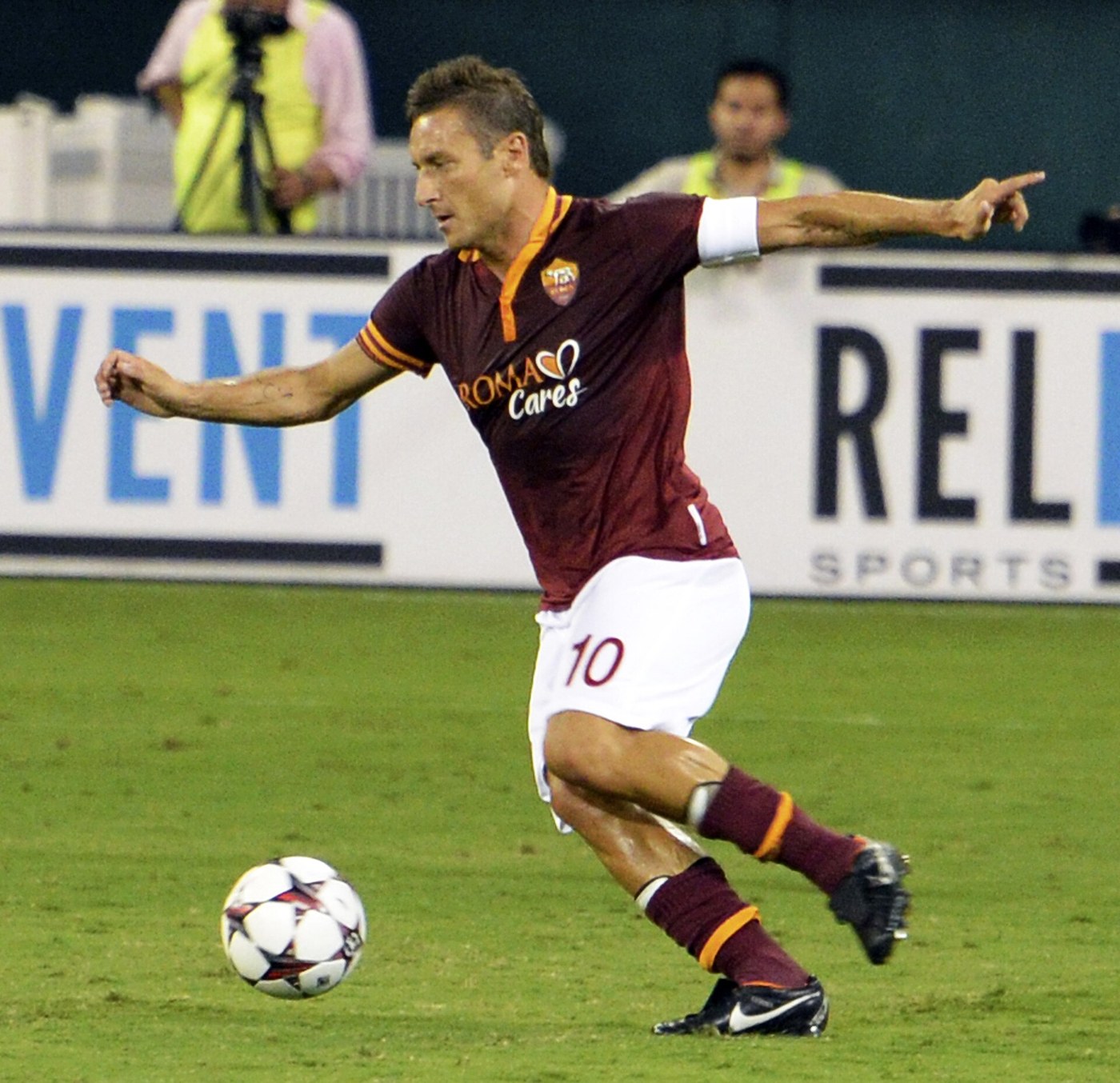
Francesco Totti in a Roma shirt, 2013. Photo: Warrenfish / Wikimedia Commons (CC BY-SA 3.0).
Francesco Totti is the face of the one-club footballer.
He made his Roma debut at 16 and stayed until he was 40, finishing with 786 official appearances and 307 goals. In Serie A alone he scored 250 times in 619 matches, still a club record that is not about to be threatened.
Totti won a single Serie A title, in 2000–01, plus two Coppa Italia trophies and two Supercoppe. For Italy he won the 2006 World Cup and reached the final of Euro 2000. In 2006–07 he also won the European Golden Shoe.
He could have left. Real Madrid, among others, came calling at the height of his career. Totti stayed in Rome, became captain, and turned a one-club career into the club’s modern identity.
If Totti comes up in GuessBaller, the common-clubs clue is brutal. There is only one answer that fits.
2. Paolo Maldini — Milan, 1984–2009
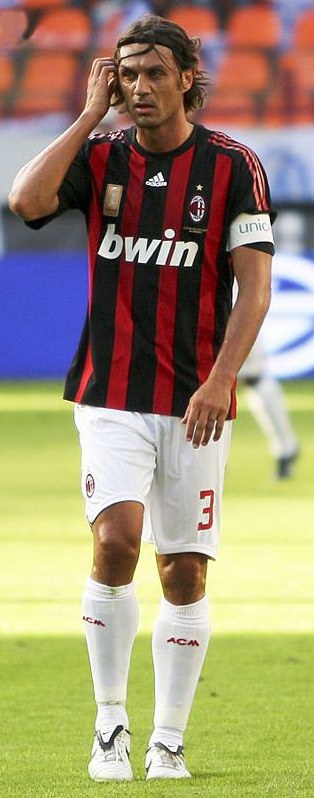
Paolo Maldini in a Milan shirt, 2008. Photo: Yelena Rybakova / Wikimedia Commons (CC BY-SA 3.0).
Paolo Maldini spent 25 seasons in a Milan shirt and left with 902 official appearances, including 647 in Serie A.
He won seven Italian titles and five European Cups or Champions Leagues, in 1988–89, 1989–90, 1993–94, 2002–03 and 2006–07. Few defenders in the history of the game can match that European record.
For Italy he won 126 caps and reached the finals of the 1994 World Cup and Euro 2000. He never lifted either trophy.
Maldini made his debut in the mid-1980s, captained the side for more than a decade, and retired in 2009 at 41. He never played senior football for anyone else.
In the daily game, a Milan-only career combined with those five European titles narrows the field almost as quickly as Totti’s Roma clue.
3. Ryan Giggs — Manchester United, 1990–2014
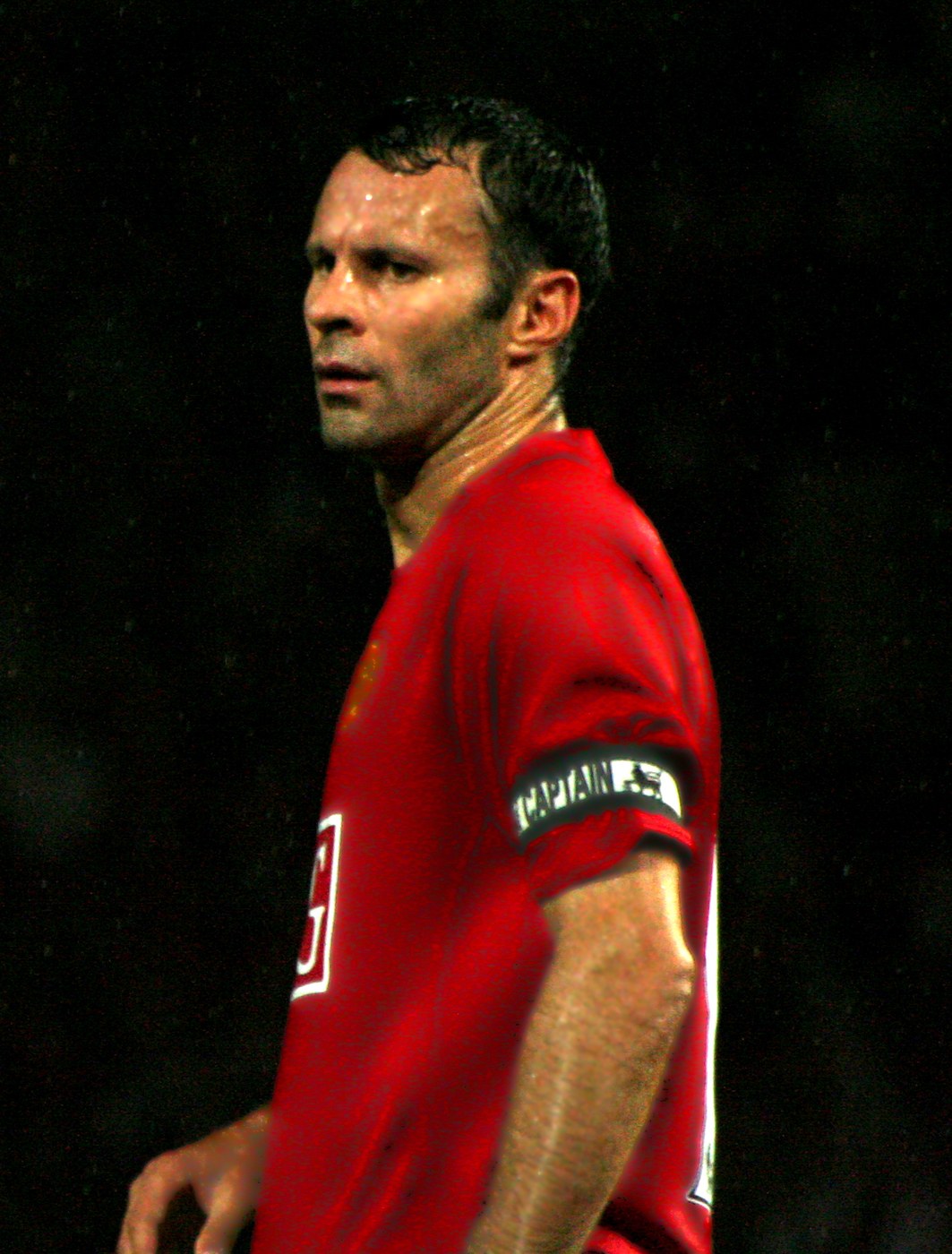
Ryan Giggs in a Manchester United shirt, 2008. Photo: James Adams / Wikimedia Commons (CC BY 2.0).
Ryan Giggs is Manchester United’s appearance record-holder, with 963 official games between 1990 and 2014.
He won 13 Premier League titles and two Champions Leagues, collected more medals than almost any British footballer, and still found time for 64 Wales caps.
One detail is worth stating clearly. As a schoolboy, Giggs played for Deans FC and spent two years, from 1985 to 1987, on Manchester City’s books before joining United. His entire senior career, though, was spent at Old Trafford.
That is the version that matters in a guessing game. If the common-clubs clue says Manchester United and nothing else, Giggs is still one of the first names that should come to mind — alongside Scholes, and a slightly shorter list than most people expect.
4. Carles Puyol — Barcelona, 1999–2014
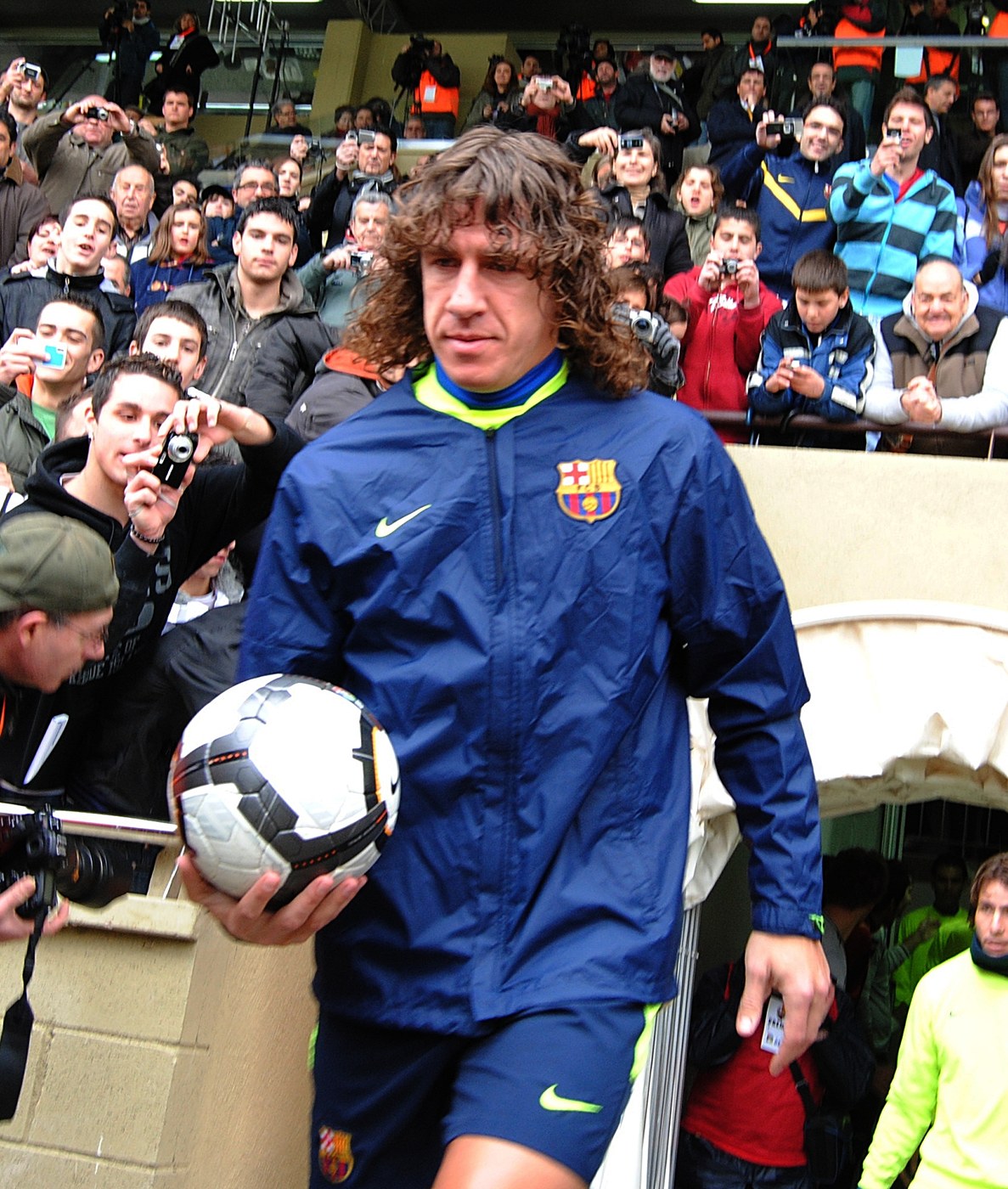
Carles Puyol in Barcelona colours, 2010. Photo: Gerard Reyes / Wikimedia Commons (CC BY 2.0).
Carles Puyol came through Barcelona C and Barcelona B before making the first team. He never left the club.
From his debut in 1999 to his retirement in 2014 he made 593 official appearances, 392 of them in La Liga. He captained Barcelona to six league titles and three Champions Leagues, and he captained Spain to the 2010 World Cup, having already won Euro 2008. He finished with 100 caps.
The long hair and the bandage made him one of the most recognisable centre-backs of his generation. The career line is simpler than the image: one club, one city, one shirt.
If you are playing GuessBaller and the clues include Barcelona, a World Cup and a single club, Puyol should not take all eight attempts.
5. Franco Baresi — Milan, 1977–1997

Franco Baresi in 2012. Photo: Kurt Schorrer / Wikimedia Commons (CC BY-SA 2.0).
Franco Baresi, who died in July 2026 at the age of 66, spent his entire 20-year career at Milan.
He made 532 Serie A appearances, captained the side for 15 seasons, and won six Italian titles and three European Cups. Shirt number 6 was retired in his honour.
Loyalty was not only a title-winning habit. Baresi stayed when Milan were relegated, and he helped the club back from Serie B in 1980–81 and again in 1982–83.
He won 81 caps for Italy. He was in the 1982 World Cup squad but did not play at that tournament. His first World Cup appearance came in 1990. In 1994 he captained Italy in the final against Brazil, days after a serious head injury, and missed a penalty in the shoot-out.
If you want a Milan teammate test, Baresi and Paolo Rossi did share a pitch. The pair has its own page on Did They Play Together.
6. Paul Scholes — Manchester United, 1993–2013
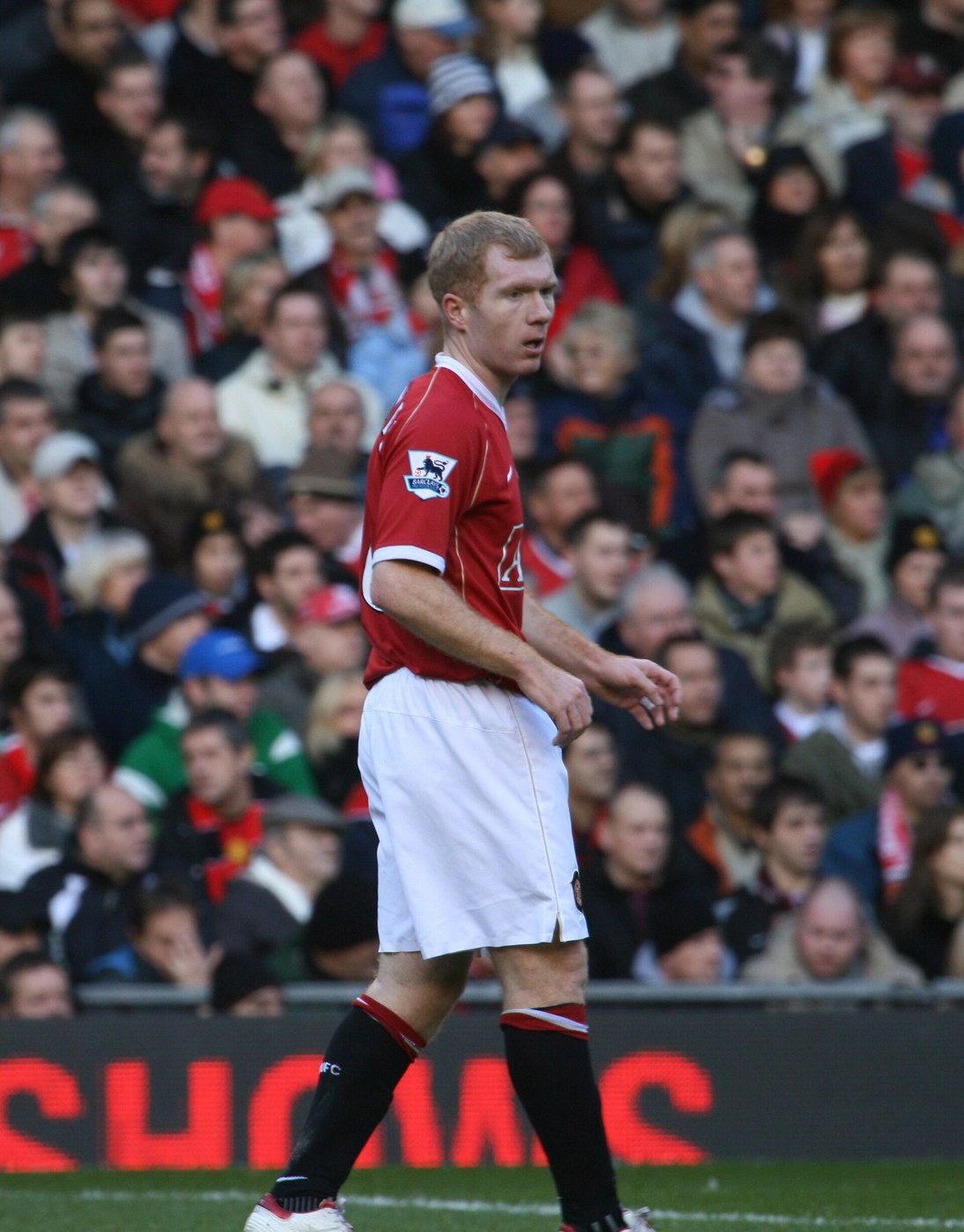
Paul Scholes in a Manchester United shirt. Photo: Austin Osuide / Wikimedia Commons (CC BY 2.0).
Paul Scholes spent his entire professional career at Manchester United.
He made 718 official appearances, won 11 Premier League titles — more than any other English player — and lifted the Champions League in 1999 and 2008. He collected 25 major trophies in total and 66 England caps.
Scholes first retired in 2011, then returned for the 2012–13 season before stopping for good. After that, in 2018, he made a handful of amateur appearances for Royton Town in the Manchester Football League. Those games came after his professional career had ended, and they do not change the club line that matters here.
In the daily game, Scholes is one of the cleaner United-only answers. He also makes a useful Did They Play Together test: he was a teammate of David Beckham, Wayne Rooney and Michael Owen at Old Trafford, and each of those pairings has its own page.
7. Tony Adams — Arsenal, 1983–2002
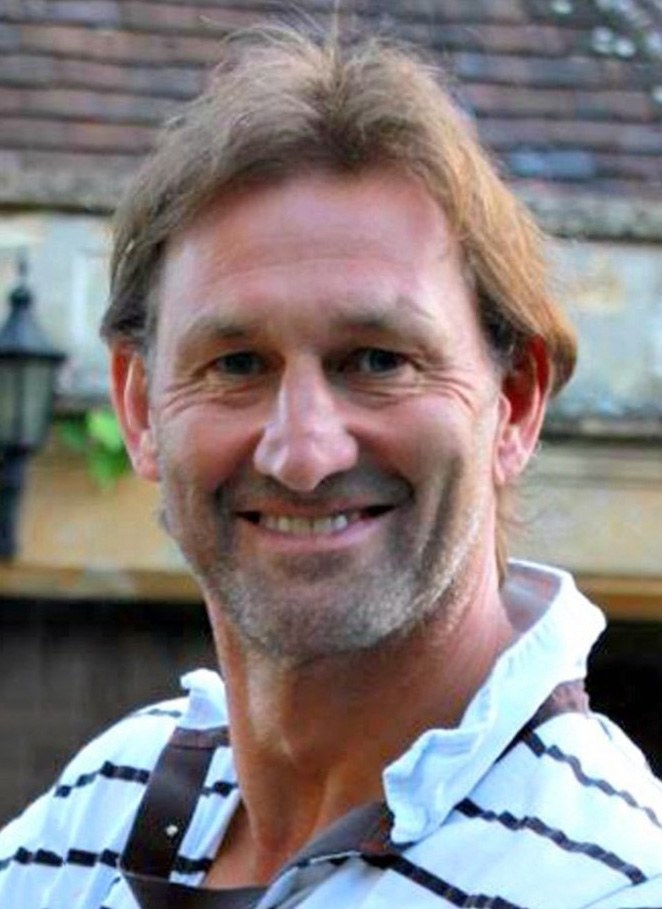
Tony Adams in 2017. Photo: Jade Moulds / Wikimedia Commons (public domain).
Tony Adams never played senior football for anyone but Arsenal.
He made 672 official appearances, 504 of them in the league, across 19 seasons, and became club captain at 21. He won league titles in two eras, under George Graham in 1988–89 and 1990–91, then under Arsène Wenger in 1997–98 and 2001–02. There were three FA Cups, League Cups, and the Cup Winners’ Cup in 1993–94.
He won 66 caps for England and remains one of the few modern defenders whose entire senior career fits in a single club’s history.
The career is a model of the type: one club, two completely different title-winning sides, and no loan elsewhere to muddy the clue.
8. Jamie Carragher — Liverpool, 1996–2013
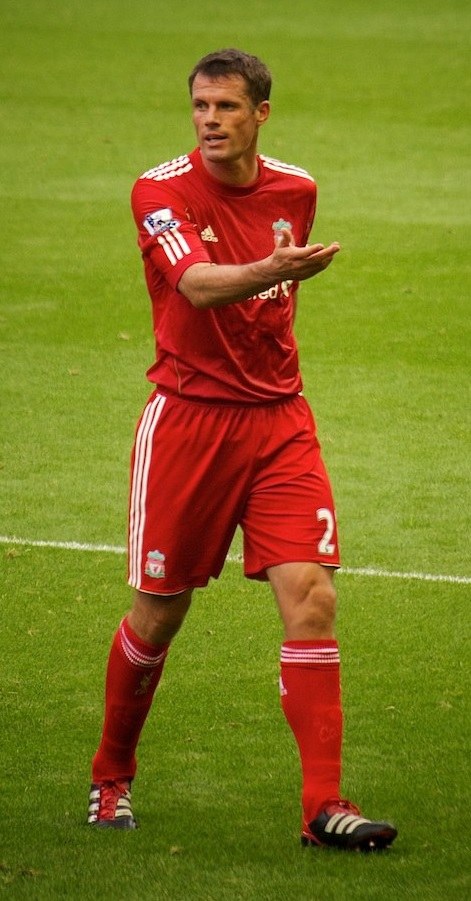
Jamie Carragher in a Liverpool shirt, 2011. Photo: Danny Molyneux / Wikimedia Commons (CC BY 2.0).
Jamie Carragher made 737 official appearances for Liverpool, 508 of them in the league, and never pulled on another club shirt.
He won the Champions League in Istanbul in 2005, the UEFA Cup in 2001, FA Cups and League Cups. He never won the league.
For England he won 38 caps, often as backup in a crowded defensive group. At Anfield he was a fixture, first as a full-back and later as a centre-back alongside Sami Hyypiä and, later, Daniel Agger.
A Liverpool-only career of that length is rare even at a club that prizes loyalty. In a guessing game, the missing league title is almost as useful a clue as the single club.
9. Lev Yashin — Dynamo Moscow, 1950–1970
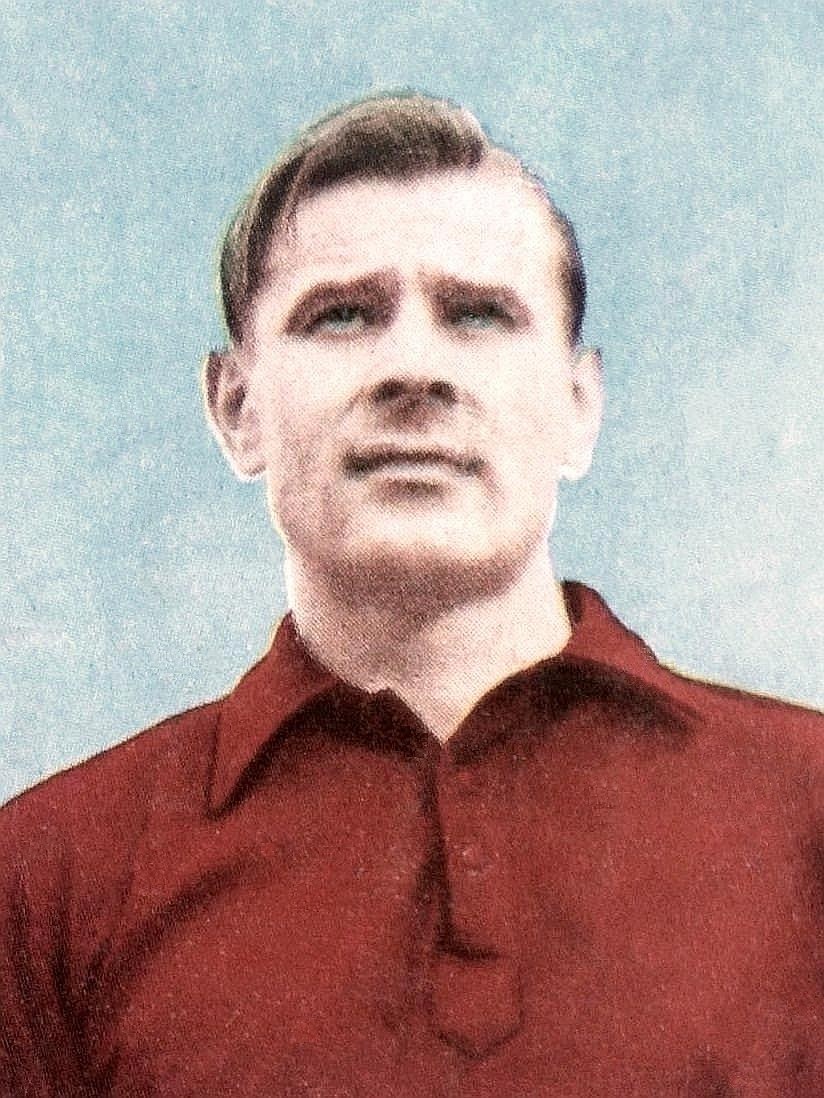
Lev Yashin, pictured in 1966. Photo: Wikimedia Commons (public domain).
Lev Yashin spent 22 years at Dynamo Moscow, the only club he ever represented.
He made 326 league appearances and became the only goalkeeper to win the Ballon d’Or, in 1963. With the Soviet Union he won the first European Championship in 1960, Olympic gold in 1956, and 74 caps, appearing at four World Cups.
GuessBaller lists his country as Russia, which is how the modern game records the player. In his own time, the shirt was the Soviet Union’s.
The career itself needs no translation. One club, one city, and a set of achievements no other goalkeeper has matched.
10. Matt Le Tissier — Southampton, 1986–2002
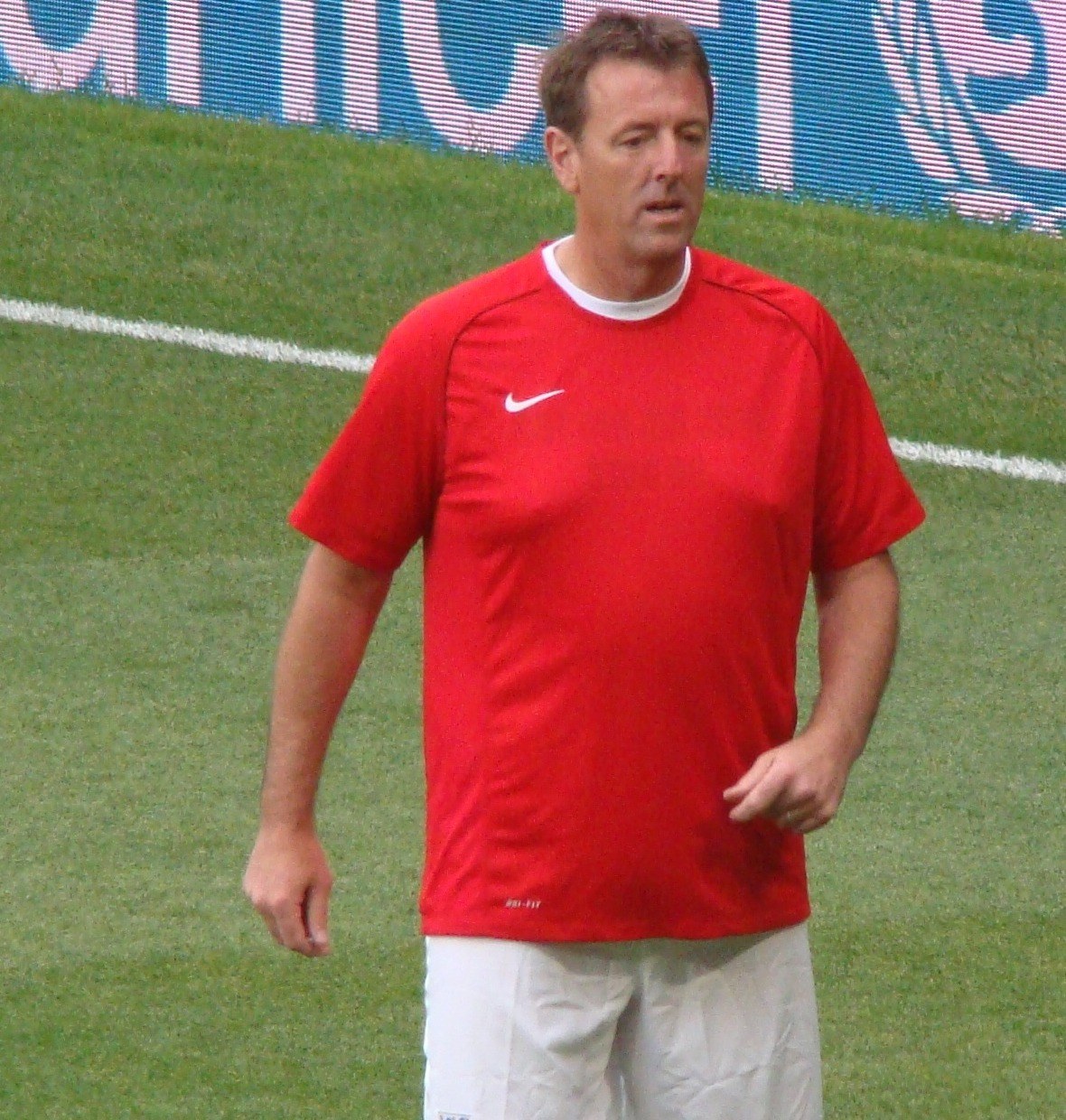
Matt Le Tissier at a later appearance. Photo: vagueonthehow / Wikimedia Commons (CC BY 2.0).
Matt Le Tissier spent his entire professional career at Southampton.
He scored 209 goals in 540 official games, including 161 in 443 league appearances, and became the first midfielder to reach 100 Premier League goals. He missed only one of 48 career penalties. He won eight England caps and no major trophies.
Two later spells need to be stated clearly. After leaving the professional game he played 17 times for non-league Eastleigh in 2002–03, and he appeared once for Guernsey in 2013. Those games are why he is sometimes left off strict one-club lists. They came after his Southampton career had ended, and he never played senior league football for another Football League or Premier League club.
If the clue is Southampton and nothing else, Le Tissier is the name a lot of players will reach for first.
11. Giuseppe Bergomi — Inter, 1979–1999

Giuseppe Bergomi. Photo: Christophe95 / Wikimedia Commons (CC BY-SA 3.0).
Giuseppe Bergomi spent 20 years at Inter and never left.
He made 517 Serie A appearances, won one Italian title and three UEFA Cups, and collected 81 caps for Italy. At the 1982 World Cup he was only 18 — and, unlike Franco Baresi in the same squad, he actually played. He was still in the Italy side at the 1990 and 1998 tournaments.
Bergomi was a defender who could play almost anywhere across the back line, and he captained Inter through a period when the club’s European success came in the UEFA Cup rather than the European Cup.
A single Serie A title in a 20-year Inter career sounds modest. The one-club line is not. If a guessing game ever gives you Inter, a World Cup in 1982 and no other club, Bergomi should be close to the top of the list.
12. Manolo Sanchís — Real Madrid, 1983–2001
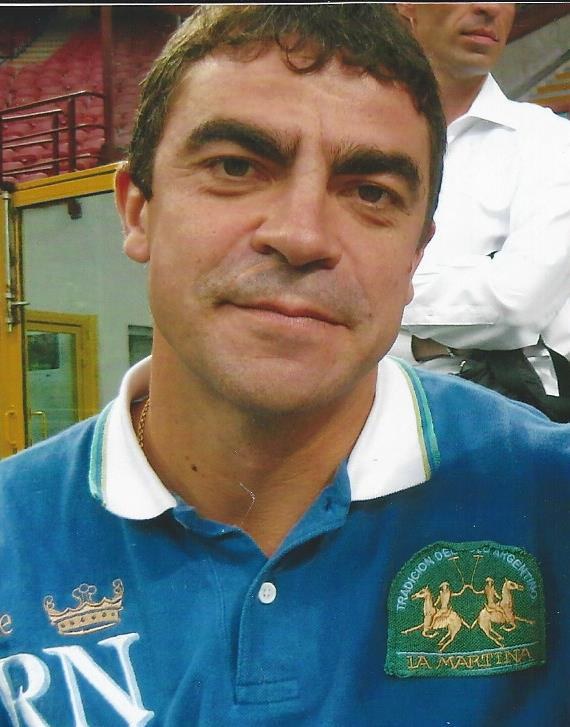
Manolo Sanchís. Photo: Christophe95 / Wikimedia Commons (CC BY-SA 3.0).
Manolo Sanchís came through Real Madrid’s Castilla side and then spent the rest of his career in the first team. He never played senior football for another club.
He made 523 league appearances, won eight La Liga titles, the Champions League in 1997–98 and 1999–2000, and two UEFA Cups. He won 48 caps for Spain and was a central figure in the Quinta del Buitre generation that brought Madrid back to the top of Spain in the 1980s.
He is easy to confuse with his father, Manuel Sanchís Martínez, who also played for Real Madrid in the 1960s. The son is the one-club man on this list.
Eighteen years at one club is a long time even by Madrid’s standards. For a guessing game, it is also a very short club list.
13. Gary Neville — Manchester United, 1992–2011
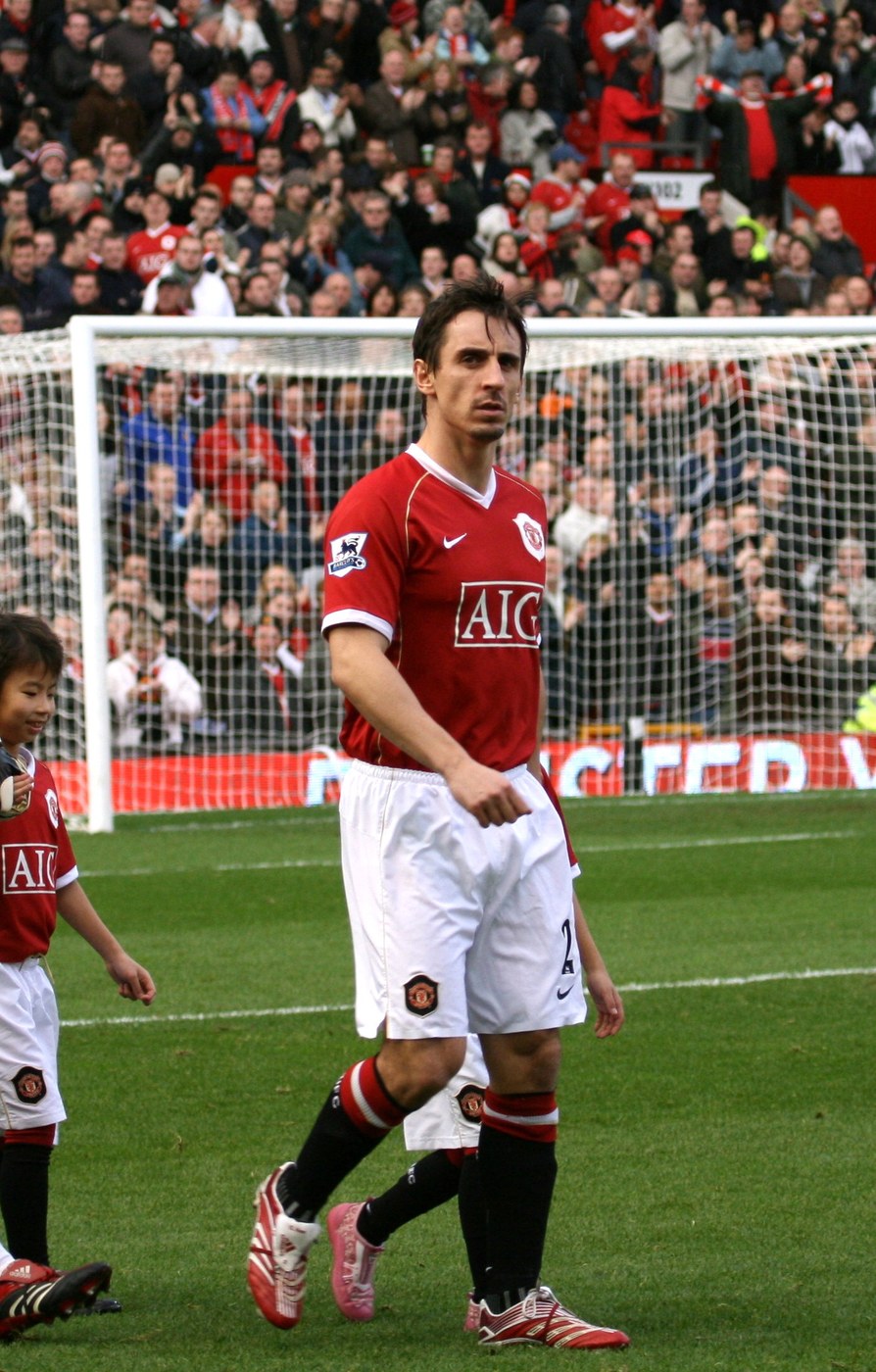
Gary Neville in a Manchester United shirt. Photo: Austin Osuide / Wikimedia Commons (CC BY 2.0).
Gary Neville made 400 Premier League appearances for Manchester United and never played for another club.
He won eight Premier League titles and two Champions Leagues, collected 85 England caps, and spent years as captain of both club and country. His brother Phil left Old Trafford for Everton. Gary stayed.
He was the first-choice right-back through the treble season of 1998–99 and still had the shirt a decade later. By the time he retired in 2011, a United full-back with that many titles and a single club on the list was pointing at a very short field.
That contrast is useful. Two brothers come through the same academy, one becomes a one-club footballer, and the other does not. If a United-only clue is sitting in front of you, Gary is the Neville it is pointing at.
14. Ledley King — Tottenham, 1999–2012
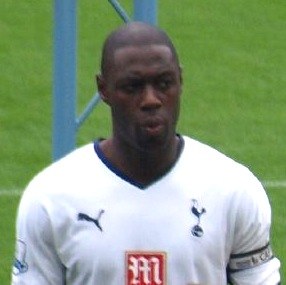
Ledley King in a Tottenham shirt. Photo: John Dobson / Wikimedia Commons (CC BY-SA 2.0).
Ledley King spent his whole career at Tottenham.
Chronic knee injuries limited him to 268 league appearances and often meant he trained only in the week of a match. He still became club captain, and he still won the League Cup in 2007–08, Tottenham’s only major trophy in his time at the club.
He won 21 caps for England. He never left White Hart Lane.
A one-club career built around a single League Cup and a body that kept breaking down is a different shape from Maldini or Totti. It still fits the rule, and it is one of the cleaner Tottenham answers a guessing game can throw at you.
15. Sepp Maier — Bayern Munich, 1962–1980
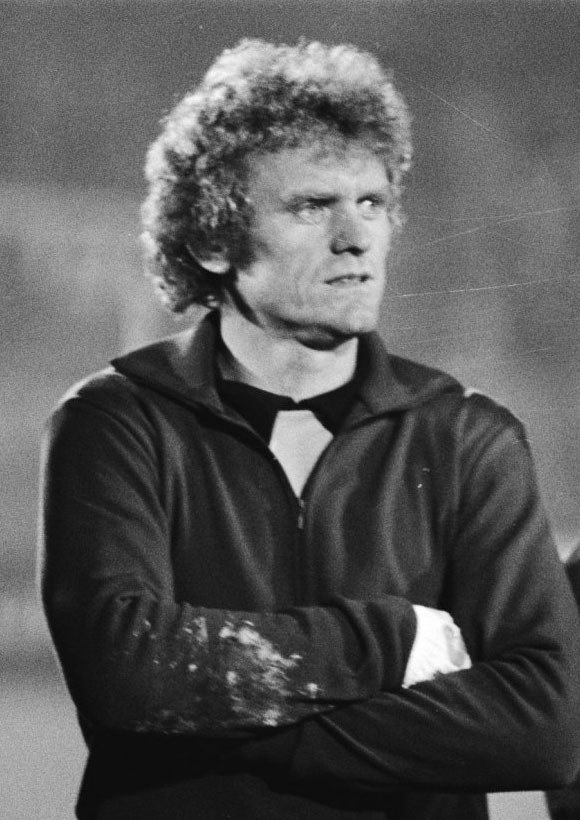
Sepp Maier in 1978. Photo: Nationaal Archief / Wikimedia Commons (CC BY-SA 3.0 NL).
Sepp Maier spent his entire senior career at Bayern Munich.
He made 537 Bundesliga appearances and 709 official ones, a club record at the time he retired. He won four Bundesliga titles, the Cup Winners’ Cup in 1966–67, and three consecutive European Cups between 1974 and 1976.
For West Germany he won the 1974 World Cup and Euro 1972, and he collected 95 caps. A car accident in 1979 effectively ended his playing career the following year.
The combination is still the classic one-club shape: one club, a pile of European Cups, and a World Cup.
16. Giacinto Facchetti — Inter, 1960–1978
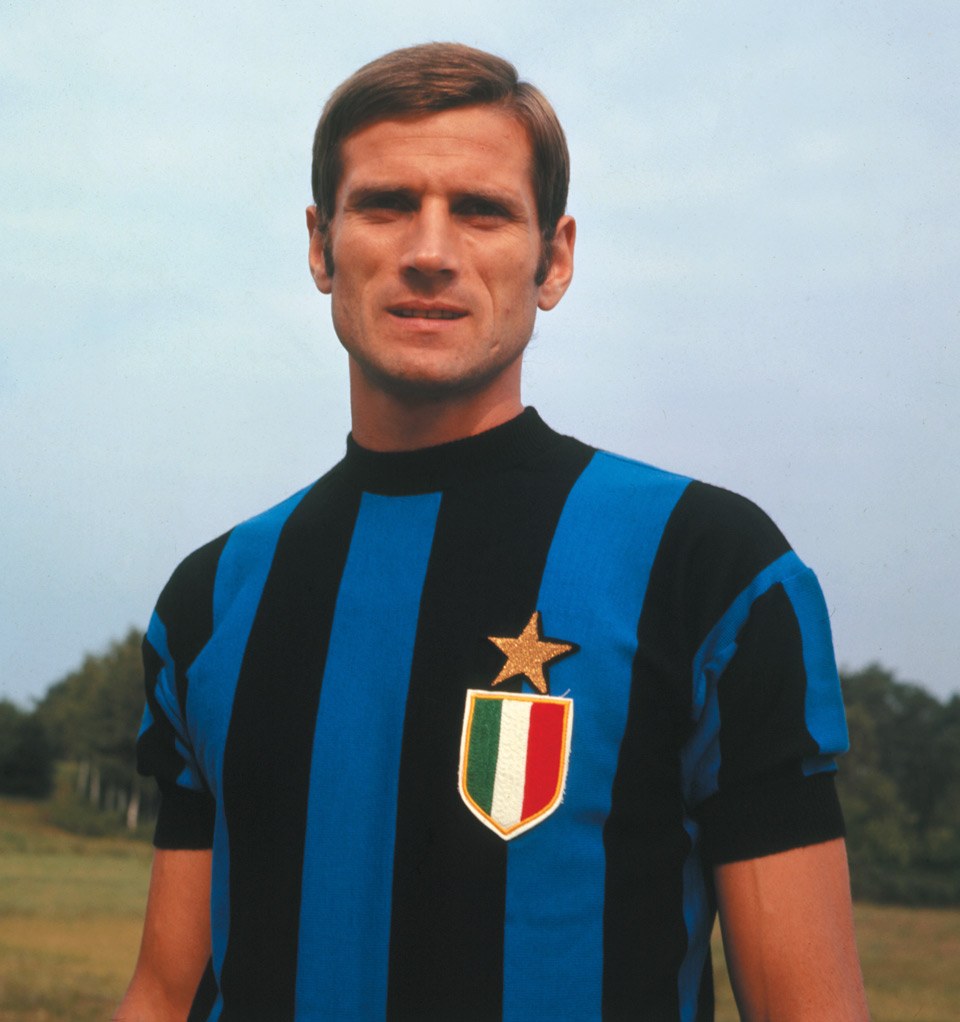
Giacinto Facchetti in an Inter shirt, 1966–67. Photo: Wikimedia Commons (public domain).
Giacinto Facchetti arrived at Inter from Trevigliese as a youngster and then played his entire senior career in Milan.
He made 634 official appearances and scored 75 goals, remarkable numbers for a pioneering attacking left-back. He was one of the first full-backs to be treated as a genuine attacking threat, overlapping from the left in Helenio Herrera’s Grande Inter side. He won four Serie A titles and two European Cups with the Grande Inter side of the mid-1960s, captained Italy to victory at Euro 1968, and reached the 1970 World Cup final. He won 94 caps. Inter retired his number 3 shirt.
Facchetti died in 2006. The career he left behind is still one of the cleanest one-club lines in Italian football.
17. Julen Guerrero — Athletic Club, 1992–2006
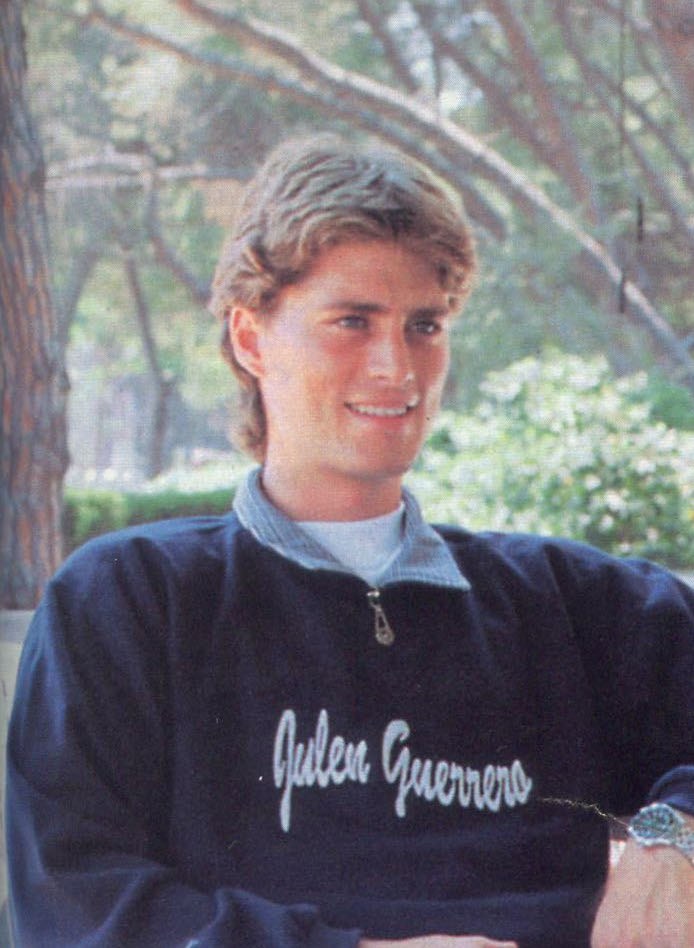
Julen Guerrero. Photo: Reebok International Limited / Wikimedia Commons (CC BY 2.0).
Julen Guerrero spent his whole career at Athletic Club, first with Bilbao Athletic and then in the first team.
He made 430 official appearances and scored 116 goals, including 101 in 372 league games. He won 41 caps for Spain and scored 13 times at international level. Athletic finished second in La Liga in 1997–98, but Guerrero never won a major trophy.
He could have left a club that wins fewer titles than Madrid or Barcelona. He never did.
That is the point of including him here. One-club careers are not only a story about the most decorated shirts in Europe.
18. Lars Ricken — Borussia Dortmund, 1993–2007
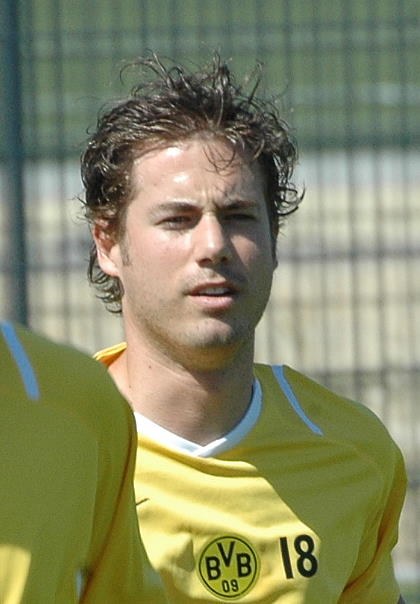
Lars Ricken in a Borussia Dortmund shirt. Photo: Northwood09 / Wikimedia Commons (public domain).
Lars Ricken spent his entire senior career at Borussia Dortmund.
He made 301 league appearances, won three Bundesliga titles, and scored one of the most famous goals in a Champions League final. In 1997, as a substitute against Juventus, he found the net 16 seconds after coming on. Dortmund won 3–1. He also won the Intercontinental Cup later that year.
Ricken won 16 caps for Germany and was in the squad that reached the 2002 World Cup final. As his first-team career wound down he appeared for Dortmund’s reserve side, still at the same club.
If a guessing game ever gives you Dortmund, a Champions League winner’s medal and a single club, this is the less obvious name worth remembering.
19. Klaus Augenthaler — Bayern Munich, 1976–1991
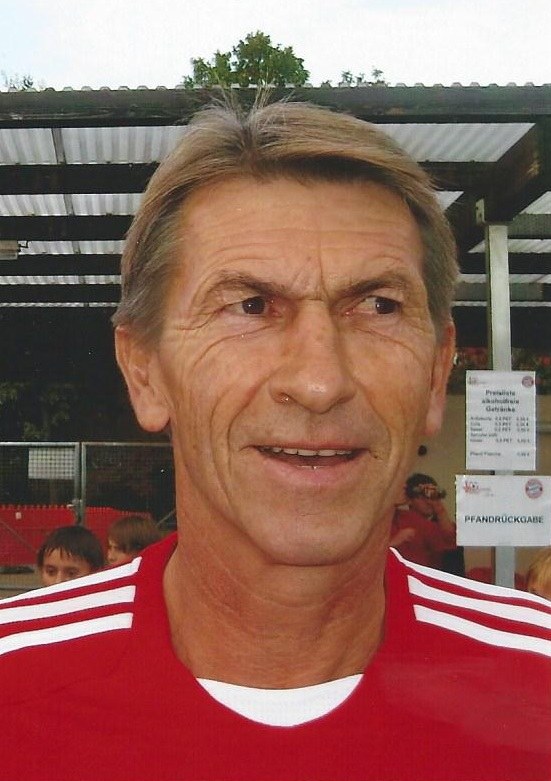
Klaus Augenthaler in Bayern colours. Photo: Christophe95 / Wikimedia Commons (CC BY-SA 3.0).
Klaus Augenthaler spent 15 years at Bayern Munich and never played senior football for anyone else.
He made 404 league appearances and won seven Bundesliga titles. For West Germany he won 27 caps and was part of the 1990 World Cup-winning squad.
He did not win the European Cup as a player. Bayern reached the final in 1982 and again in 1987 during his career, and lost both. That is the detail that catches people out. A long Bayern career from the late 1970s to the early 1990s looks, at a glance, as if it must include a European Cup. Augenthaler’s does not.
The one-club line is still perfect. The European trophy cabinet is not.
20. Sandro Mazzola — Inter, 1960–1977
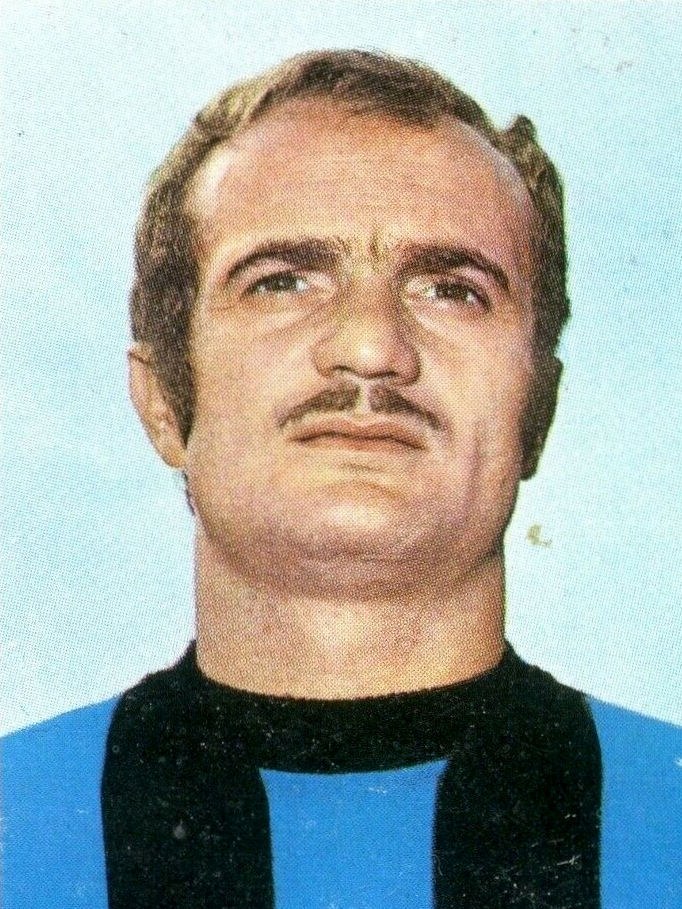
Sandro Mazzola in an Inter shirt, 1971–72. Photo: Wikimedia Commons (public domain).
Sandro Mazzola spent 17 years at Inter, the only club he ever played for.
He made 417 league appearances and scored 116 league goals, won four Serie A titles and two European Cups, and collected 70 caps for Italy, including a place in the 1970 World Cup side. He was the son of Valentino Mazzola, the great Torino captain.
Mazzola and Facchetti were teammates throughout the Grande Inter years, two one-club footballers in the same dressing room. That is a useful reminder that these careers sometimes arrive in clusters, not only as isolated acts of loyalty.
When One Club Is All the Clue You Need
A one-club career is one of the easiest tells in a football guessing game. If the common-clubs clue names only Roma, or only Milan, or only Southampton, a long list of famous names falls away at once.
That is also why these players are worth knowing beyond the obvious legends. Totti, Maldini, Giggs and Puyol will come to mind quickly. Guerrero, Ricken, Augenthaler and Sanchís are the names that separate a good guess from a slow one.
If you want to test it, play today’s GuessBaller puzzle, or try a pairing on Did They Play Together and see how often a one-club career is hiding in the answer. You can also browse the player directory and check a career line before you lock in a guess.
Enjoyed this? Put your football knowledge to the test.
Play Guessballer →