
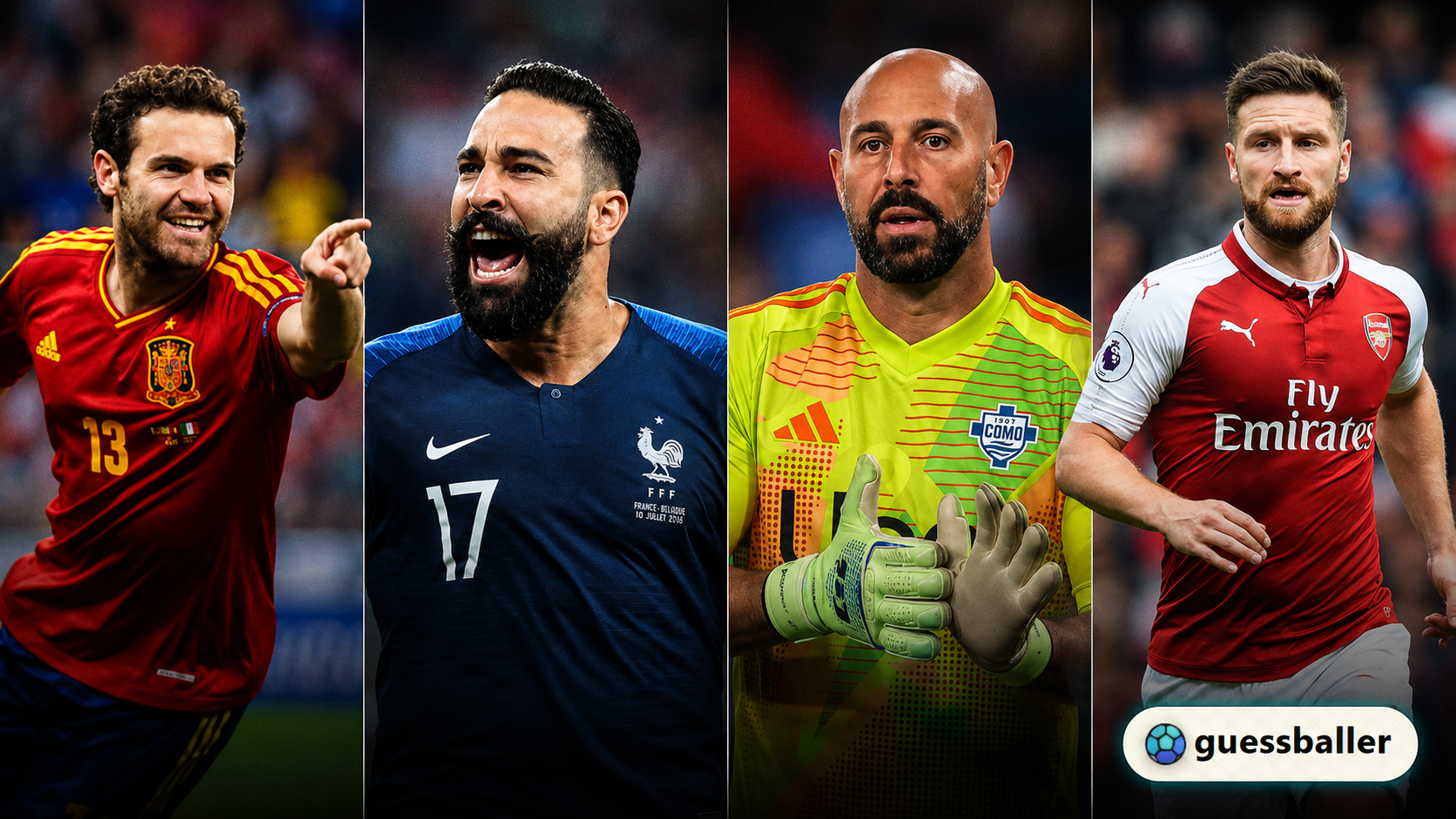
Winning the FIFA World Cup is the greatest achievement available to an international footballer.
The names most closely associated with each winning team are remembered forever. Pelé, Diego Maradona, Zinedine Zidane, Ronaldo, Andrés Iniesta, Lionel Messi and Kylian Mbappé all produced iconic moments on football’s biggest stage.
But a World Cup-winning squad contains far more than its headline stars.
Some players spend the entire tournament on the bench. Others make only one brief appearance or lose their place before the decisive knockout matches. A few become better known for disappointing club transfers than for the World Cup medal sitting in their collection.
That does not make them any less official as world champions.
Every player on this list was part of a squad that lifted the World Cup. Some made important contributions. Others barely appeared at all.
Here are 20 footballers you may have forgotten won the World Cup.
1. Juan Mata — Spain, 2010
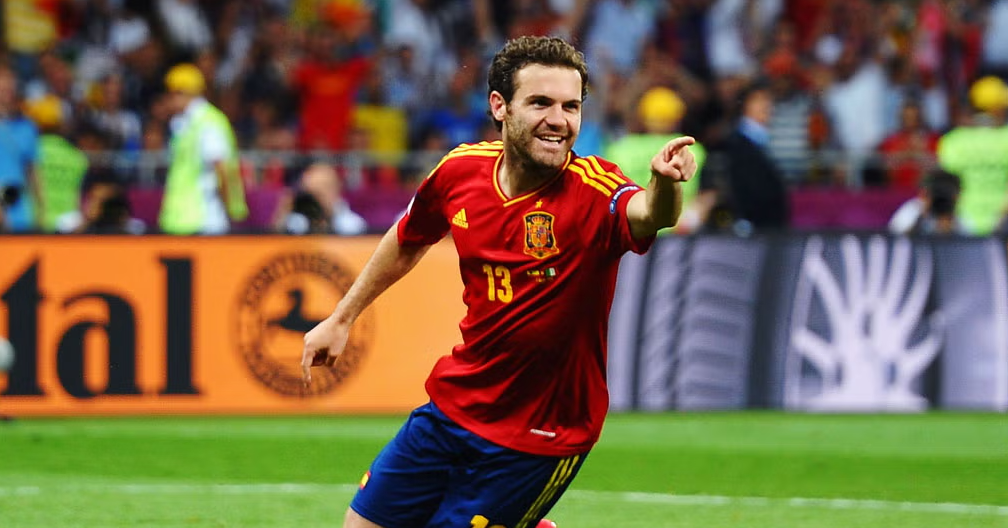
Juan Mata won almost every major trophy available during his career, yet his status as a World Cup winner is sometimes overlooked.
The attacking midfielder travelled to South Africa in 2010 as one of the younger members of an extraordinary Spain squad. He was competing for playing time with Xavi, Andrés Iniesta, David Silva, Cesc Fàbregas and Pedro.
Mata made only one appearance during the tournament, coming off the bench in Spain’s group-stage victory over Honduras.
He did not feature during the knockout rounds as Spain defeated Portugal, Paraguay, Germany and the Netherlands to win its first World Cup.
Mata became much more prominent for his country two years later. He scored in the Euro 2012 final against Italy, completing Spain’s historic run of three consecutive major international trophies.
At club level, he became a Champions League winner with Chelsea and later spent eight years with Manchester United.
Many supporters remember Mata as a Premier League playmaker and Chelsea cult hero. It is easier to forget that he was already a world champion before moving to England.
2. Adil Rami — France, 2018
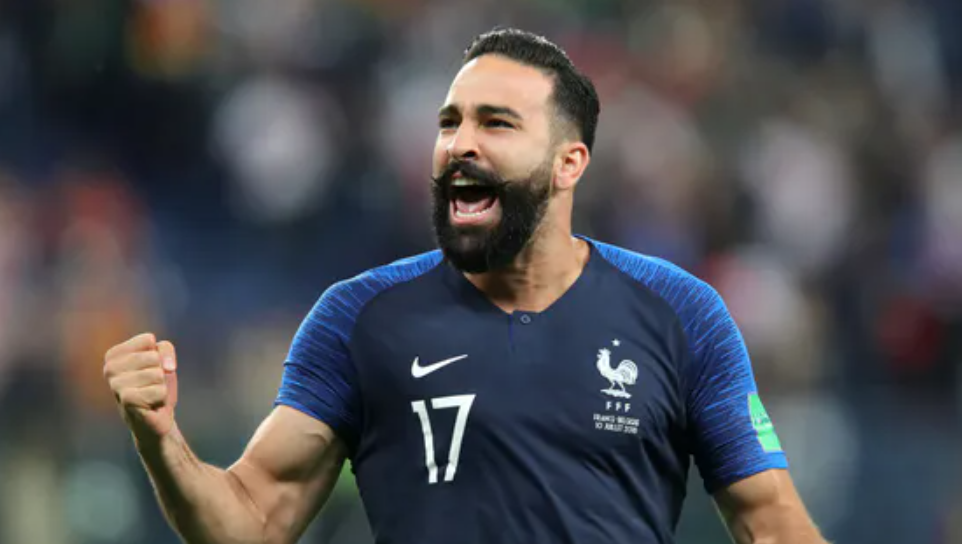
Adil Rami returned from Russia in 2018 with a World Cup winner’s medal despite not playing a single minute.
The centre-back was 32 and playing for Marseille when Didier Deschamps selected him for the tournament.
France’s preferred defensive partnership consisted of Raphaël Varane and Samuel Umtiti. Presnel Kimpembe was also available as the younger alternative, leaving Rami further down the defensive order.
Rami remained an unused substitute throughout all seven matches.
He nevertheless became one of the most recognisable personalities within the celebrations. His humour, energy and popularity among teammates helped make him an important dressing-room figure.
Rami had enjoyed a strong career before the tournament. He won Ligue 1 with Lille, represented Valencia, AC Milan and Sevilla, and collected the Europa League during his time in Spain.
However, he was never viewed as one of France’s leading international stars.
When people remember the 2018 champions, they usually picture Mbappé, Griezmann, Pogba, Kanté, Varane and Lloris.
Rami was part of the same squad — even without entering the pitch.
3. Pepe Reina — Spain, 2010
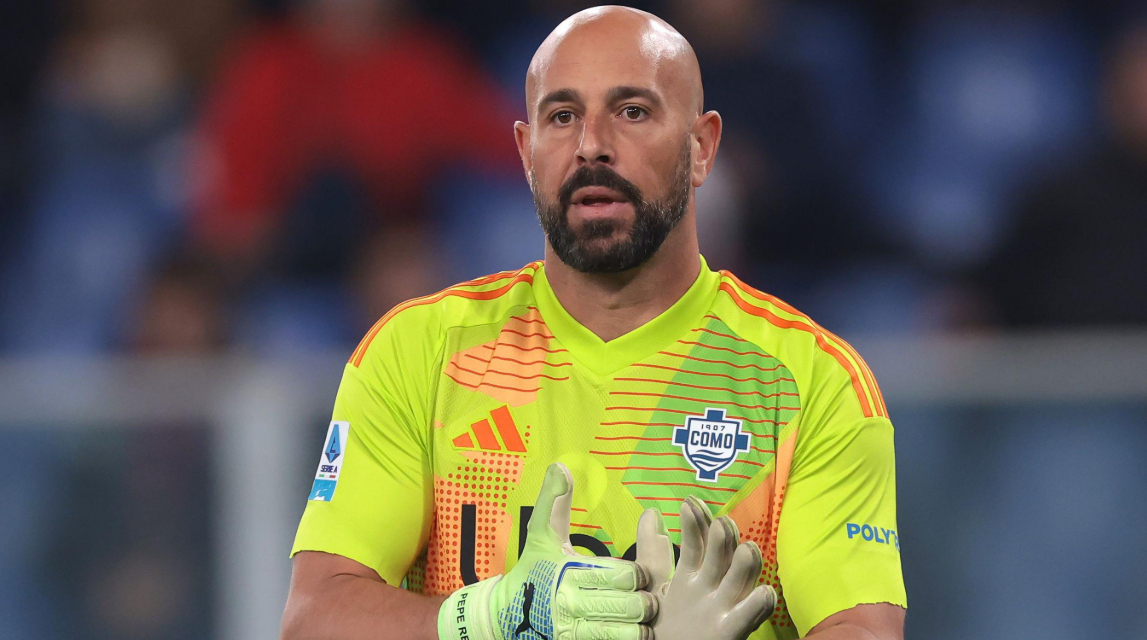
Pepe Reina spent years as one of the Premier League’s leading goalkeepers, but he never came close to replacing Iker Casillas during Spain’s 2010 World Cup campaign.
Reina had established himself as Liverpool’s first-choice goalkeeper and won the Premier League Golden Glove in three consecutive seasons.
For Spain, however, Casillas was the captain and undisputed number one.
Reina did not make an appearance in South Africa. He shared backup duties with Barcelona goalkeeper Víctor Valdés while Casillas played every minute of the tournament.
His contribution came primarily away from the pitch.
Reina was known as one of Spain’s biggest dressing-room personalities and frequently acted as the master of ceremonies during the team’s trophy celebrations.
He was also part of the squads that won Euro 2008 and Euro 2012, giving him three medals from one of international football’s greatest eras.
Reina went on to represent Napoli, Bayern Munich, AC Milan, Aston Villa, Lazio and several other clubs.
His long club career made him one of the most recognisable Spanish goalkeepers of his generation. His World Cup medal is still easy to forget because Casillas left no playing time for anyone else.
4. Shkodran Mustafi — Germany, 2014
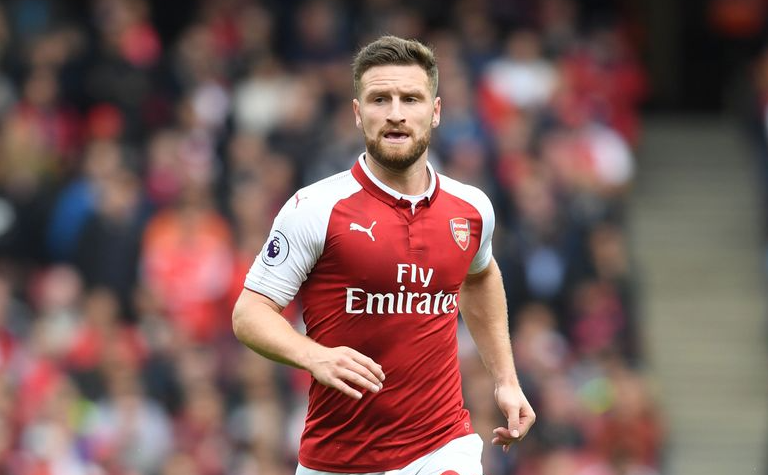
Shkodran Mustafi was not originally supposed to be part of Germany’s 2014 World Cup squad.
The defender was added at the last moment after Marco Reus suffered an ankle injury during Germany’s final warm-up match before the tournament.
Mustafi was only 22 and playing for Sampdoria at the time.
Rather than spending the entire competition on the bench, he appeared in Germany’s opening victory over Portugal and featured again against Ghana.
He then started at right-back in the round-of-16 match against Algeria.
A thigh injury forced Mustafi to leave the pitch during the second half and ended his tournament. Germany continued without him, defeating France, Brazil and Argentina to become world champions.
Mustafi later moved to Valencia and then Arsenal, where his inconsistent performances made him a frequently criticised figure among Premier League supporters.
That period changed the way many fans remembered him.
Before the difficult Arsenal years, however, Mustafi had already made three appearances for a World Cup-winning team.
He may not be remembered alongside Lahm, Hummels or Boateng, but he contributed more to Germany’s 2014 campaign than several other members of the squad.
5. Florian Thauvin — France, 2018
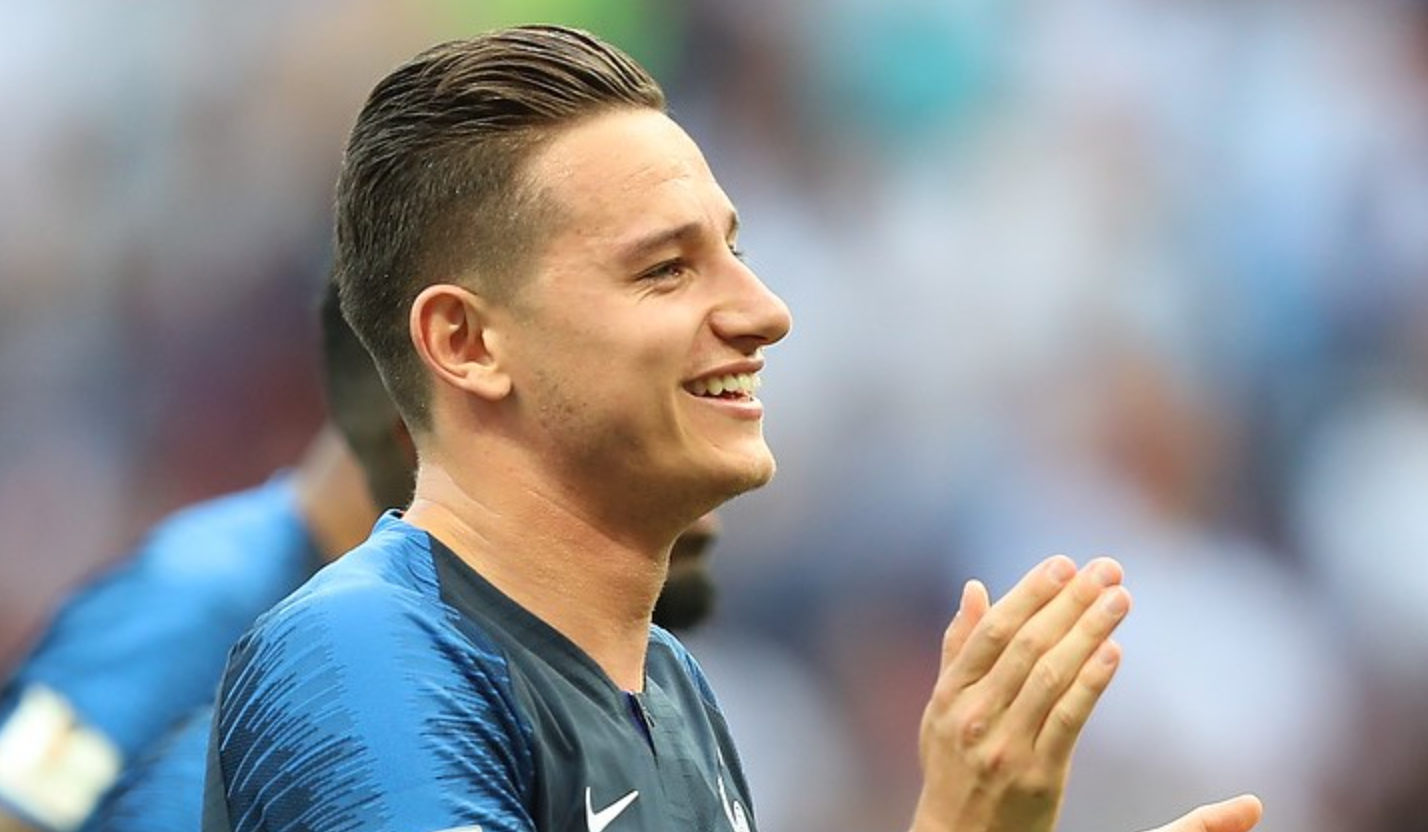
Florian Thauvin’s World Cup experience lasted only a few minutes.
The winger arrived at the 2018 tournament after an outstanding club season with Marseille. He had scored regularly in Ligue 1 and helped his team reach the Europa League final.
Breaking into France’s attack was considerably more difficult.
Deschamps could choose from Kylian Mbappé, Antoine Griezmann, Olivier Giroud, Ousmane Dembélé, Thomas Lemar and Nabil Fekir.
Thauvin’s only appearance came near the end of France’s dramatic 4–3 victory over Argentina in the round of 16.
He replaced Mbappé after the young forward had produced one of the tournament’s defining performances.
Thauvin did not appear again, but France continued past Uruguay and Belgium before defeating Croatia in the final.
His later career took him away from the centre of European football, particularly after his move from Marseille to Mexican club Tigres.
That has made his place in the 2018 squad easier to forget.
Thauvin barely had enough time to touch the ball in Russia, but his name remains permanently attached to one of the strongest French teams in history.
6. Nabil Fekir — France, 2018
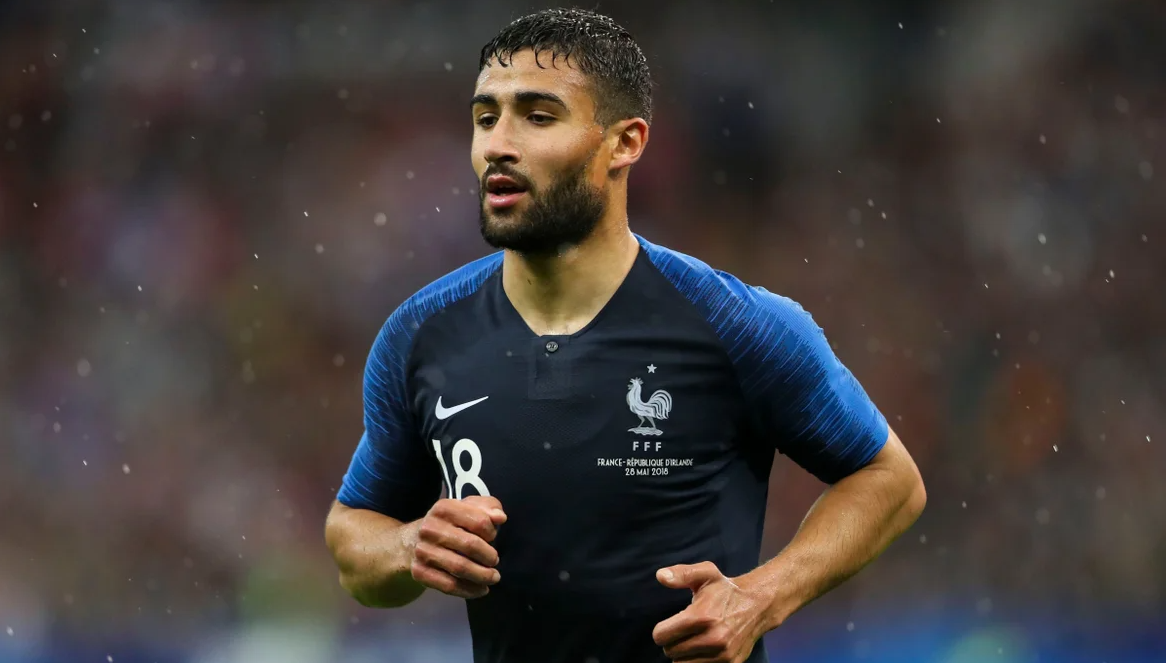
Nabil Fekir was one of Ligue 1’s most exciting attacking players when France won the 2018 World Cup.
The Lyon captain had produced an outstanding club season and was attracting interest from several major European teams.
Fekir was not a starter for France, but he was used regularly from the bench. Deschamps valued his ability to carry the ball, win fouls and operate in several attacking positions.
He appeared during multiple matches and was introduced late in the World Cup final as France protected its lead over Croatia.
Fekir therefore stepped onto the pitch in the biggest match of all, even if his role during the tournament was relatively limited.
Only weeks before the World Cup, he had appeared close to joining Liverpool. That transfer collapsed after concerns emerged during the medical process.
He later moved to Real Betis, where he won the Copa del Rey and became a popular figure in Spain.
Fekir’s club career did not reach the level predicted during his Lyon peak.
However, he will always possess something many more celebrated attacking midfielders never achieved: a World Cup winner’s medal and an appearance in the final.
7. Alphonse Areola — France, 2018
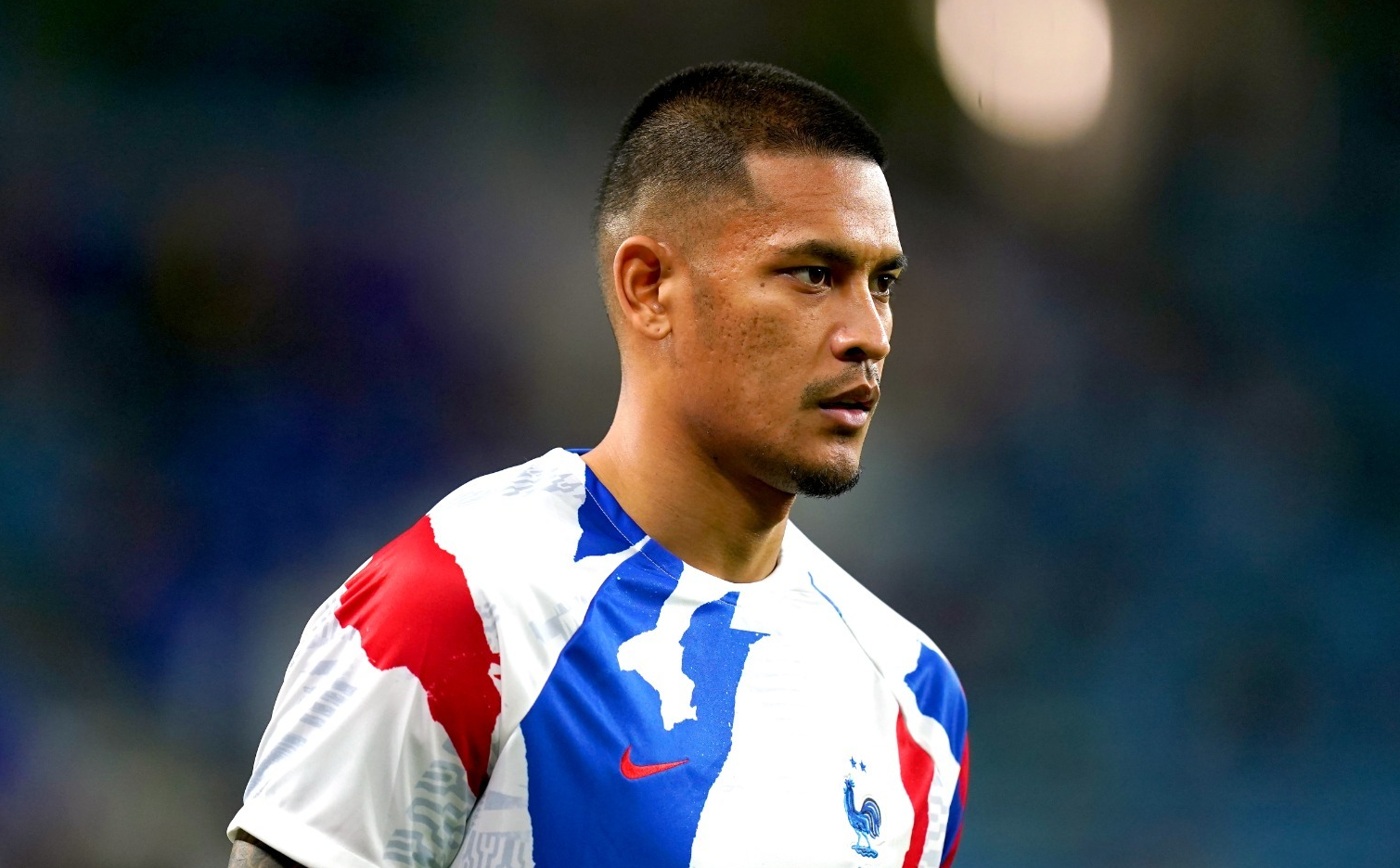
Alphonse Areola became a world champion without making an appearance for France at senior international level before the tournament began.
The goalkeeper had enjoyed a strong season with Paris Saint-Germain and was selected alongside Hugo Lloris and Steve Mandanda.
Lloris was the established captain and played every important match. Mandanda was used in France’s final group game against Denmark.
Areola remained on the bench throughout the competition.
He therefore completed the unusual achievement of winning the World Cup before making his senior debut for his country.
That debut arrived later in 2018, when he produced an impressive performance against Germany.
Areola’s club career included spells with Villarreal, Real Madrid, Fulham and West Ham United. He won several domestic trophies with PSG and was also part of Real Madrid’s squad for a season.
His collection of medals is considerably stronger than many people realise.
When France’s 2018 triumph is discussed, Lloris understandably dominates any conversation about the goalkeepers.
Areola did not contribute on the pitch, but he still left Russia as a world champion before earning his first official cap.
8. Benjamin Mendy — France, 2018
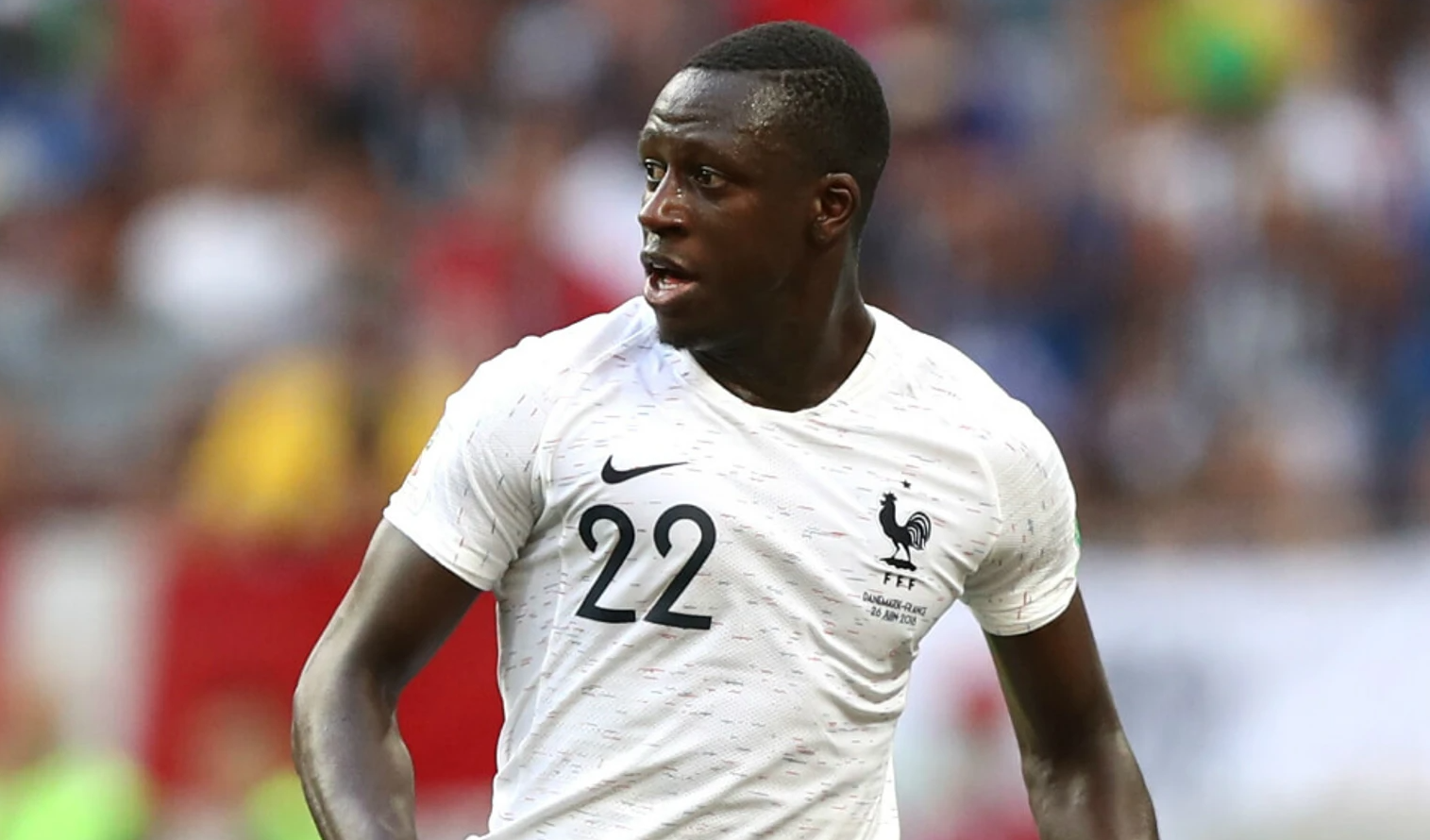
Benjamin Mendy was one of the most expensive defenders in football when France travelled to Russia.
Manchester City had signed him from Monaco one year earlier, but a serious knee injury limited his first season in England.
Mendy recovered in time to make France’s World Cup squad, although Lucas Hernandez had established himself as Deschamps’ preferred left-back.
Mendy made only one appearance during the tournament, coming off the bench in the goalless group-stage draw against Denmark.
He did not feature in any of France’s four knockout matches.
Before his injury problems, Mendy had been regarded as one of Europe’s most dangerous attacking full-backs. He provided width, pace and powerful crossing during Monaco’s run to the 2017 Champions League semi-finals.
His later career became defined by matters far removed from his football, meaning his role within the 2018 squad is rarely central to discussions about him.
On the pitch, his contribution to the World Cup was brief.
Nevertheless, he was part of the 23-man group that returned to France with the trophy.
9. Víctor Valdés — Spain, 2010
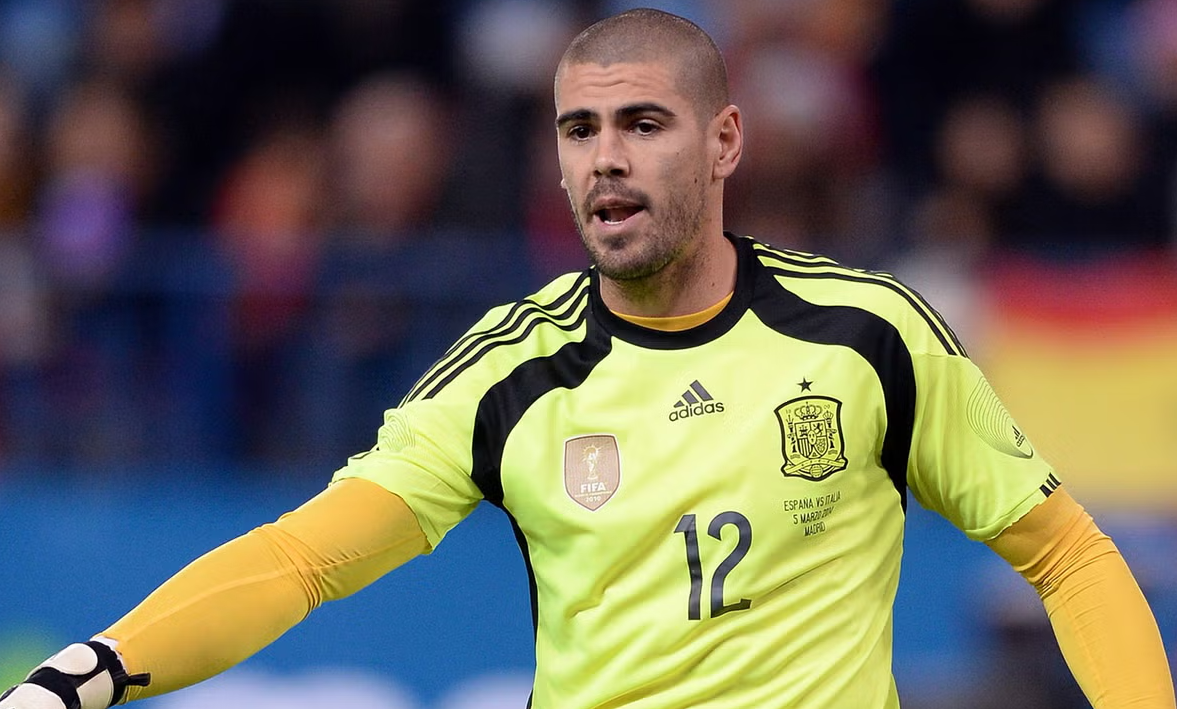
Víctor Valdés was Barcelona’s first-choice goalkeeper during one of the greatest periods in club football history.
He won multiple La Liga titles and Champions League trophies while playing behind Carles Puyol, Gerard Piqué, Xavi, Iniesta and Sergio Busquets.
For Spain, however, he remained behind Iker Casillas.
Valdés entered the 2010 World Cup without having made a senior international appearance. His performances for Barcelona had finally earned him a place in Vicente del Bosque’s squad, but there was no serious possibility of Casillas being replaced.
Valdés did not play a minute as Spain won the tournament.
He eventually made his international debut later that year and collected 20 caps in total.
Valdés was also included in Spain’s Euro 2012 squad, again serving as one of Casillas’ backups.
His club achievements were so significant that many people naturally associate him with Barcelona rather than the national team.
Yet Valdés was present for the greatest moment in Spanish football history.
One of the most successful goalkeepers of his era won the World Cup without ever stepping onto the field during the tournament.
10. Javi Martínez — Spain, 2010
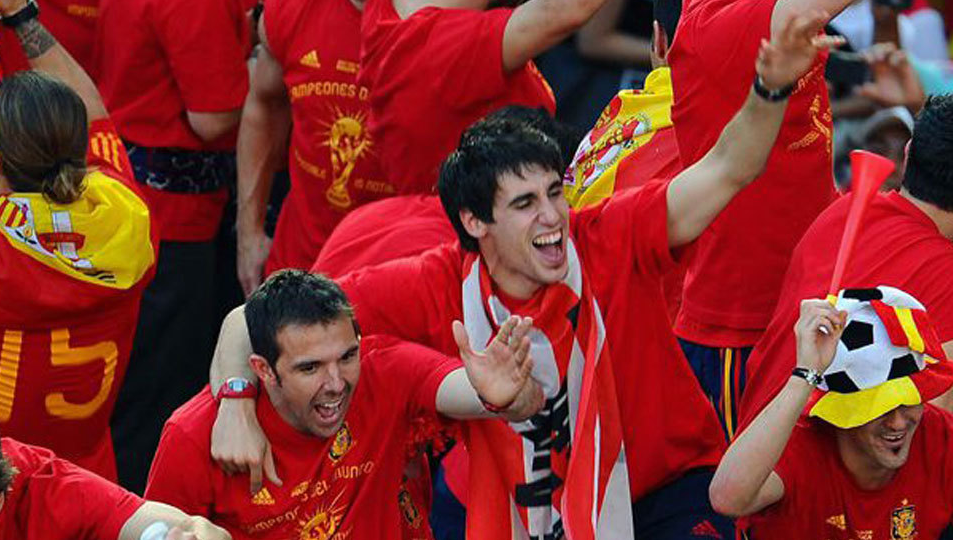
Javi Martínez was only 21 when he became a world champion.
The Athletic Club midfielder had not played for Spain’s senior team before being selected for the 2010 tournament.
His versatility allowed him to operate as a defensive midfielder or centre-back, but Spain’s starting midfield was almost impossible to break into.
Sergio Busquets and Xabi Alonso provided the defensive platform, while Xavi and Iniesta controlled possession.
Martínez made one brief appearance, replacing Alonso during Spain’s final group match against Chile.
That was his entire contribution on the pitch.
He later became a far more established international and was part of the squad that won Euro 2012.
At club level, Martínez joined Bayern Munich in 2012 and immediately played an important role in the team that completed the treble under Jupp Heynckes.
Injuries affected the later stages of his career, but he still collected an extraordinary number of major trophies in Germany.
Martínez is often remembered as a Bayern midfielder and Champions League winner.
Before any of that happened, he had already lifted the World Cup after playing only a small part in Spain’s successful campaign.
11. Raúl Albiol — Spain, 2010
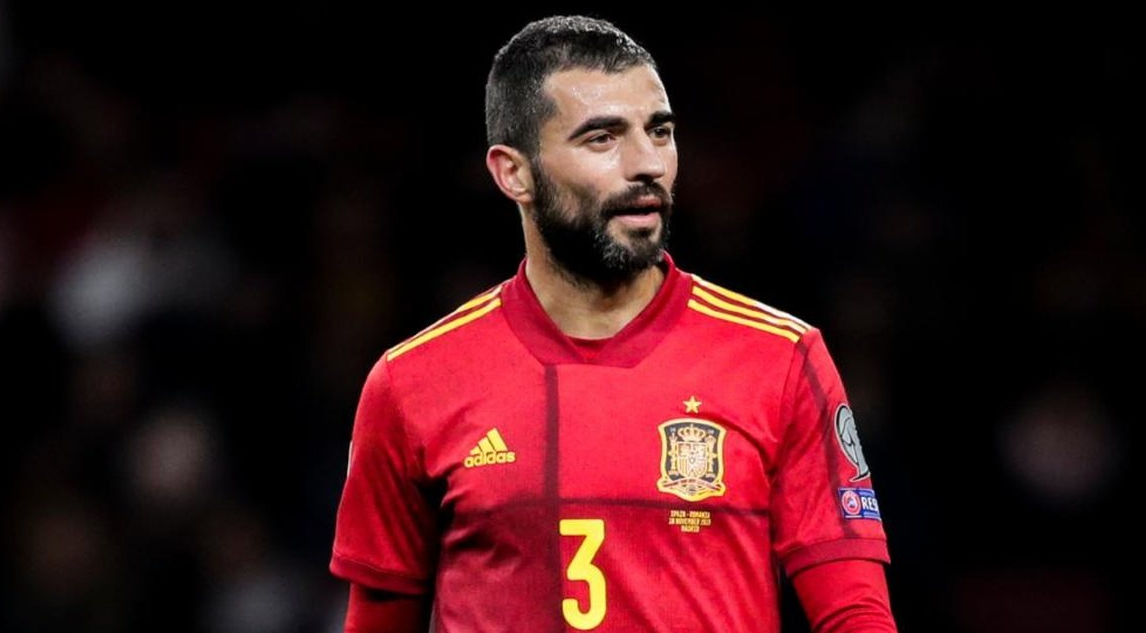
Raúl Albiol spent the 2010 World Cup behind one of international football’s most established central-defensive partnerships.
Carles Puyol and Gerard Piqué started throughout the tournament, while Sergio Ramos operated at right-back. Carlos Marchena was also available as an experienced defensive alternative.
Albiol did not make an appearance.
He had joined Real Madrid from Valencia one year before the tournament and was already an established Spain international.
His inability to get onto the pitch was therefore not a reflection of a lack of quality. Spain simply possessed extraordinary defensive depth.
Albiol remained involved with the national team and collected another major medal at Euro 2012.
His club career continued for many years after the World Cup. He represented Real Madrid, Napoli and Villarreal, winning domestic and European trophies along the way.
Albiol also became a respected veteran defender known for his positioning and professionalism.
Because he never appeared in South Africa, his World Cup medal rarely forms a major part of his public image.
He was still a full member of the team that delivered Spain’s first world title.
12. Kevin Großkreutz — Germany, 2014
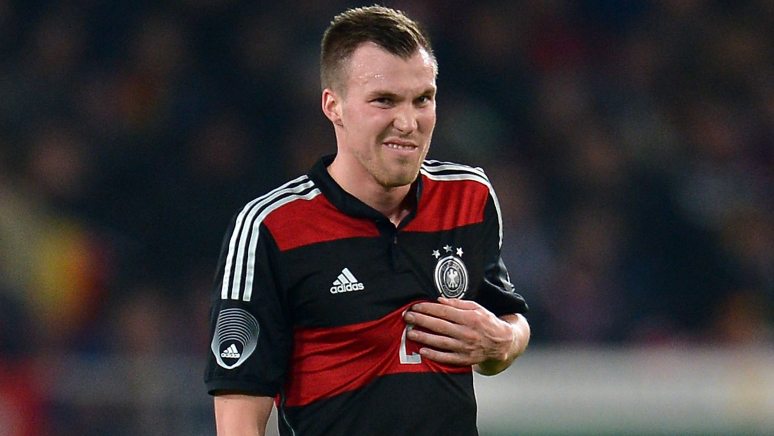
Kevin Großkreutz was one of Jürgen Klopp’s most trusted players at Borussia Dortmund.
His energy and versatility allowed him to play as a winger, full-back or midfielder. He helped Dortmund win two Bundesliga titles and reach the 2013 Champions League final.
Joachim Löw included him in Germany’s squad for the 2014 World Cup.
Despite his ability to cover several positions, Großkreutz did not make an appearance in Brazil.
Germany used multiple defensive and midfield combinations during the tournament, but Löw never called on him.
His international career ended shortly afterwards, leaving him with only six senior caps.
Großkreutz’s club career also declined surprisingly quickly after leaving Dortmund. A proposed transfer to Galatasaray failed because the registration documents were submitted incorrectly, and later spells took him away from Europe’s elite level.
He eventually continued playing in Germany’s lower divisions.
Supporters remember Großkreutz primarily as a Dortmund cult hero and lifelong fan of the club.
Hidden within that unusual career is a World Cup winner’s medal earned as an unused member of Germany’s 2014 squad.
13. Matthias Ginter — Germany, 2014
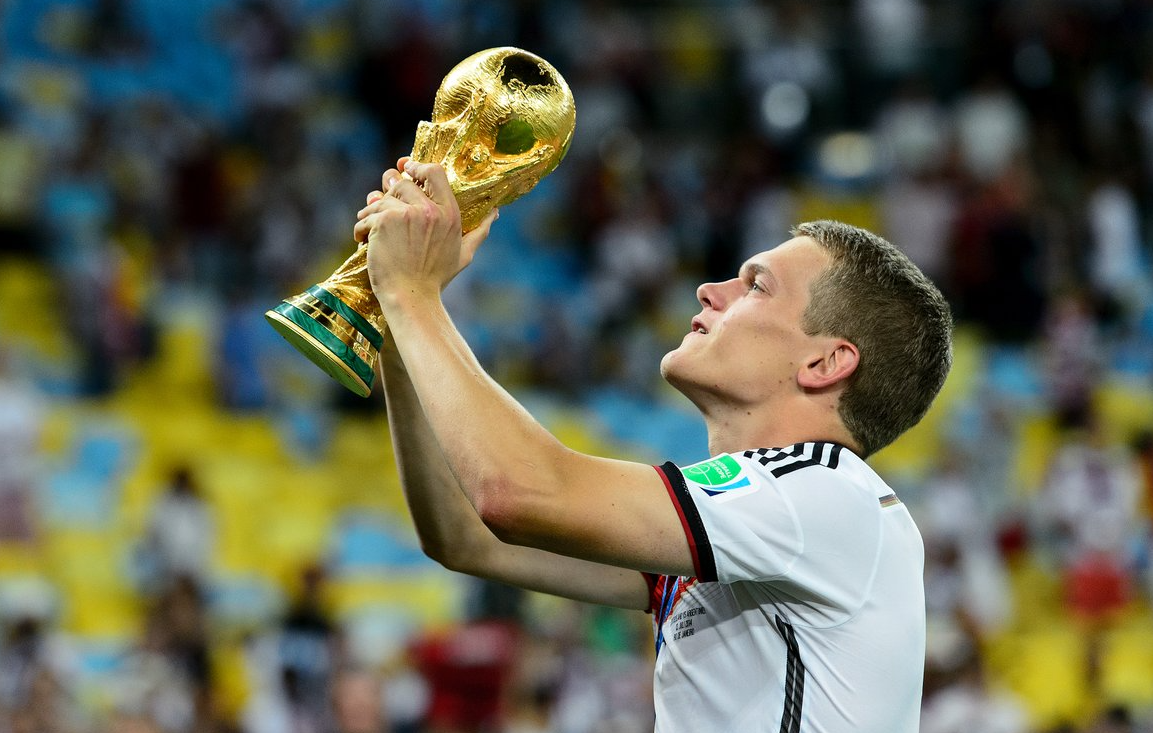
Matthias Ginter was the youngest player in Germany’s World Cup squad.
The 20-year-old defender had impressed with Freiburg and was preparing to join Borussia Dortmund after the tournament.
Ginter could play in central defence, at full-back or in defensive midfield, making him a useful squad option.
He did not appear in any of Germany’s seven matches.
Löw relied on more experienced defenders, while players such as Philipp Lahm, Jérôme Boateng, Mats Hummels, Per Mertesacker and Benedikt Höwedes occupied the available positions.
Ginter still became one of the youngest World Cup winners in history.
Unlike several unused squad members, he later developed into a regular Germany international. He won the Confederations Cup in 2017 and represented his country at additional major tournaments.
He also built a long Bundesliga career with Dortmund, Borussia Mönchengladbach and Freiburg.
Ginter’s later international appearances can create the impression that he played an active role in the 2014 triumph.
In reality, he watched the entire campaign from the bench before celebrating with the trophy at the Maracanã.
14. Erik Durm — Germany, 2014
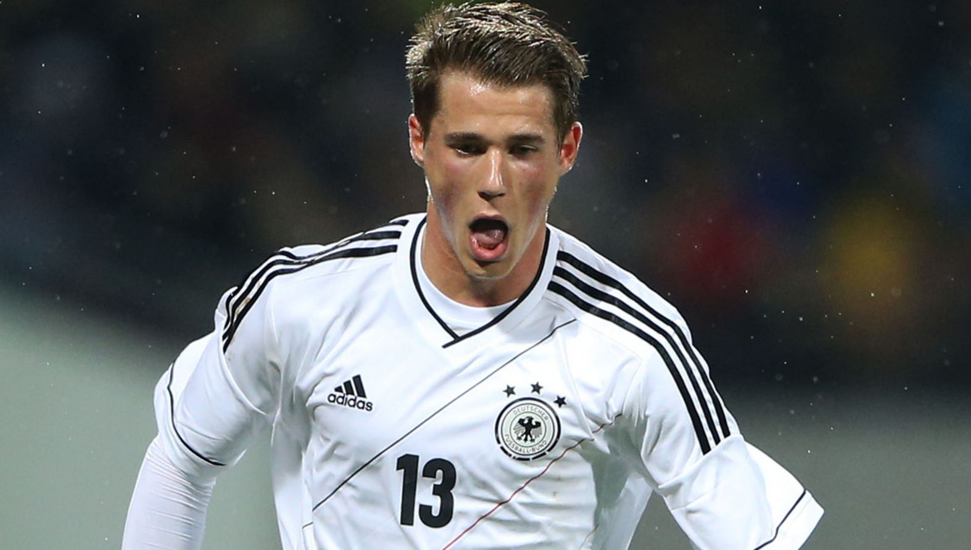
Erik Durm’s rise into Germany’s World Cup squad happened extremely quickly.
The Borussia Dortmund full-back had made his Bundesliga debut only during the 2013/14 season.
Originally developed as an attacking player, Durm had been converted into a defender and impressed enough to earn his first senior international cap shortly before the World Cup.
Löw selected him as a versatile option capable of covering both full-back positions.
Durm did not play during the tournament.
Germany experienced uncertainty at full-back, particularly before Lahm moved back from midfield, but Höwedes and Boateng received the majority of the available minutes.
Durm returned from Brazil as a world champion after only a handful of senior international appearances.
Injuries later disrupted his development at Dortmund. He moved to Huddersfield Town in the Premier League and later won the Europa League with Eintracht Frankfurt.
His international career never developed beyond seven caps.
Durm’s presence in the 2014 squad now feels like a snapshot of one very specific moment in his career — a rapid rise that placed him inside a legendary team before injuries changed his trajectory.
15. Kléberson — Brazil, 2002
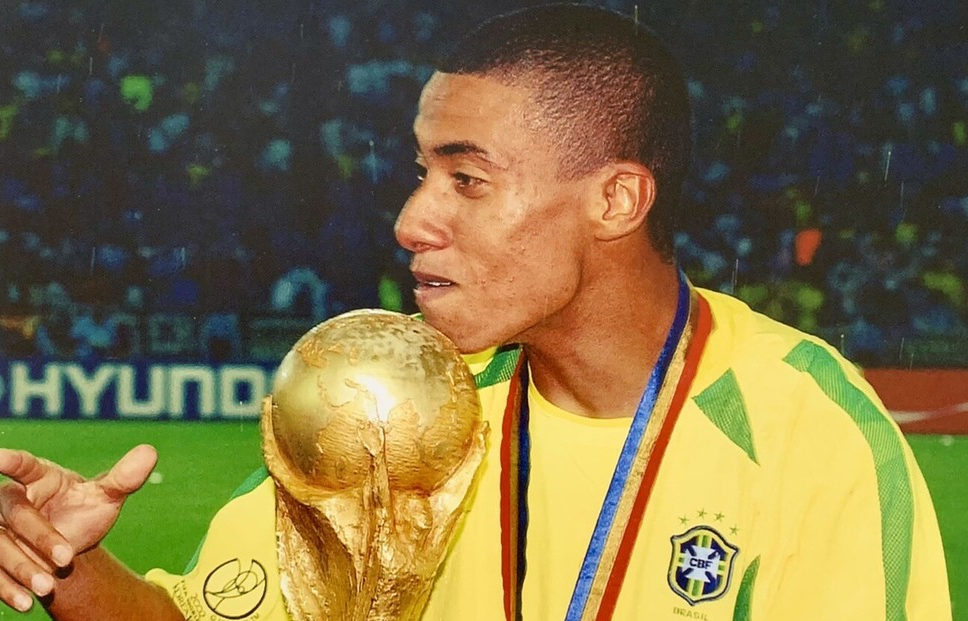
Kléberson was not merely an unused squad player in 2002.
He started the World Cup final.
The Brazilian midfielder began the tournament outside the starting eleven, with Luiz Felipe Scolari initially preferring Juninho Paulista.
As the competition progressed, Kléberson gained the manager’s trust. His energy, tactical discipline and ability to cover ground provided greater balance behind Brazil’s famous attacking trio of Ronaldo, Rivaldo and Ronaldinho.
He started the semi-final against Turkey and retained his place for the final against Germany.
Kléberson produced an excellent performance in Yokohama and came close to scoring when his shot struck the crossbar.
His later move to Manchester United changed how many European supporters remembered him.
He struggled to adapt to English football, suffered injuries and left after only two seasons. The transfer became widely viewed as a failure.
That disappointing club spell often overshadows what came before it.
Kléberson was an important member of Brazil’s last World Cup-winning team and played the full 90 minutes in the final.
16. Juninho Paulista — Brazil, 2002
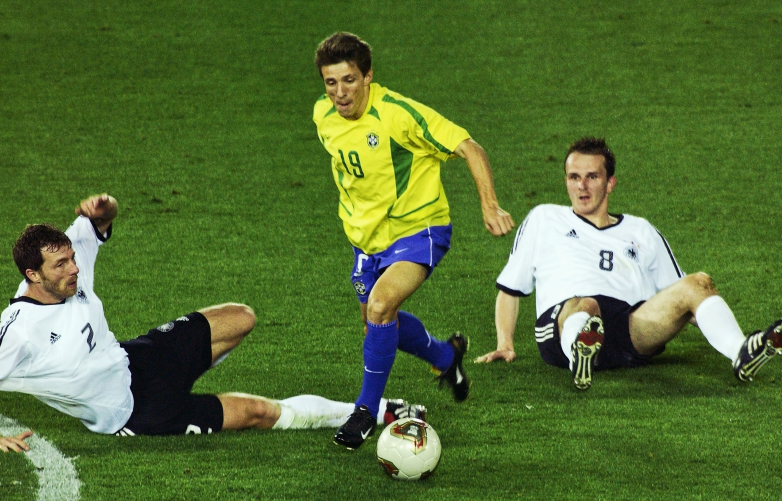
Juninho Paulista was already a cult hero in English football when Brazil won the World Cup in 2002.
The small attacking midfielder was adored by Middlesbrough supporters for his technical ability, creativity and willingness to join the club during an ambitious period in its history.
Juninho returned from a serious knee injury and earned a place in Scolari’s World Cup squad.
He started several of Brazil’s matches during the tournament, including games in the group stage and early knockout rounds.
However, Scolari changed the midfield balance as Brazil approached the decisive matches. Kléberson replaced Juninho in the starting lineup for the semi-final and final.
Juninho therefore watched from the bench as Ronaldo scored twice against Germany.
His contribution earlier in the tournament still mattered. Brazil won all seven matches, and Juninho had been part of the team that established momentum before the final rounds.
Because he did not appear in the final and was surrounded by global superstars, his role is frequently overlooked.
Middlesbrough fans remember Juninho as one of their greatest-ever players.
He was also a meaningful contributor to Brazil’s fifth World Cup title.
17. Roque Júnior — Brazil, 2002
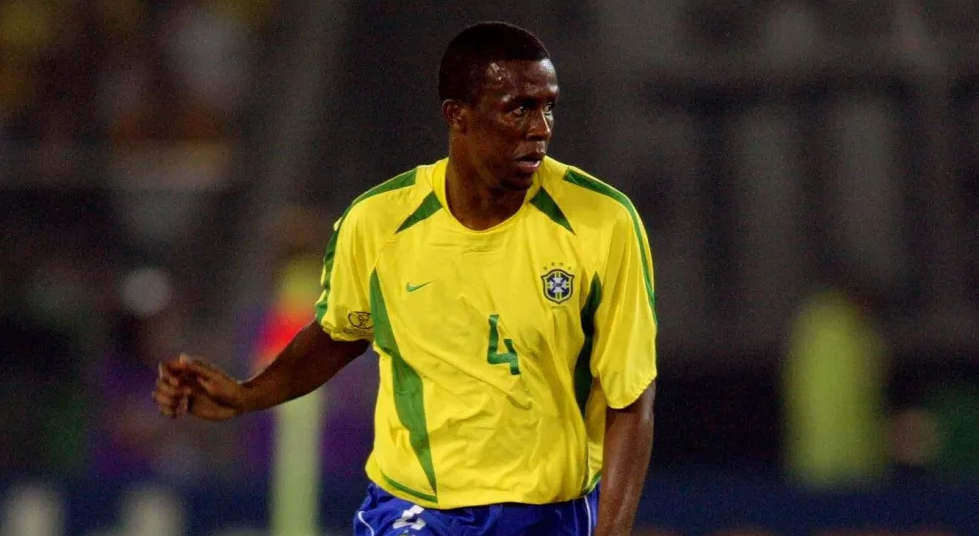
Roque Júnior may be one of the least remembered regular starters from any modern World Cup-winning team.
The centre-back was part of Scolari’s three-man defence alongside Lúcio and Edmílson.
He started the final against Germany and played the entire match as Brazil kept a clean sheet.
Roque Júnior’s international achievements were significant. In addition to winning the World Cup, he later captained Brazil and collected more than 40 caps.
His club career included spells with Palmeiras, AC Milan, Leeds United, Bayer Leverkusen and several other teams.
European supporters may remember his chaotic loan period at Leeds more clearly than his World Cup performances. The English club struggled badly, and Roque Júnior became associated with a defence conceding large numbers of goals.
That brief period created an unfairly negative image of his wider career.
In 2002, he was trusted to start throughout Brazil’s successful campaign and helped contain Germany in the final.
He may not have received the attention given to Cafu, Roberto Carlos or Lúcio, but Roque Júnior was not simply a passenger. He was a first-choice defender for the world champions.
18. Cristian Zaccardo — Italy, 2006
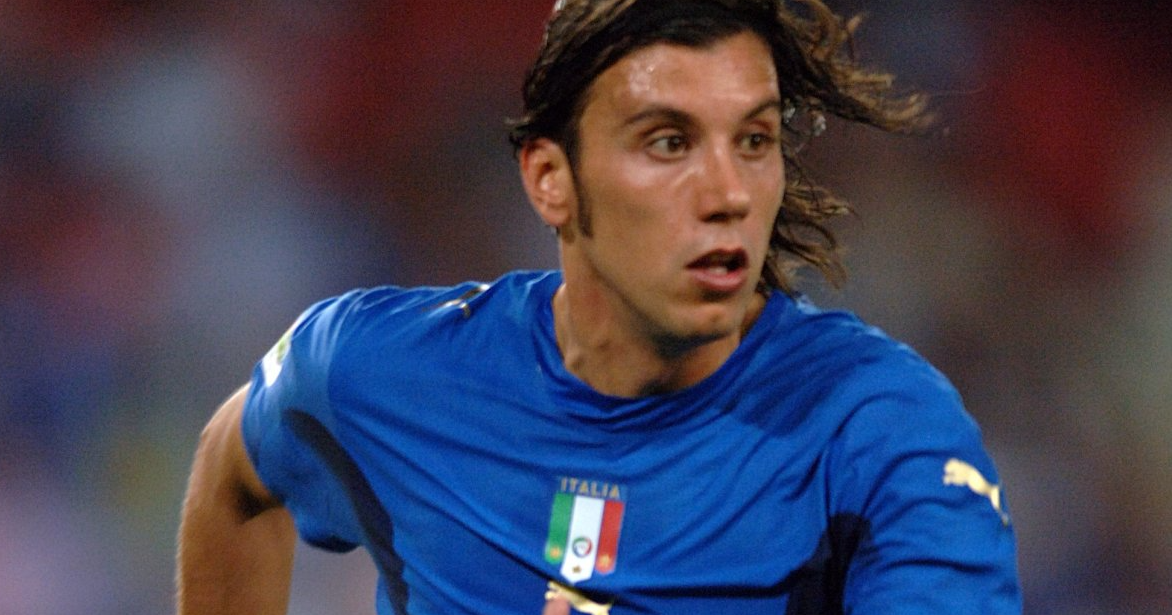
Cristian Zaccardo’s World Cup is remembered primarily for one unfortunate moment.
The Palermo defender started Italy’s first two group matches in 2006.
Against the United States, a failed attempt to clear a cross resulted in an own goal. It was the only goal Italy conceded from open play during the entire tournament.
Zaccardo lost his starting position after that match.
Gianluca Zambrotta and Fabio Grosso became Italy’s preferred full-backs, while the central defence was built around Fabio Cannavaro and Marco Materazzi after Alessandro Nesta’s injury.
Zaccardo did not appear during the knockout rounds.
Italy went on to defeat Australia, Ukraine, Germany and France, giving Zaccardo a World Cup winner’s medal despite his tournament being associated with an own goal.
He still built a strong Serie A career and later represented Wolfsburg, Parma and AC Milan.
Zaccardo also became the first player from Italy’s 2006 squad to advertise for a new club through LinkedIn near the end of his career.
His football story contains several unusual details.
The most important is that he was part of Italy’s fourth World Cup victory.
19. Bernard Diomède — France, 1998
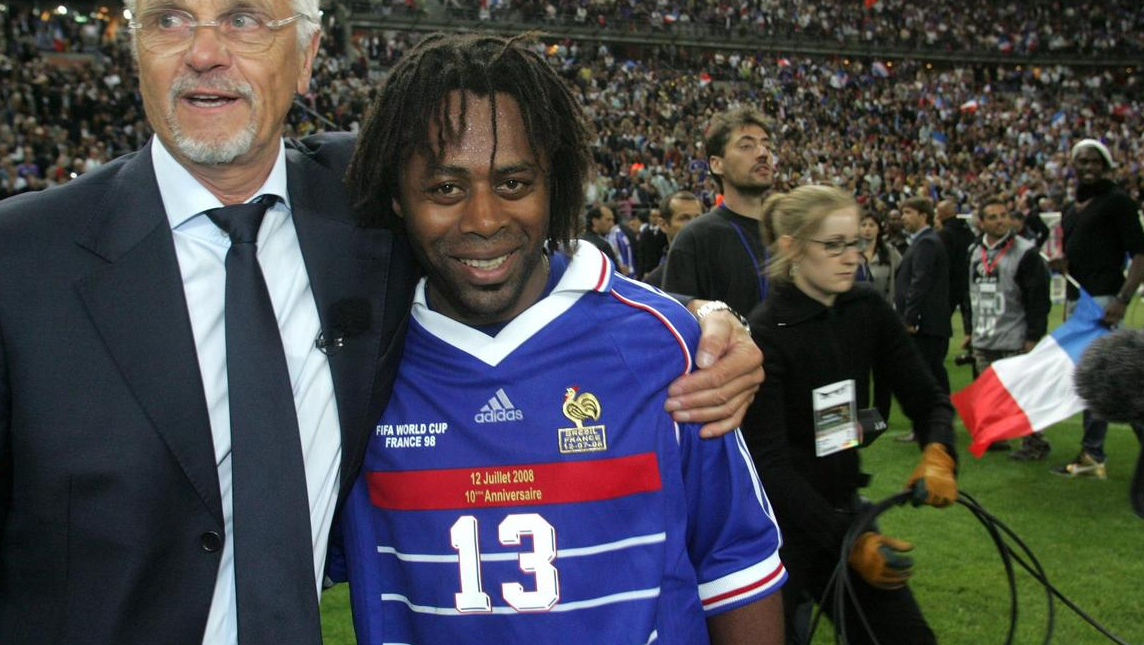
Bernard Diomède made several appearances during France’s 1998 World Cup triumph, yet he remains one of the least remembered members of the squad.
The Auxerre winger had won the French league and cup double under Guy Roux and earned his international opportunity shortly before the tournament.
Aimé Jacquet used Diomède during the group stage and again in the round of 16 against Paraguay.
France’s attacking options included Thierry Henry, Christophe Dugarry, Robert Pirès, Youri Djorkaeff and Stéphane Guivarc’h, making competition for places extremely strong.
Diomède did not feature in the quarter-final, semi-final or final.
His entire international career produced only eight appearances, all within a relatively short period surrounding the World Cup.
At club level, he later joined Liverpool but struggled for regular football and disappeared from the highest level earlier than expected.
That career path made his status as a world champion increasingly easy to forget.
Diomède was not an unused reserve. He actually appeared during France’s historic home tournament before dropping out of the team for the decisive matches.
20. Viola — Brazil, 1994
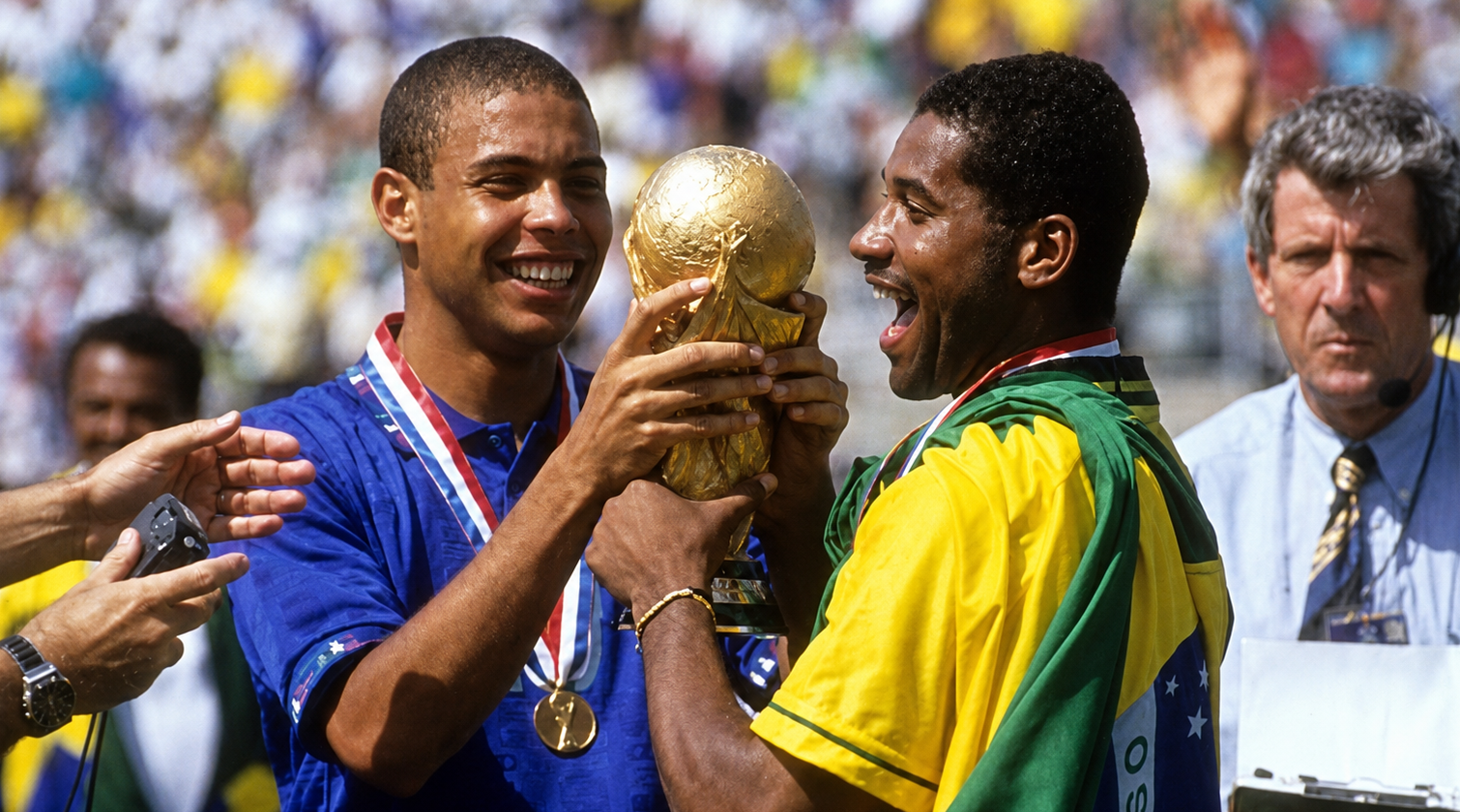
Viola entered the 1994 World Cup final during extra time.
With Brazil and Italy still level at the Rose Bowl, coach Carlos Alberto Parreira replaced midfielder Zinho with the striker.
Viola therefore spent the final stages of the biggest match in world football playing alongside Romário and Bebeto.
He did not take one of Brazil’s penalties, but remained on the pitch as Roberto Baggio sent Italy’s final attempt over the crossbar.
The victory made Viola a world champion.
His international career was relatively brief, and he never became one of Brazil’s defining forwards. Competition was extraordinary, with Romário, Bebeto and a teenage Ronaldo all included in the 1994 squad.
Viola enjoyed a long club career in Brazil and also played in Spain, Turkey and several other countries.
Outside Brazil, he is far less recognisable than the superstars associated with that World Cup-winning team.
Yet he did something Ronaldo did not manage at the tournament: Viola actually appeared in the final.
For a few tense minutes in Pasadena, one of Brazil’s most forgotten squad members was directly involved in the match that ended the country’s 24-year wait for another World Cup.
Does a Player Need to Play to Be a World Champion?
A World Cup is won by an entire squad, but the experience can be very different for each player.
Some footballers start every match and become national heroes. Others provide tactical alternatives, maintain standards in training or support the group without receiving an opportunity on the pitch.
Goalkeepers face the clearest problem. Unless the first choice is injured, suspended or rested, the backup may spend the entire tournament watching from the bench.
Outfield players can experience the same situation when competing with historically strong teammates.
Víctor Valdés was one of Europe’s best goalkeepers but could not displace Casillas. Matthias Ginter became a long-term Germany international but was too young and inexperienced to break into the 2014 team.
Areola won the World Cup before making his senior France debut.
Their contributions cannot be compared with those of Iniesta, Zidane, Ronaldo or Mbappé. However, they were selected, trained with the squad and remained part of the group throughout the competition.
Officially and historically, they are world champions.
Enjoyed this? Put your football knowledge to the test.
Play Guessballer →