
Winning the European Cup once is rare enough. Winning it in two different shirts is a much shorter list.
Some of these footballers did it in consecutive seasons, walking out of one dressing room and into another in time for the next final. Samuel Eto’o won trebles in back-to-back years, first with Barcelona and then with Inter. Gerard Piqué collected a medal with Manchester United in Moscow, then won the same competition with Barcelona the following May.
One man went further still. Clarence Seedorf is the only footballer to have won the Champions League with three different clubs.
A winner’s medal counts if a player was officially part of the squad, even if he did not play in the final. Scott Carson never appeared in one, and still has two. The European Cup era is included: Ronald Koeman’s free-kick at Wembley in 1992 and Miodrag Belodedici’s wins with Steaua Bucharest and Red Star Belgrade belong on the same list as Paris Saint-Germain’s titles in 2025 and 2026.
More than twenty players have done it. Others include Christian Panucci, Dejan Savićević, Vladimir Jugović, Thiago Motta, Owen Hargreaves, José Bosingwa, Paulo Ferreira, Daniel Sturridge, Xherdan Shaqiri, Thiago Alcântara, Fernando Redondo, Kepa Arrizabalaga, and Saul Malatrasi, the first to win it with two clubs, for Inter in 1965 and Milan in 1969. The twenty below are the stories that stay with you.
Here are 20 footballers who won the European Cup or the Champions League with more than one club.
1. Clarence Seedorf — Ajax, 1995; Real Madrid, 1998; Milan, 2003 and 2007
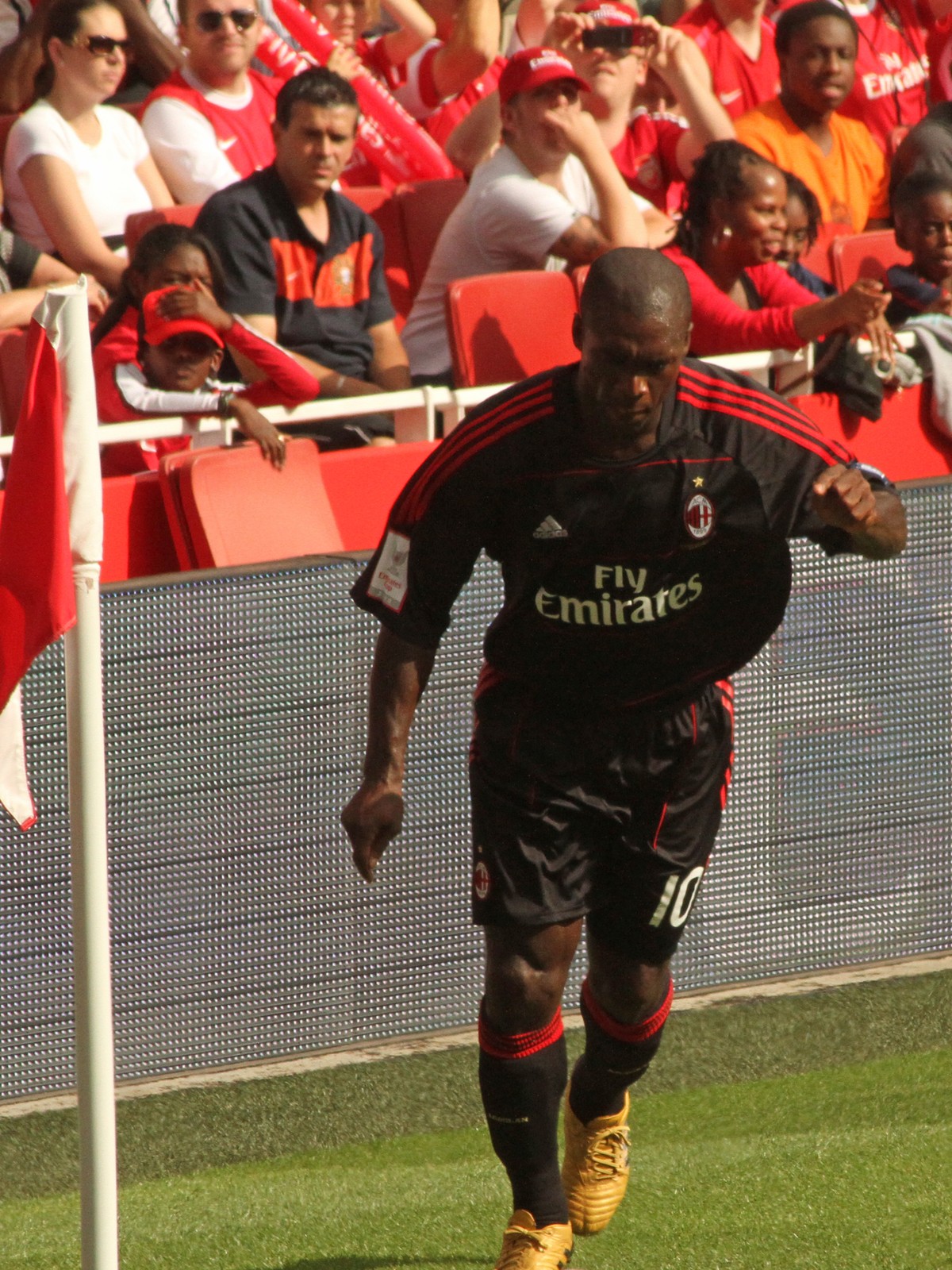
Clarence Seedorf in an AC Milan shirt at the Emirates Cup, 2010. Photo: Ronnie Macdonald / Wikimedia Commons (CC BY 2.0).
Clarence Seedorf is the only footballer to have won the Champions League with three different clubs. Nobody else has even come close to the same itinerary.
He was 19 when he started for Ajax in the 1995 final in Vienna. A late goal from Patrick Kluivert beat Milan 1–0, and Seedorf left Amsterdam that summer as a European champion. Three years later he was in a Real Madrid shirt, starting the 1998 final in Amsterdam itself. Predrag Mijatović scored the only goal, against Juventus, and Madrid had their first European Cup in 32 years.
The last two arrived at Milan. Seedorf started the 2003 final against Juventus at Old Trafford, a 0–0 draw that Milan won on penalties, and he started again in Athens in 2007, when two goals from Filippo Inzaghi beat Liverpool 2–1. Four titles, three clubs, and a midfield career that stitched Ajax, Madrid and Milan into a single, unmatched record.
2. Cristiano Ronaldo — Manchester United, 2008; Real Madrid, 2014, 2016, 2017 and 2018
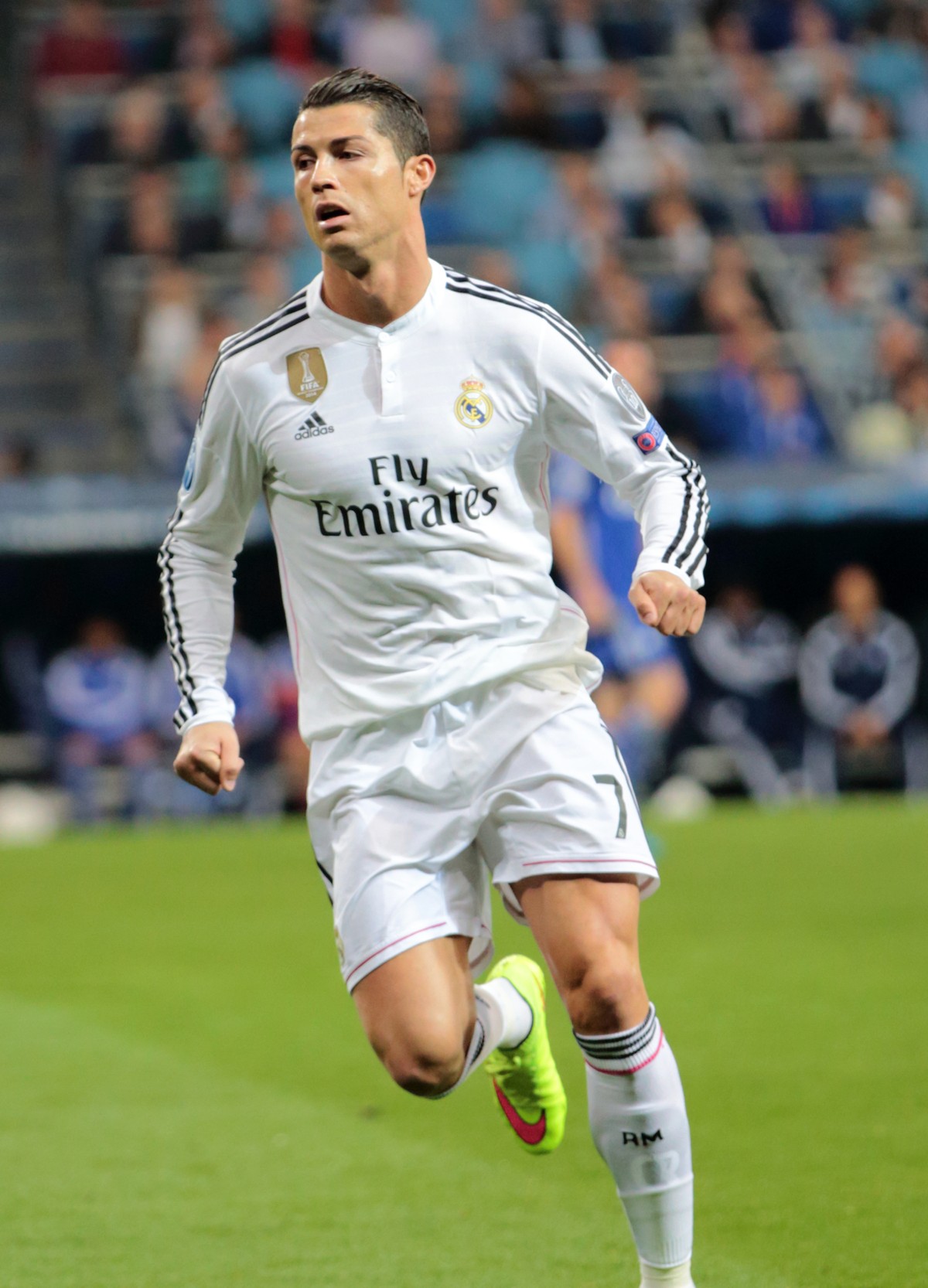
Cristiano Ronaldo in a Real Madrid shirt against Schalke in the Champions League at the Bernabéu, 10 March 2015. Photo: Chris Deahr / Wikimedia Commons (CC BY 2.0).
Cristiano Ronaldo has five Champions League winner’s medals, and they come from two of the biggest dressing rooms in the game.
The first was in Moscow, on 21 May 2008. He headed Manchester United in front against Chelsea, then had his own penalty saved by Petr Čech in the shoot-out. United still won it, 6–5, when Edwin van der Sar kept out Nicolas Anelka. Ronaldo left for Real Madrid a year later.
At the Bernabéu the haul became a collection. He scored the last goal of the 2014 final in Lisbon, a penalty in extra time as Madrid beat Atlético 4–1. He scored in the shoot-out when the same two clubs met again in Milan in 2016, and he scored in the 2017 final in Cardiff, a 4–1 win over Juventus. The fifth medal arrived in Kyiv in 2018, when Madrid beat Liverpool 3–1. Five titles, two clubs, and a record that still sits at the top of the modern game.
3. Toni Kroos — Bayern Munich, 2013; Real Madrid, 2016, 2017, 2018, 2022 and 2024
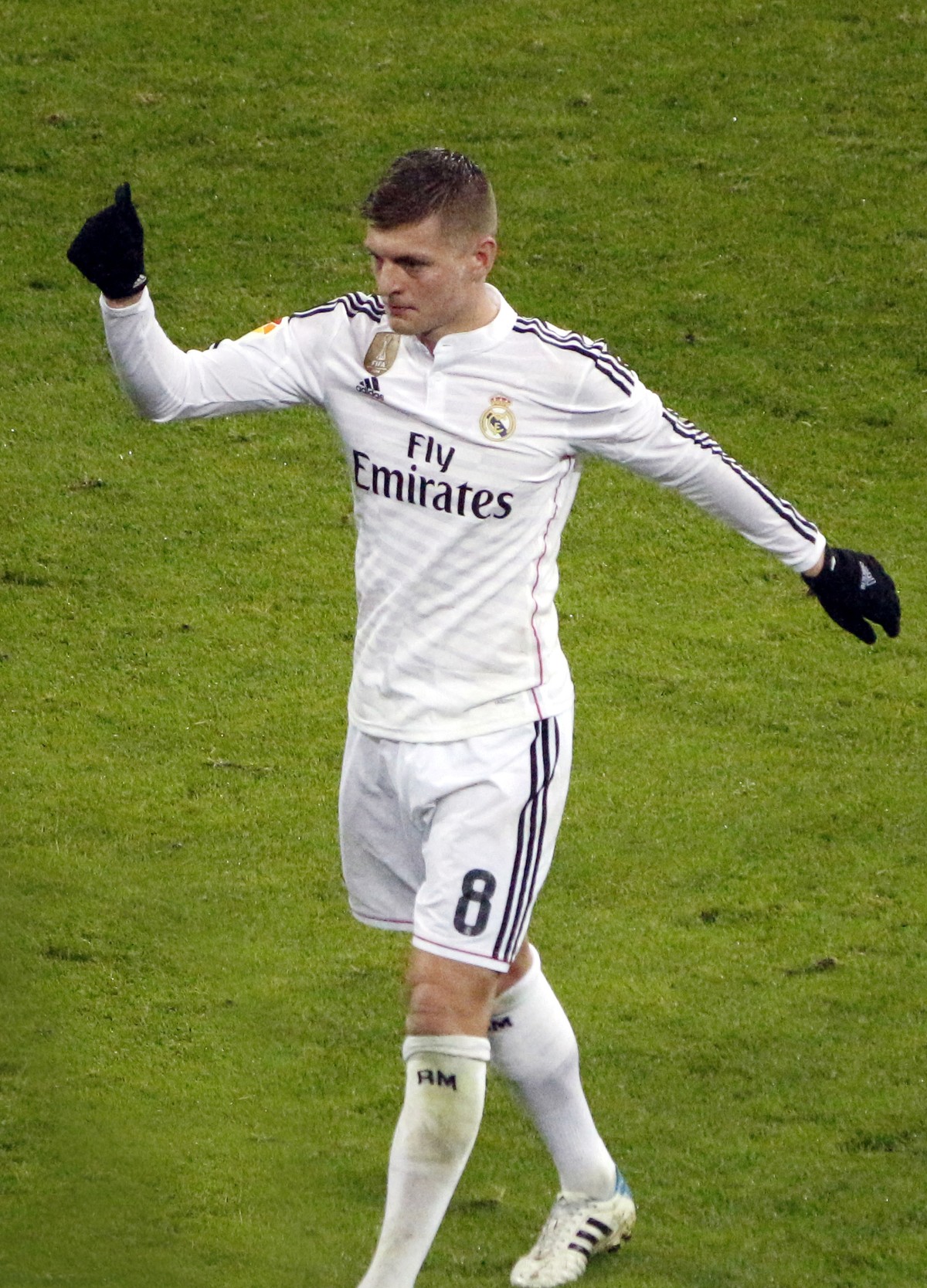
Toni Kroos in a Real Madrid shirt against Atlético Madrid, 2015. Photo: DSanchez17 / Wikimedia Commons (CC BY 3.0).
No one on this list has more Champions League titles than Toni Kroos. He has six, and they are split between Bayern Munich and Real Madrid.
The first came at Wembley on 25 May 2013, when Bayern beat Borussia Dortmund 2–1 in an all-German final. Kroos started in midfield, in a side that also completed a treble. A year later he moved to Madrid, and the rest of his European record was written in white.
He started the finals of 2016, 2017 and 2018, then again in Paris in 2022, when Madrid beat Liverpool 1–0, and once more at Wembley in 2024, a 2–0 win over Dortmund. That was his last match as a professional. He retired with six European Cups, five of them at Madrid, and a passing range that made the midfield look simple from a long way out.
4. Samuel Eto’o — Barcelona, 2006 and 2009; Inter, 2010
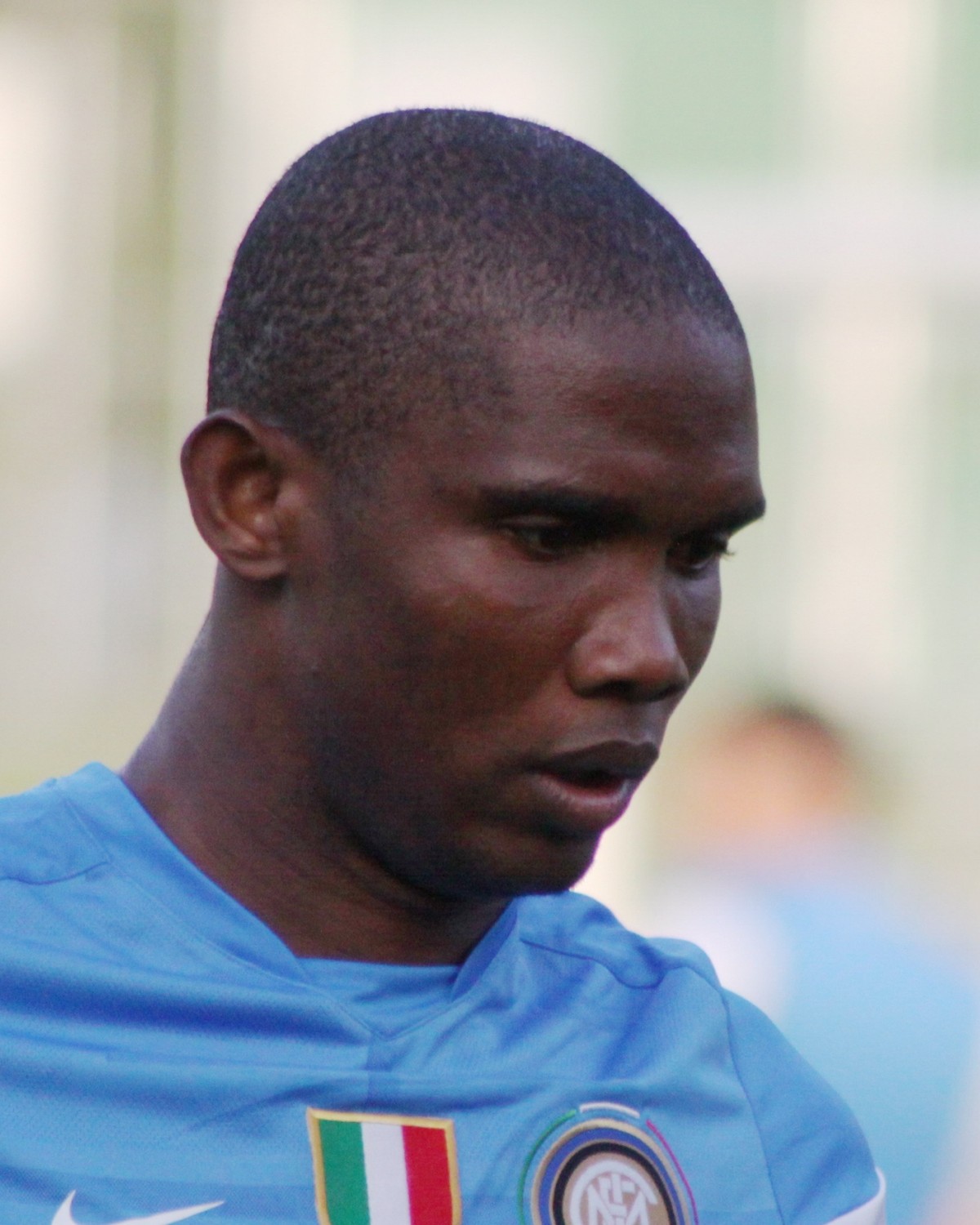
Samuel Eto’o in an Inter shirt in 2009. Photo: Steindy / Wikimedia Commons (CC BY-SA 3.0).
Samuel Eto’o is the only player to have won the treble in consecutive seasons with two different clubs.
He scored in both of Barcelona’s finals in that stretch. In Paris in 2006 he equalised against Arsenal before Belletti’s late winner. In Rome in 2009 he opened the scoring in a 2–0 win over Manchester United. That 2008–09 side won La Liga, the Copa del Rey and the Champions League. Then he moved to Inter.
Twelve months later, in Madrid, he started the 2010 final against Bayern Munich. Diego Milito scored twice, Inter won 2–0, and Eto’o had a second treble in a second shirt. Few forwards have ever timed a transfer quite like that.
5. Gerard Piqué — Manchester United, 2008; Barcelona, 2009, 2011 and 2015
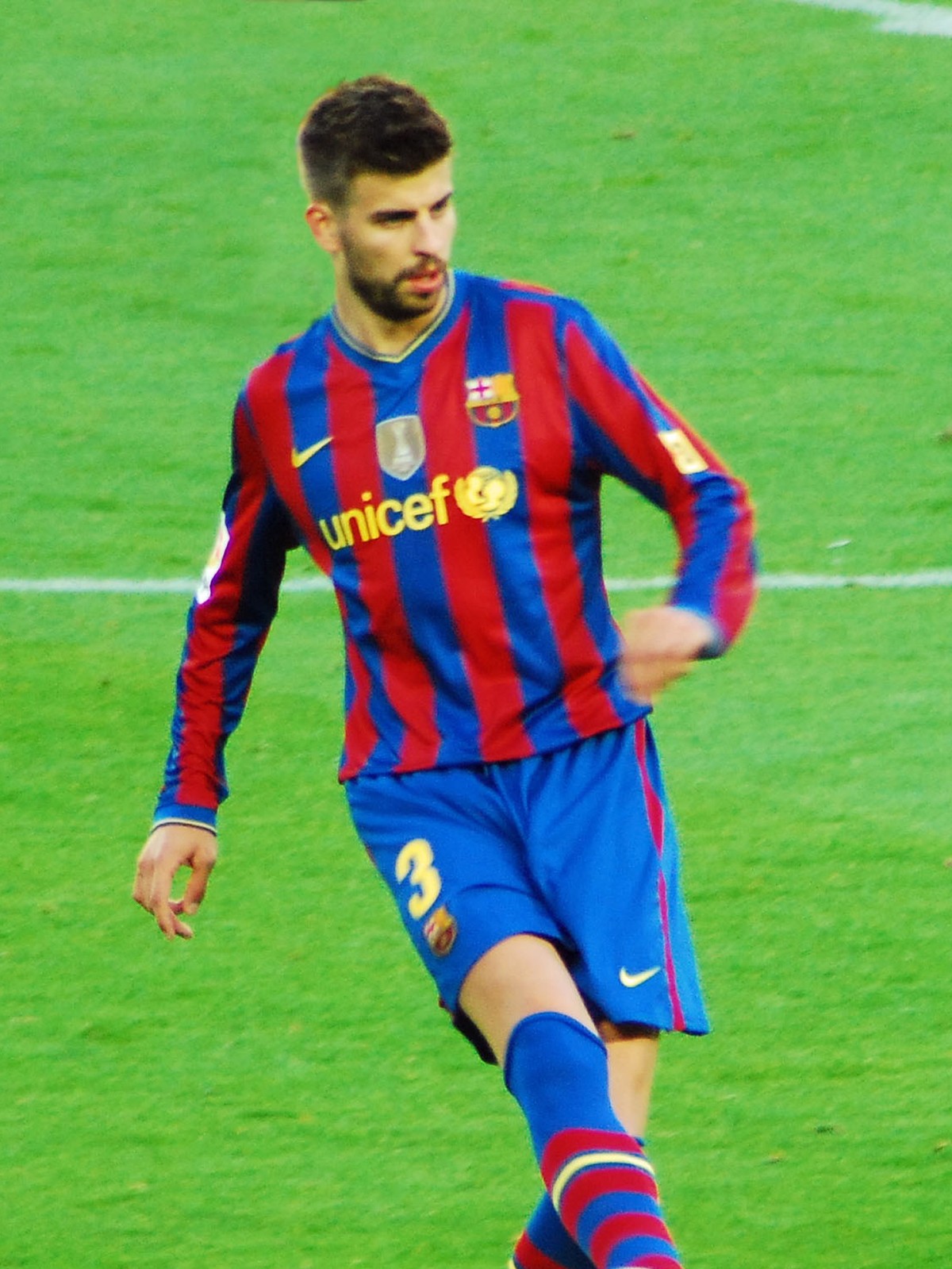
Gerard Piqué in a Barcelona shirt. Photo: Oemar / Wikimedia Commons (CC BY 2.0).
Gerard Piqué left Barcelona’s academy for Manchester United as a teenager, and came home as a European champion.
In 2007–08 he scored in the Champions League quarter-final against Roma and was part of the United squad that beat Chelsea on penalties in Moscow. He returned to Barcelona that summer. The following May, in Rome, he started the final against his former club. Barcelona won 2–0, and Piqué became one of only four players to win the competition in consecutive seasons with two different clubs, alongside Marcel Desailly, Paulo Sousa and Samuel Eto’o.
Two more titles followed, in 2011 and 2015. By the time he retired he had four Champions League medals, three of them in a Barcelona shirt, and a defensive partnership with Carles Puyol that defined a decade at the Camp Nou.
6. David Alaba — Bayern Munich, 2013 and 2020; Real Madrid, 2022 and 2024
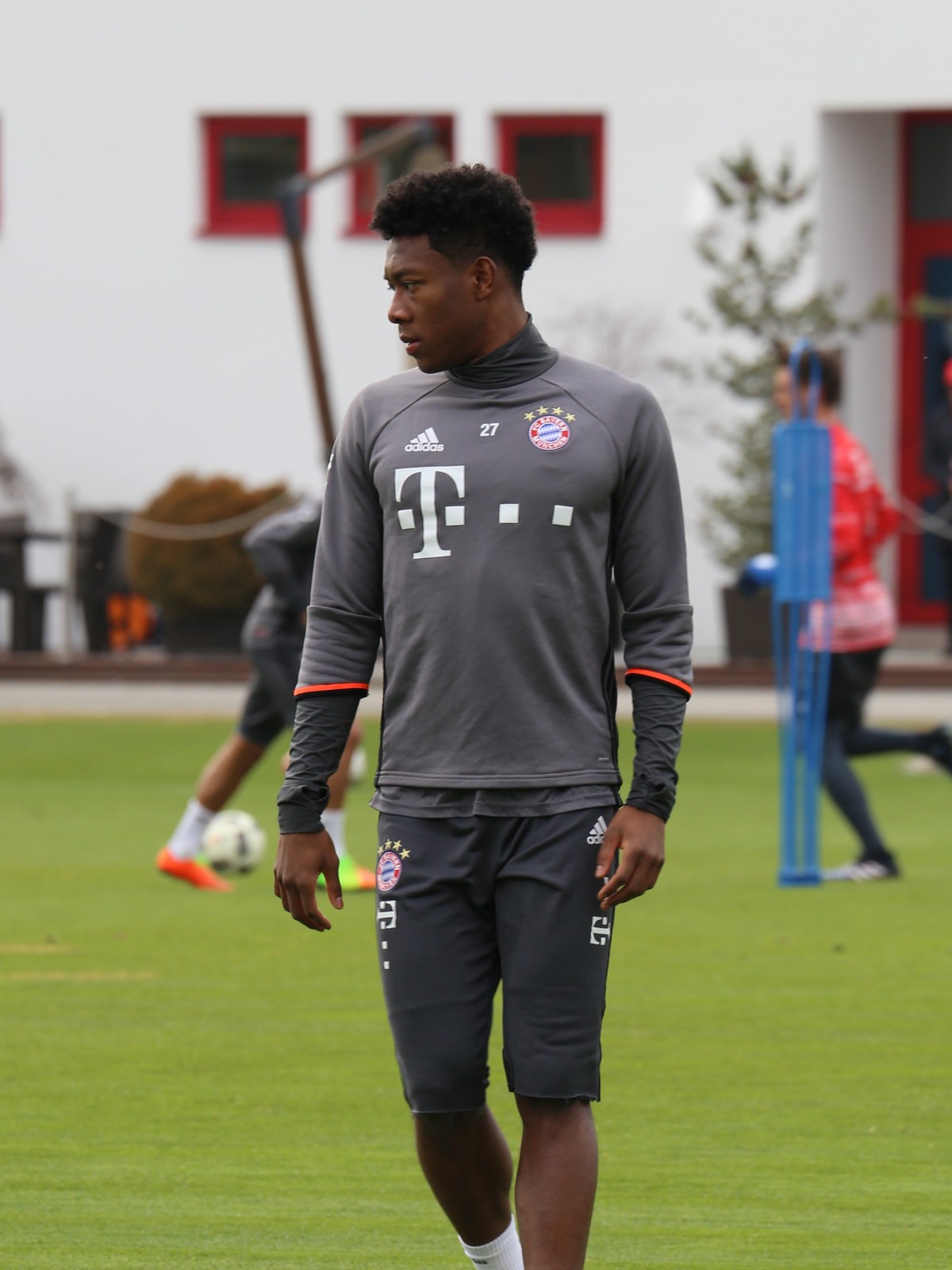
David Alaba at Bayern Munich training, 14 March 2017. Photo: Rufus46 / Wikimedia Commons (CC BY-SA 3.0).
David Alaba has four Champions League medals, split evenly between Bayern Munich and Real Madrid, and he won them as a left-back, a centre-back and, when required, a midfielder.
He was still 20 when he started Bayern’s 2013 final against Dortmund at Wembley. Seven years later, in the delayed 2020 final in Lisbon, he lifted the trophy again after a 1–0 win over Paris Saint-Germain, part of a second treble in Bavaria. He left for Real Madrid in 2021.
The next two arrived in white. Alaba started the 2022 final in Paris, when Vinícius Júnior’s goal beat Liverpool, and he was part of the squad that beat Dortmund 2–0 at Wembley in 2024. Four finals, two clubs, and a career that made versatility look like a plan rather than a compromise.
7. Xabi Alonso — Liverpool, 2005; Real Madrid, 2014
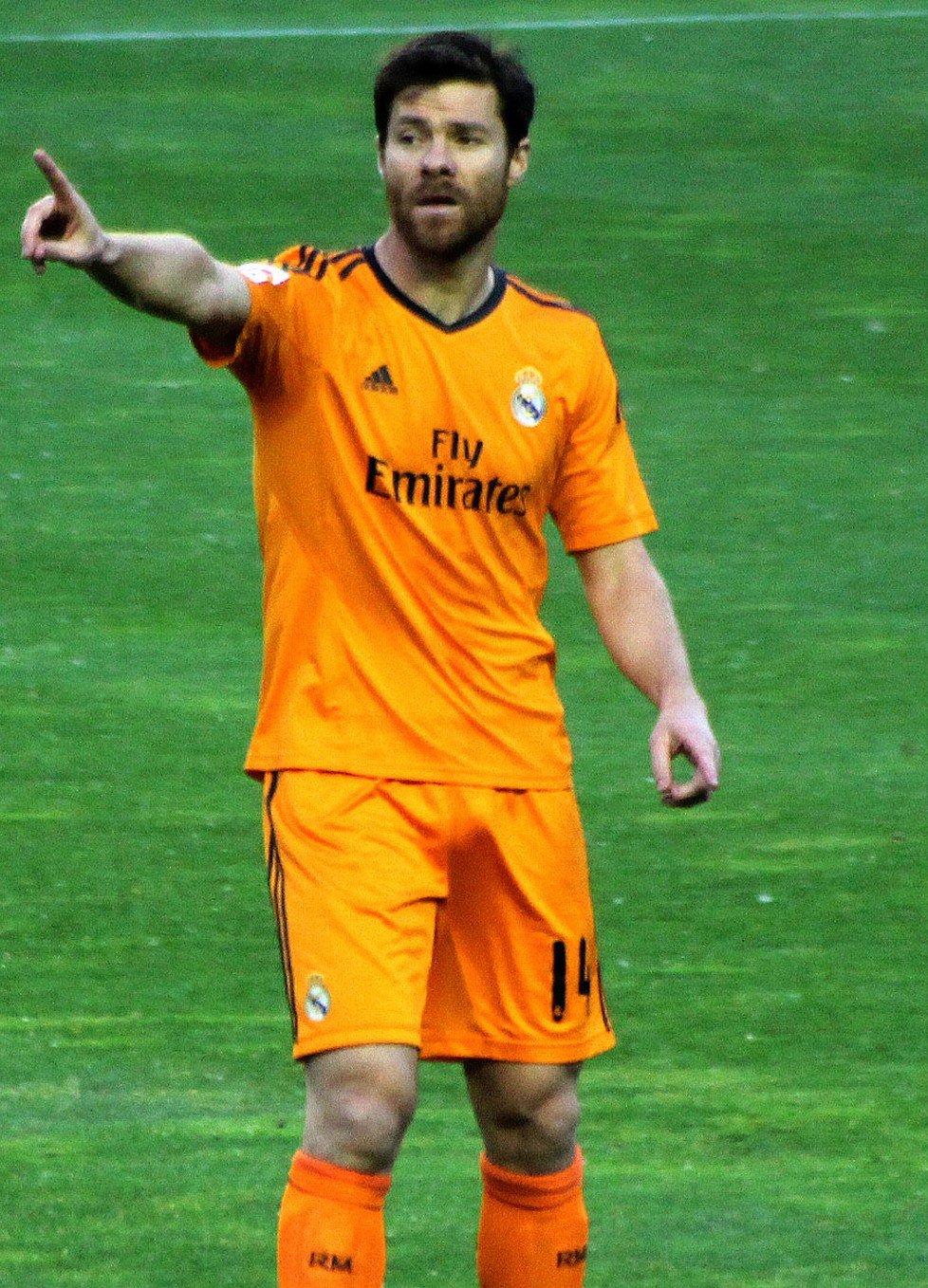
Xabi Alonso in a Real Madrid shirt against Real Valladolid in La Liga, 2014. Photo: rubénortegavega / Wikimedia Commons (CC BY-SA 2.0).
Two finals, nine years apart, and Xabi Alonso was in the middle of both of them.
In Istanbul, on 25 May 2005, Liverpool were 3–0 down to Milan at half-time. Alonso’s penalty, after a save from Dida, made it 3–3 late in normal time. The shoot-out went Liverpool’s way, and a 23-year-old midfielder from San Sebastián had a winner’s medal in the most famous comeback the competition has ever produced.
He later played for Liverpool’s rivals at Real Madrid. In the 2014 final in Lisbon he started in midfield as Madrid came from behind to beat Atlético 4–1 after extra time, the club’s tenth European Cup. Istanbul and Lisbon, red and white: the same player, the same tournament, two completely different nights.
8. Edwin van der Sar — Ajax, 1995; Manchester United, 2008
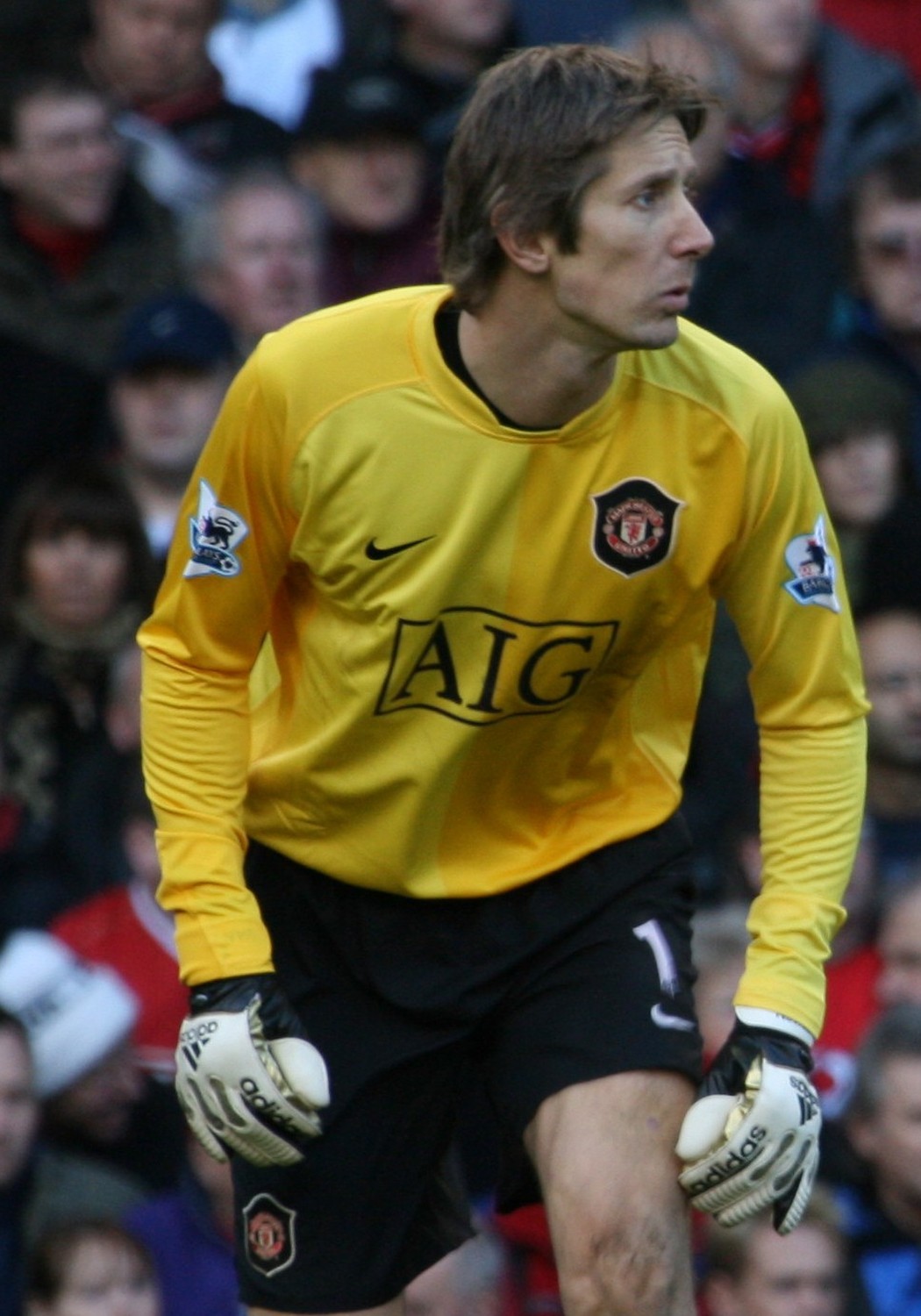
Edwin van der Sar in a Manchester United shirt. Photo: Austin Osuide / Wikimedia Commons (CC BY 2.0).
The gap between Edwin van der Sar’s two Champions League titles was 13 years, which was the longest on this list until Scott Carson stretched it further still.
He started the 1995 final in Vienna, keeping a clean sheet as Ajax beat Milan 1–0. He was already a tall, composed presence in a young Ajax side that also included Seedorf, the de Boer brothers and a teenage Kluivert. Then came Juventus, Fulham, and, in 2005, Manchester United.
On 21 May 2008, in a rain-soaked final in Moscow, he started in goal against Chelsea. The match went to penalties. After Ronaldo had missed, van der Sar dived to his right and saved from Anelka. United were champions, and the Dutchman had a second medal, 13 years after the first, in a different country and a different shirt.
9. Deco — Porto, 2004; Barcelona, 2006
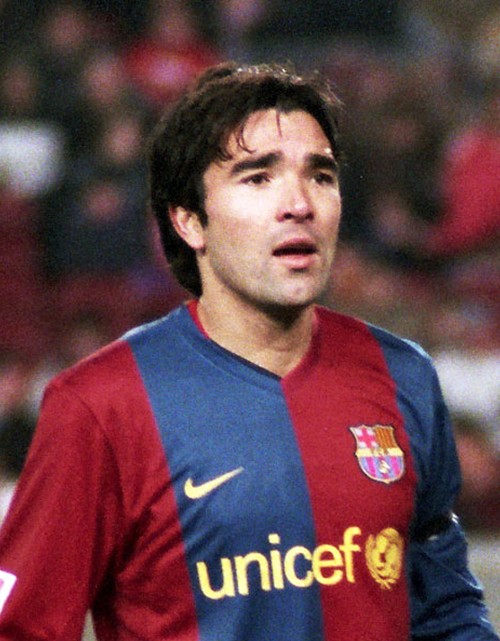
Deco in a Barcelona shirt against Atlético Madrid, 21 December 2006. Photo: Darz Mol / Wikimedia Commons (CC BY-SA 2.5).
Deco won the Champions League twice in three seasons, with two different Portuguese-speaking dressing rooms, and he was the midfield brain of both sides.
In 2004 he was the playmaker of José Mourinho’s Porto, who beat Monaco 3–0 in the final in Gelsenkirchen. Deco was named UEFA Club Footballer of the Year that season. A year later he joined Barcelona, and in May 2006 he started the final against Arsenal in Paris. Barcelona came from behind to win 2–1.
Two medals, two clubs, and a career that is easy to undersell if you only remember the later years at Chelsea. For a stretch in the mid-2000s, Deco was as important to a European champion as anyone on the pitch.
10. Marcel Desailly — Marseille, 1993; Milan, 1994
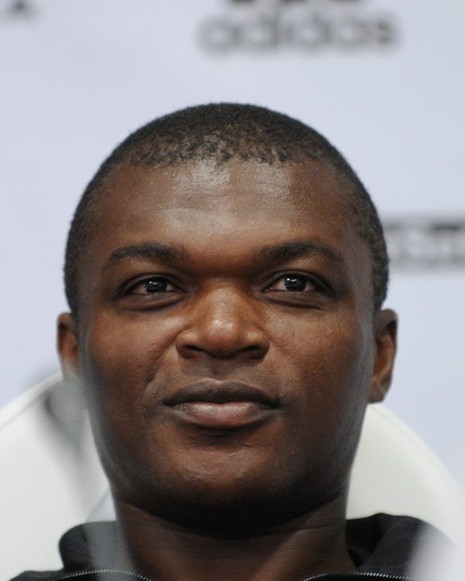
Marcel Desailly in 2011. Photo: Ilya Khokhlov / Wikimedia Commons (CC BY-SA 3.0).
Marcel Desailly was the first player to win the Champions League, in its new guise, with two different clubs, and he did it in consecutive seasons.
On 26 May 1993, in Munich, he started in midfield as Marseille beat Milan 1–0, with a header from Basile Boli. It was the first final of the rebranded Champions League, and the first European Cup won by a French club. A year later Desailly had joined Milan themselves.
On 18 May 1994, in Athens, he started in defence as Milan dismantled Barcelona 4–0. Fabio Capello’s side were ruthless, and Desailly already had a second medal in a second shirt. He later won the World Cup and the Euros with France. The European record was already complete by the time he arrived in England.
11. Didier Deschamps — Marseille, 1993; Juventus, 1996
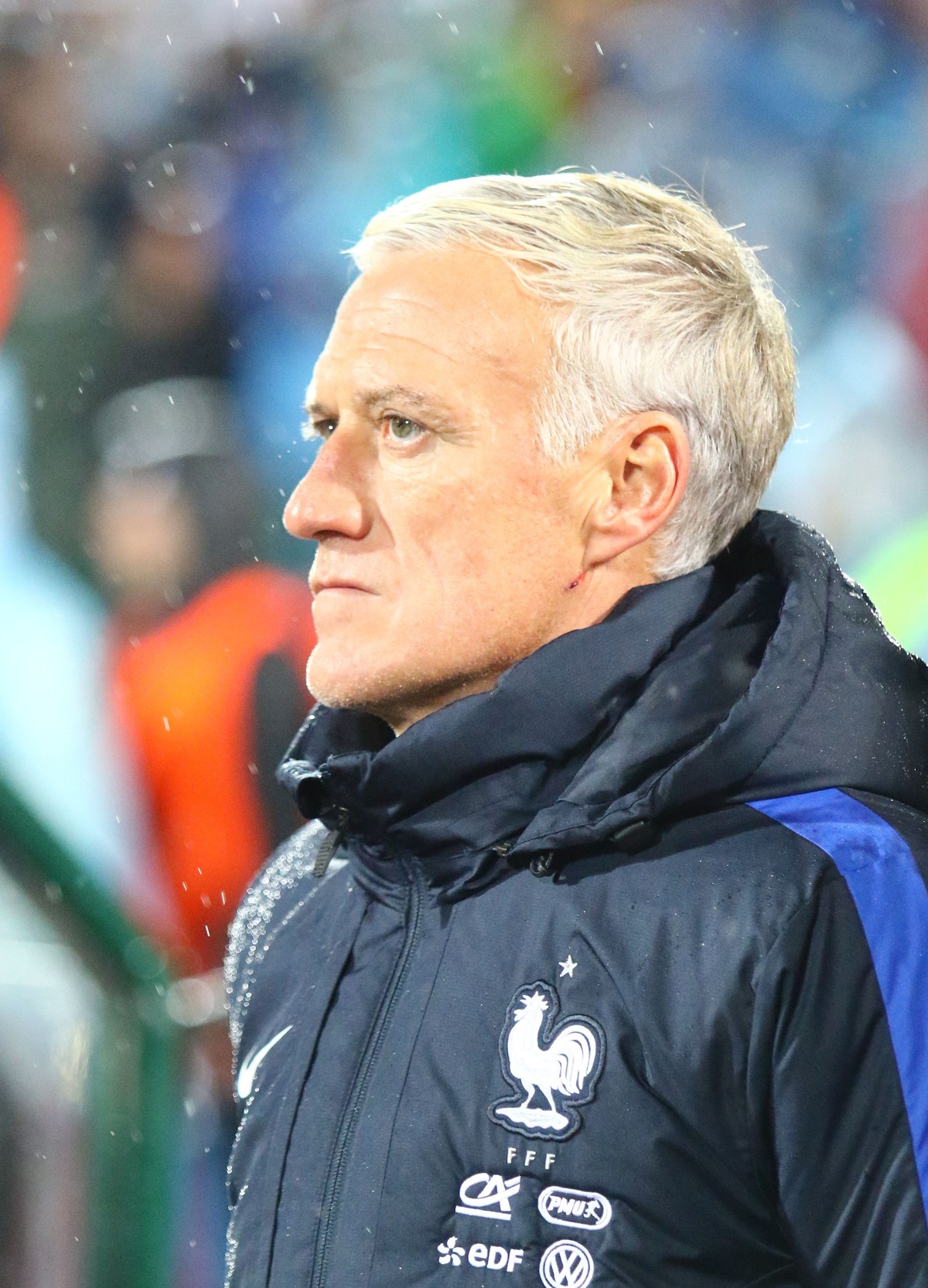
Didier Deschamps as France manager in 2017. Photo: Biser Todorov / Wikimedia Commons (CC BY 4.0).
The midfield partner from that Marseille side did it too, with a short detour in between.
Didier Deschamps started the 1993 final in Munich, then moved to Juventus. On 22 May 1996, in Rome, he started again as Juventus drew 1–1 with Ajax and won the shoot-out 4–2. Two clubs, two medals, and a midfield career built on positioning rather than decoration.
He later captained France to the 1998 World Cup and to Euro 2000, and then, as a manager, won the World Cup again in 2018. The club medals came first, and they came in two different shirts, three years apart.
12. Ronald Koeman — PSV, 1988; Barcelona, 1992
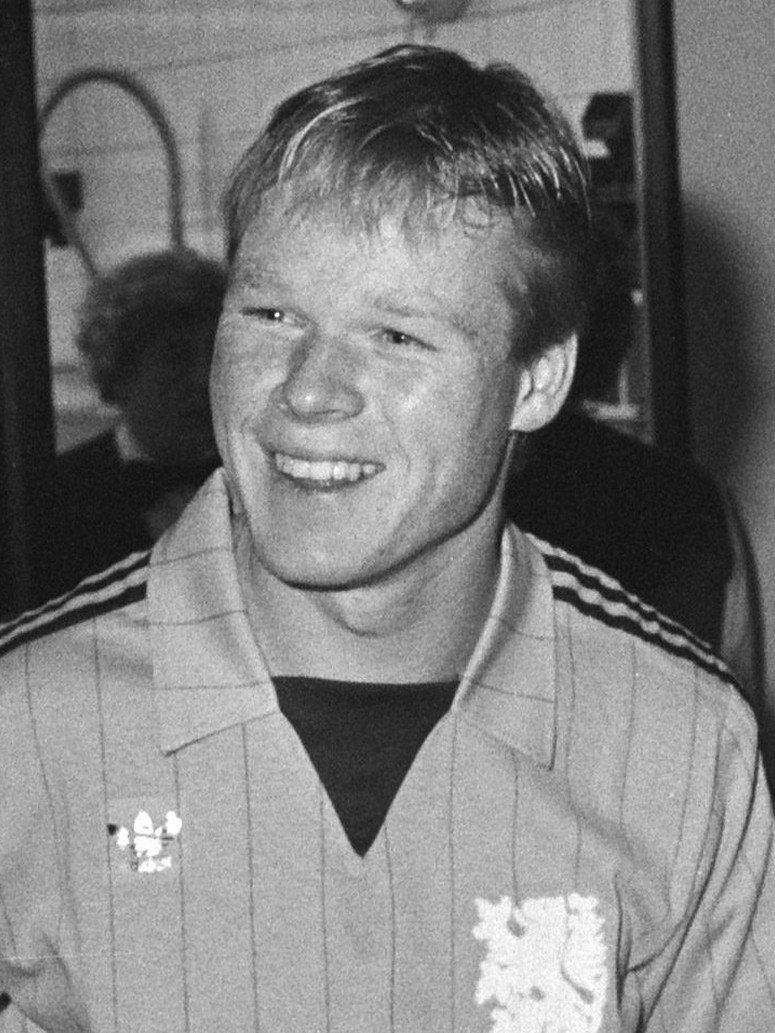
Ronald Koeman with the Netherlands in 1983. Photo: Marcel Antonisse / Anefo (CC0).
Most players on this list collected a medal. Ronald Koeman scored the goal that decided one of the finals.
The first title arrived in Stuttgart on 25 May 1988, when PSV beat Benfica 0–0 after extra time and won on penalties. Koeman, already a composed sweeper with a heavy shot, was part of that side. Four years later he was at Barcelona, in Johan Cruyff’s Dream Team, and the final was at Wembley.
On 20 May 1992, against Sampdoria, the match was still goalless in extra time. Koeman struck a free-kick from more than 20 yards and beat Gianluca Pagliuca. Barcelona had their first European Cup. A defender had won it twice, with two clubs, and had written his name across the second one.
13. Frank Rijkaard — Milan, 1989 and 1990; Ajax, 1995
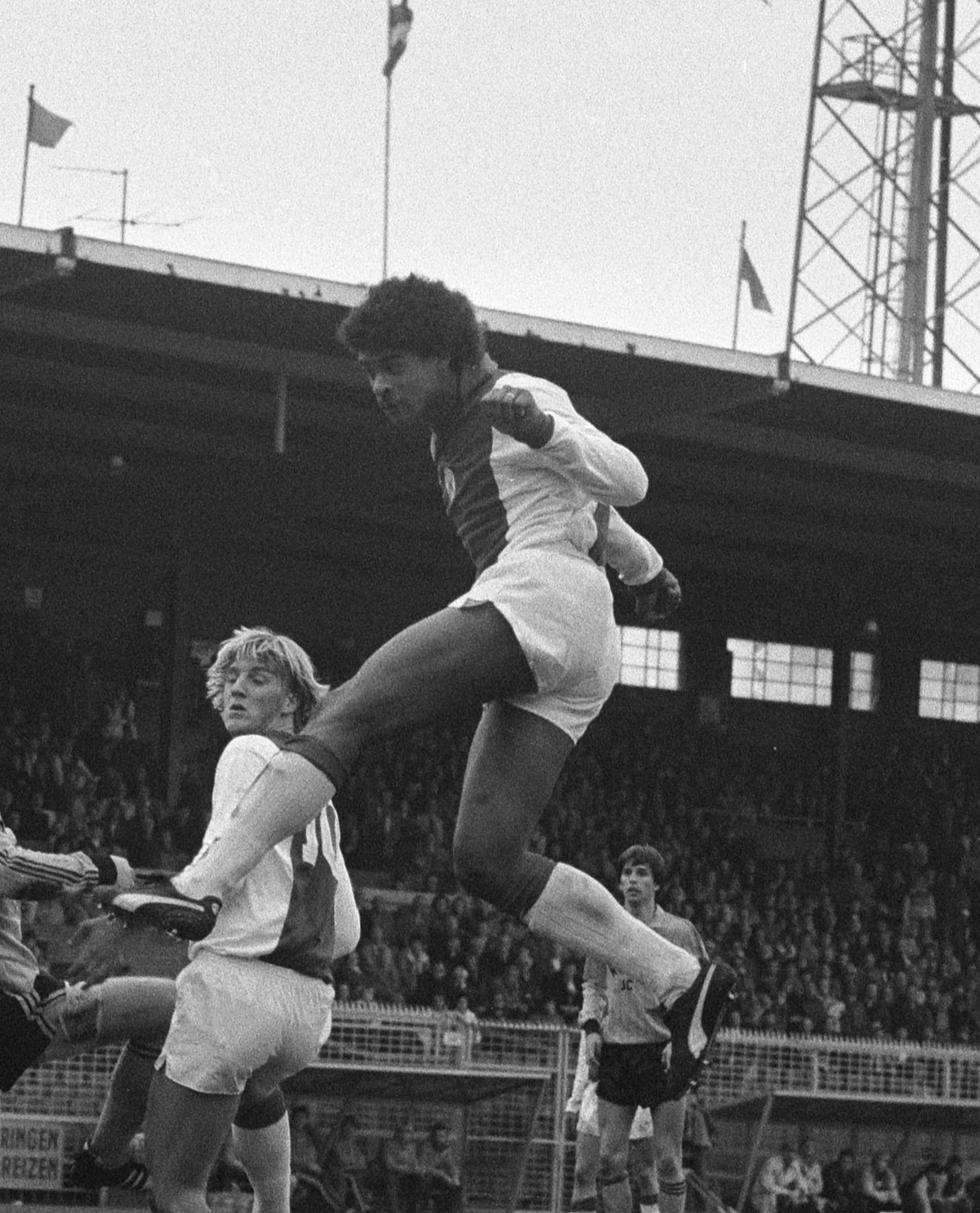
Frank Rijkaard heading a goal for Ajax against Roda JC. Photo: Rob Croes / Anefo (CC0).
Frank Rijkaard won the European Cup with the two clubs that defined his career, and he scored in one of the finals.
At Milan he was the midfield enforcer alongside Ruud Gullit and Marco van Basten. He started the 1989 final, a 4–0 win over Steaua Bucharest in Barcelona, and he started again in Vienna a year later. That night, against Benfica, he scored the only goal. Two European Cups, back to back, in the same shirt.
Then he went home. In 1995, as a veteran in Louis van Gaal’s young Ajax side, he won it a third time, 1–0 against his former club Milan in Vienna. The medal was his third, the shirt was different, and the opponent was the team with which he had already done it twice.
14. Miodrag Belodedici — Steaua Bucharest, 1986; Red Star Belgrade, 1991
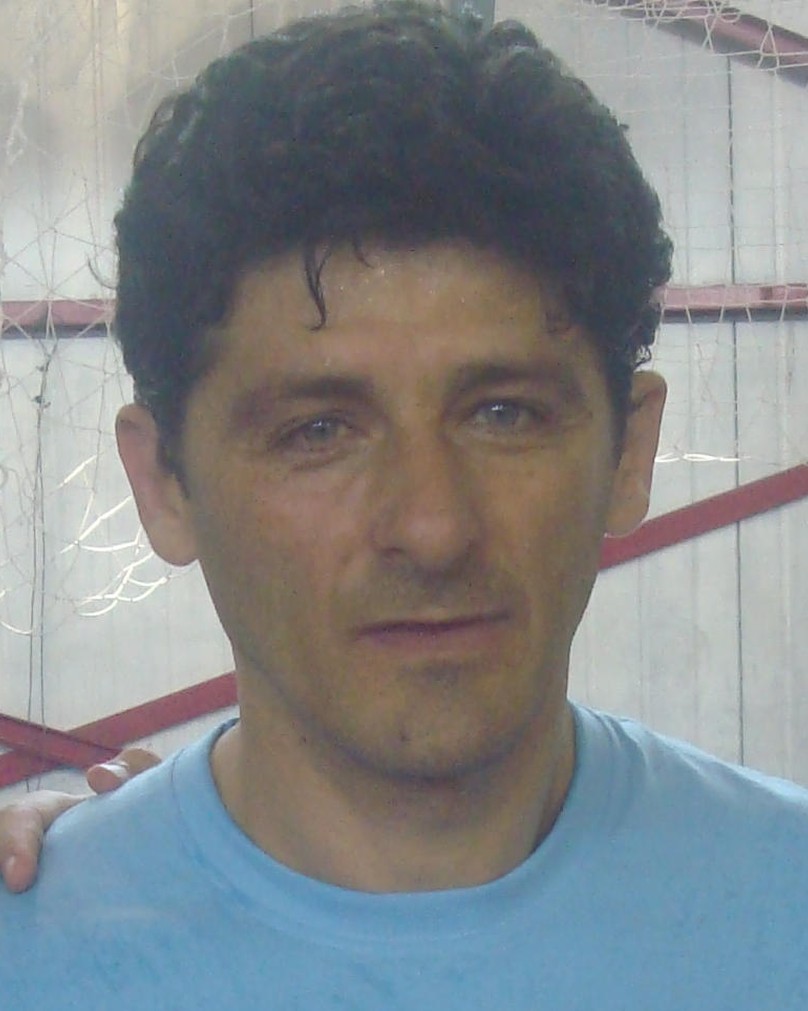
Miodrag Belodedici in 2010. Photo: Razvanflorian / Wikimedia Commons (public domain).
Miodrag Belodedici’s path between his two European Cups is unlike anyone else’s on this list.
The Romanian libero, nicknamed the Deer for the way he moved, started the 1986 final in Seville. Steaua Bucharest drew 0–0 with Barcelona and won on penalties, after Helmuth Duckadam saved all four of Barcelona’s kicks. It was the first European Cup won by a side from the Eastern Bloc. Two years later Belodedici fled Romania, crossing into Yugoslavia, and was sentenced in absentia to ten years in prison for treason.
He joined Red Star Belgrade, and on 29 May 1991, in Bari, he started another final. Red Star drew 0–0 with Marseille and won on penalties. Belodedici had played in and won two European Cup finals with two different clubs, a first at the time, and he had done it after being declared an enemy of the state he had left behind.
15. Achraf Hakimi — Real Madrid, 2018; Paris Saint-Germain, 2025 and 2026
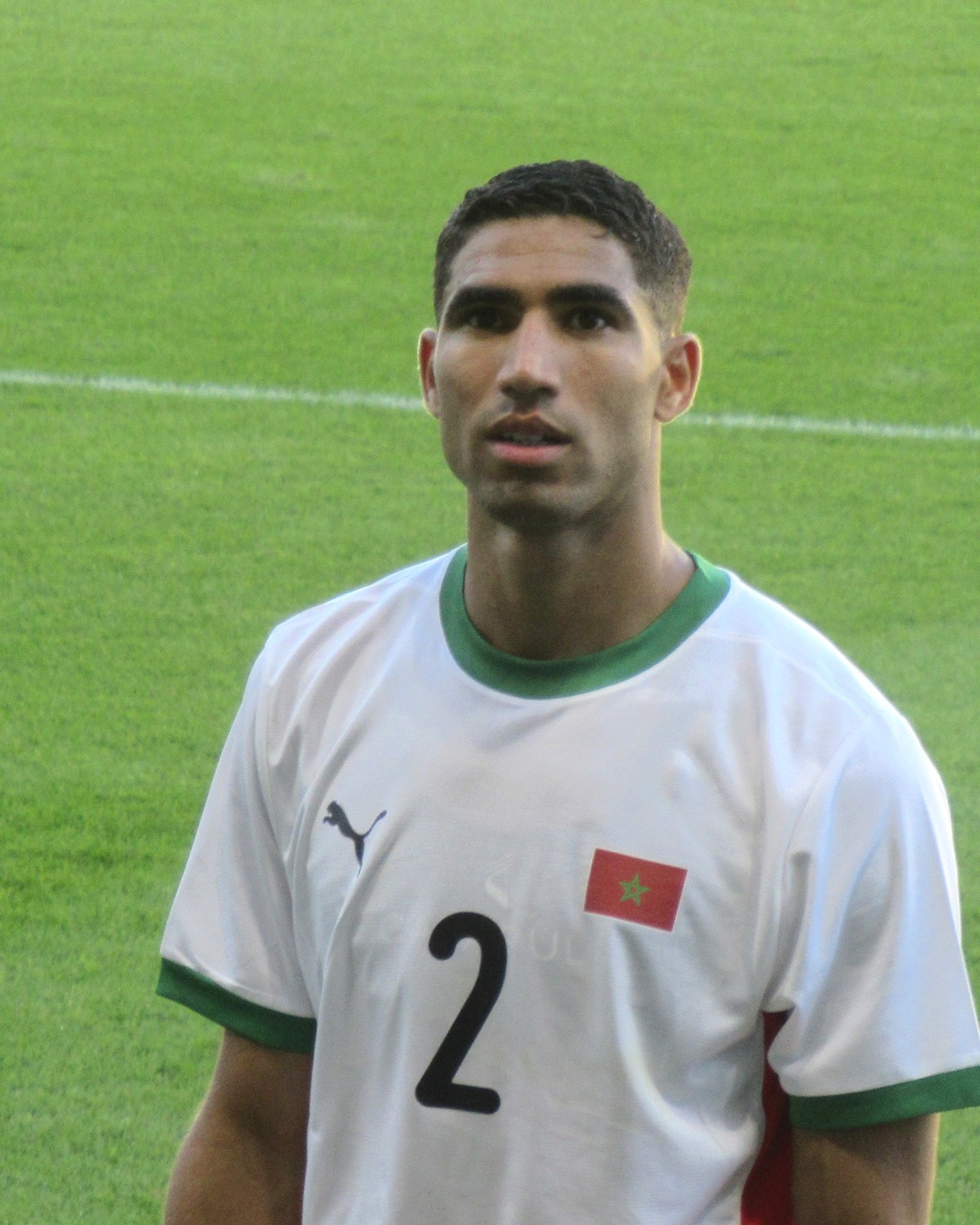
Achraf Hakimi in a Morocco shirt at the 2024 Olympic football tournament. Photo: MFonzatti / Wikimedia Commons (CC BY-SA 4.0).
Achraf Hakimi’s first Champions League medal arrived when he was still a teenager on the edge of Real Madrid’s first team.
In 2017–18 he started two group-stage matches against Tottenham Hotspur, at the Bernabéu and at Wembley. He was not in the matchday squad for the final in Kyiv, when Madrid beat Liverpool 3–1, but he was officially part of the winning campaign. Loans at Dortmund and a move to Inter followed, then Paris Saint-Germain.
On 31 May 2025, in Munich, he scored the opening goal of the final as Paris beat Inter 5–0, the club’s first European Cup, and the biggest winning margin in a final. A year later, on 30 May 2026 in Budapest, Paris retained the trophy, drawing 1–1 with Arsenal and winning 4–3 on penalties. Three medals, two clubs, and a right-back who had gone from a cameo in Madrid’s last great run to scoring in Paris’s first.
16. Lucas Hernández — Bayern Munich, 2020; Paris Saint-Germain, 2025 and 2026
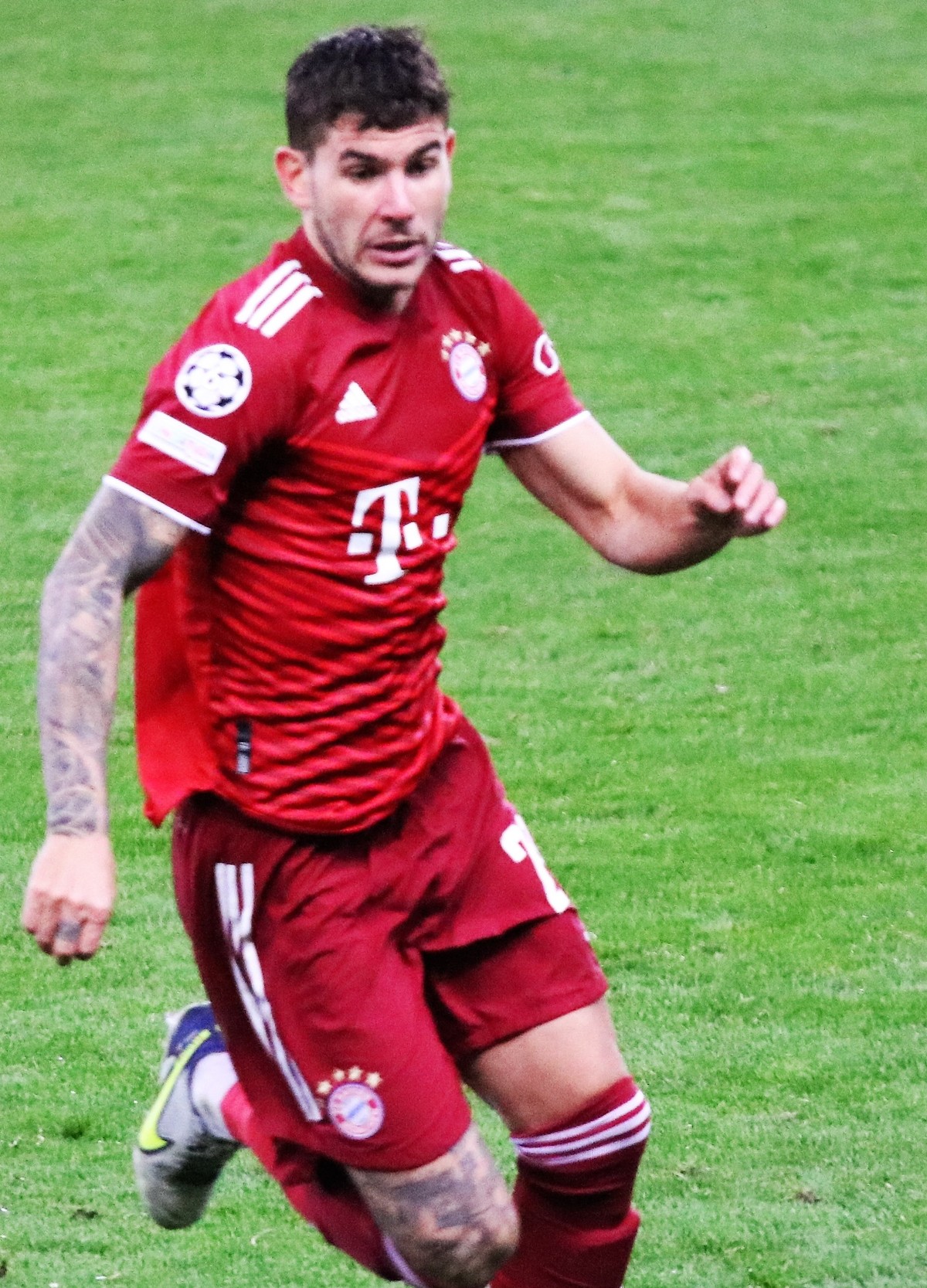
Lucas Hernández in a Bayern Munich shirt in the Champions League, 2022. Photo: Werner100359 / Wikimedia Commons (CC BY-SA 4.0).
Lucas Hernández has followed a similar route, just from the other side of that 2020 final.
He joined Bayern Munich in 2019, after reaching a Champions League final with Atlético Madrid in 2016 and losing it. In his first season in Bavaria the club completed a treble. On 23 August 2020, in Lisbon, Bayern beat Paris Saint-Germain 1–0, and Hernández had the medal he had missed in Milan four years earlier.
In 2023 he signed for Paris themselves. In 2025 he won the Champions League again, this time in a Paris shirt, as part of a second career treble, and in 2026 he was part of the side that retained the trophy against Arsenal in Budapest. Bayern and Paris, the two clubs that met in Lisbon, and a centre-back who ended up with a medal from both.
17. Scott Carson — Liverpool, 2005; Manchester City, 2023

Scott Carson warming up for Aston Villa against Fulham, 25 August 2007. Photo: Gunsnroses15 / Wikimedia Commons (public domain).
Scott Carson has two Champions League winner’s medals and has never played a minute in a Champions League final. The gap between them is 18 years, the longest of anyone on this list.
In 2005 he was a 19-year-old backup at Liverpool, behind Jerzy Dudek, when the club came from 3–0 down to beat Milan in Istanbul. He did not play in the final. In 2023 he was a 37-year-old third-choice goalkeeper at Manchester City, behind Ederson, when City beat Inter 1–0 in Istanbul again. He did not play in that final either.
Two medals, two English clubs, two nights in the same city, and not a minute on the pitch in either final. The official list still includes him, and the gap between the two wins is the one that finally overtook van der Sar.
18. Mateo Kovačić — Real Madrid, 2016, 2017 and 2018; Chelsea, 2021
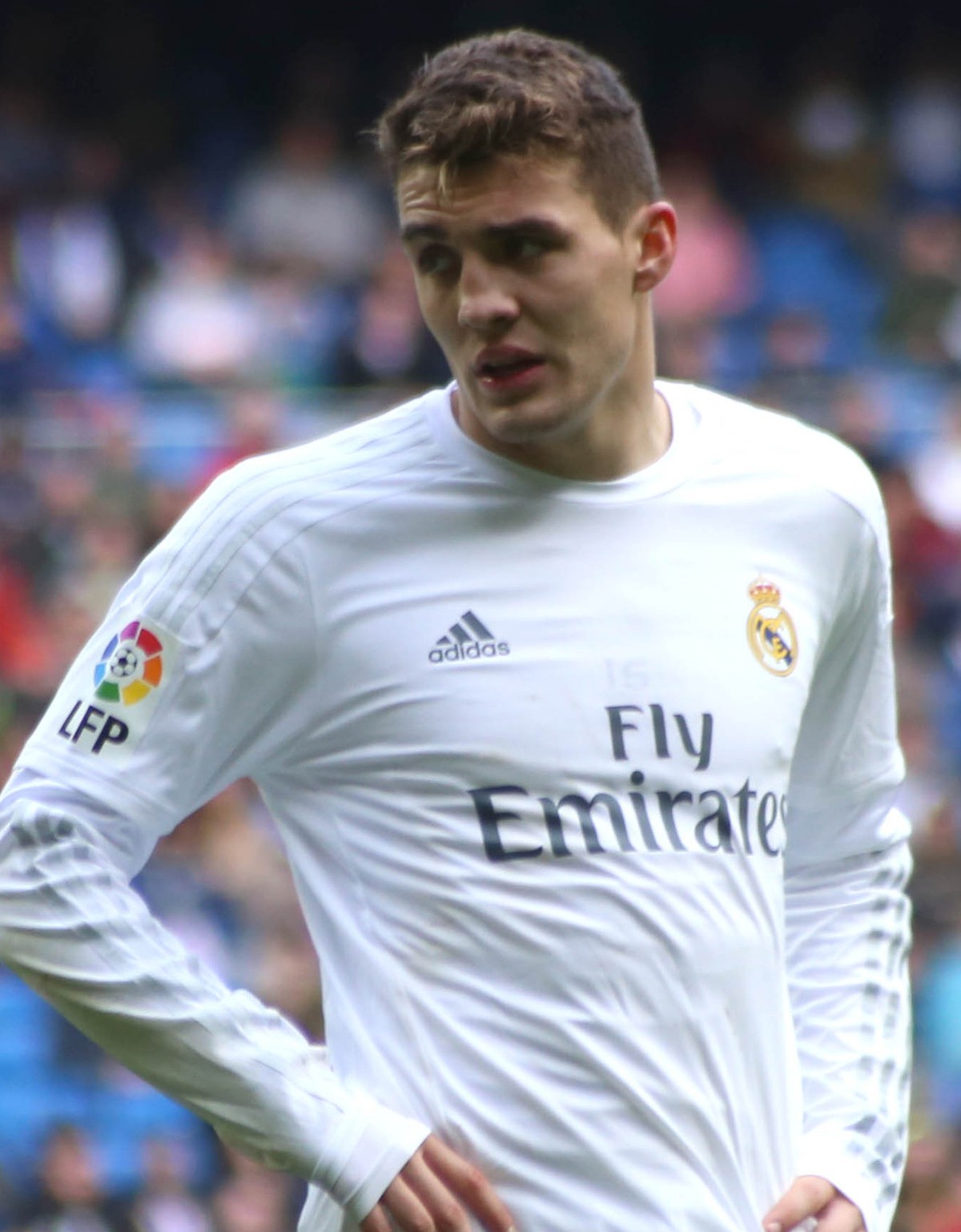
Mateo Kovačić in a Real Madrid shirt. Photo: Ruben Ortega / Wikimedia Commons (CC BY-SA 4.0).
Mateo Kovačić collected three Champions League medals as a squad midfielder at Real Madrid, then added a fourth in a Chelsea shirt when he was finally a starter on the biggest night.
He joined Madrid in 2015 and was part of the sides that won in 2016, 2017 and 2018, often used from the bench in a midfield that already contained Kroos, Luka Modrić and Casemiro. The medals were real. The role was limited.
Chelsea signed him in 2018, initially on loan, and by 2021 he was a regular under Thomas Tuchel. He did not start the final in Porto on 29 May, but he came on for Mason Mount in the 80th minute, as Chelsea beat Manchester City 1–0. A fourth title, a second club, and a night when the medal finally arrived in a dressing room he truly belonged to, even if his own contribution came late.
19. Antonio Rüdiger — Chelsea, 2021; Real Madrid, 2024
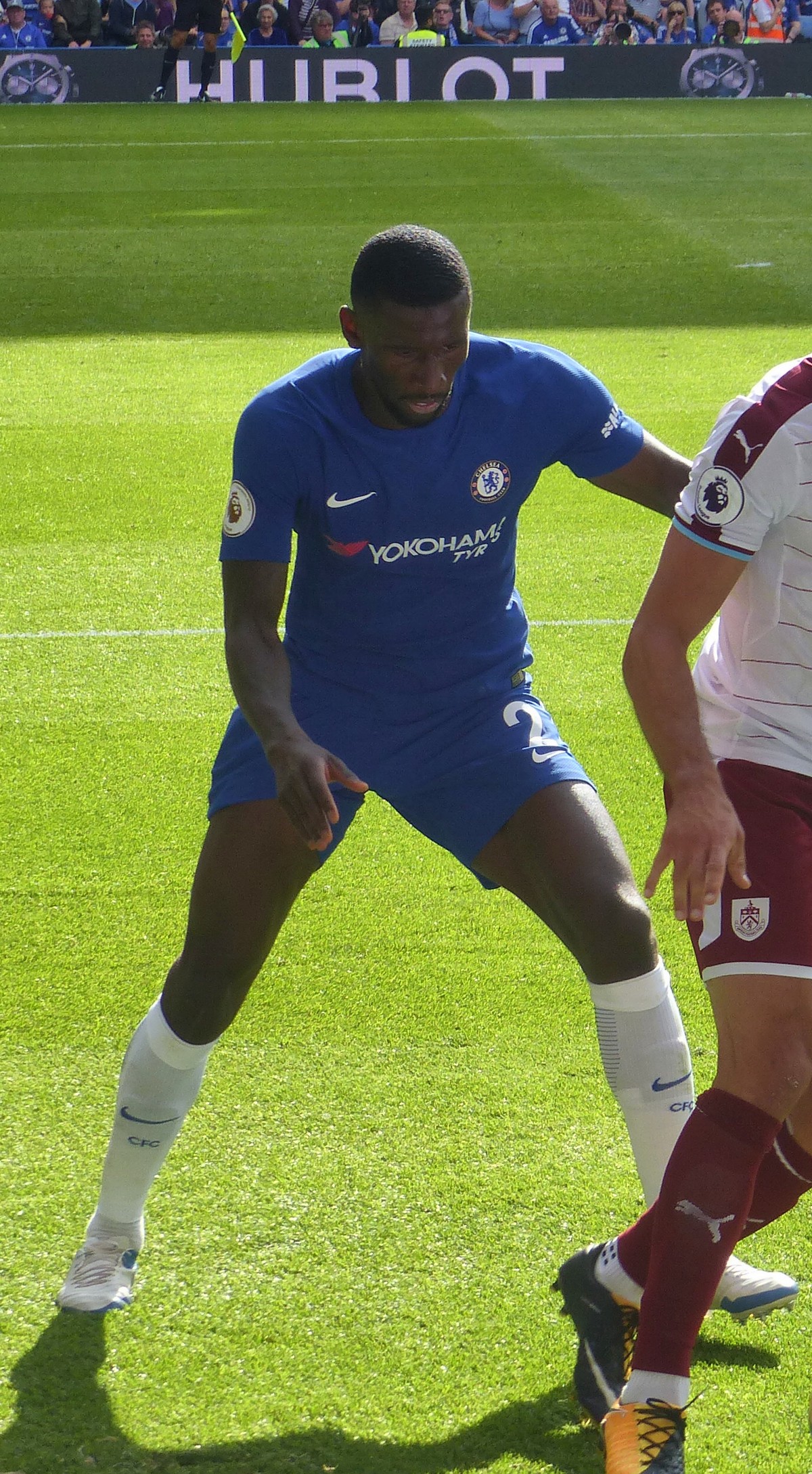
Antonio Rüdiger in a Chelsea shirt against Burnley, August 2017. Photo: Brian Minkoff / Wikimedia Commons (CC BY-SA 4.0).
Antonio Rüdiger started both of his Champions League finals, in two different central defences, three years apart.
The first was in Porto, on 29 May 2021, when he was part of Chelsea’s back three in the win over Manchester City. He left Stamford Bridge on a free transfer the following summer, after the 2022 final had already been played. He joined Real Madrid in June 2022, too late for that year’s triumph in Paris, and had to wait.
The wait ended at Wembley on 1 June 2024. Rüdiger started as Madrid beat Dortmund 2–0, and a defender who had already won it in a Chelsea shirt had a second medal in white. He was not a 2022 winner, however often the two Madrid eras get blurred together. The second title is 2024, and it is the one that puts him on this list.
20. Paulo Sousa — Juventus, 1996; Borussia Dortmund, 1997
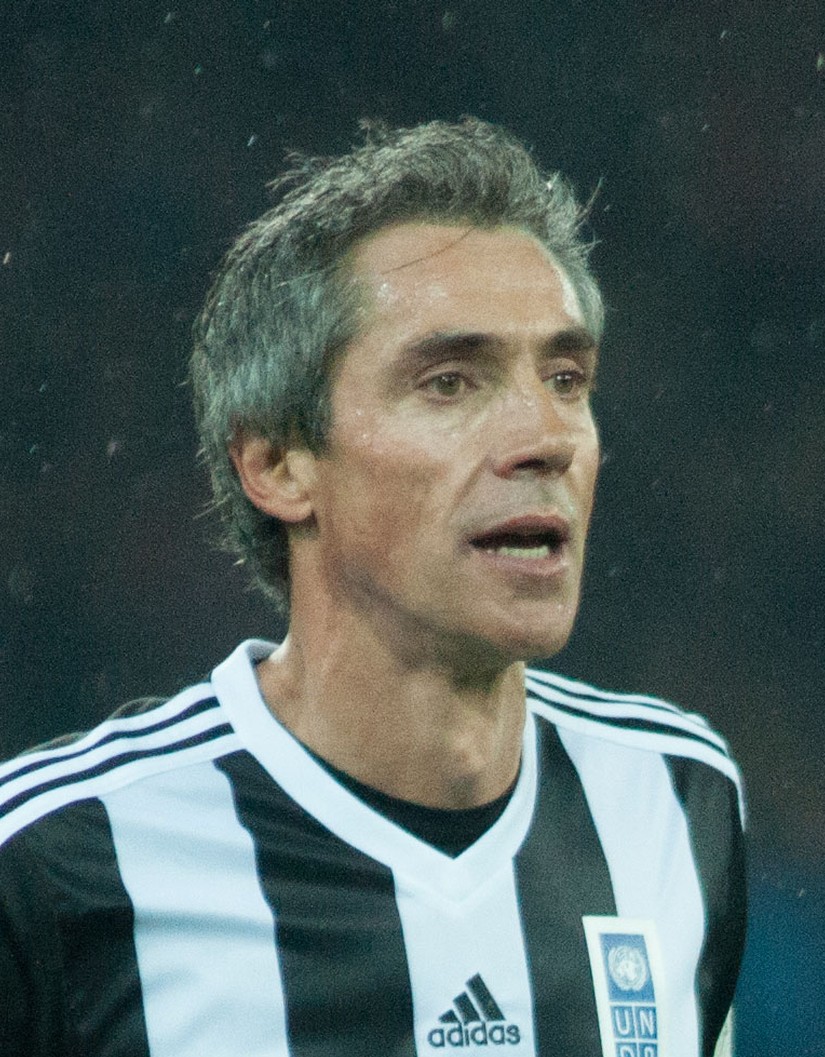
Paulo Sousa in the Football Against Poverty match in Bern, 4 March 2014. Photo: Ludovic Péron / Wikimedia Commons (CC BY-SA 3.0).
Paulo Sousa’s two medals came in consecutive seasons, and the second one came against the club that had given him the first.
He started the 1996 final in Rome, when Juventus beat Ajax on penalties. A year later he was at Borussia Dortmund. On 28 May 1997, in Munich, Dortmund faced Juventus in the final. Sousa started in midfield against his former teammates, and Dortmund won 3–1, with two goals from Karl-Heinz Riedle and one from a young substitute, Lars Ricken.
It is one of the strangest entries on the list: a midfielder who won the Champions League, changed clubs, and then beat the holders in the next final. Only Desailly, Piqué and Eto’o have also won it in consecutive seasons with two different clubs. Sousa is the one who had to do it the hard way, against the side he had just left.
The Same Medal, a Different Shirt
Some of these careers are defined by a single, obvious crossing: Seedorf’s three clubs, Eto’o’s back-to-back trebles, Koeman’s free-kick, Belodedici’s two finals on either side of a treason sentence. Others are quieter. Carson never played in a final. Hakimi’s first medal came from two group games as a teenager. Rüdiger had to wait an extra year at Madrid before the second one arrived.
In GuessBaller’s daily game, one of the clues is whether a retired footballer won the Champions League. When that tile lights up, it does not tell you how many shirts were involved. A yes can mean Ajax and Milan, or Porto and Barcelona, or Liverpool in Istanbul and Madrid in Lisbon.
It is also a reminder that a famous career can still be missing the medal entirely. That other list is 20 famous footballers who never won the Champions League, and it is full of names who came closer than you think, or never came close at all.
You can start the daily game, try practice mode, or switch to Football Wordle and Guess the Footballer. If you want to check whether two of these winners ever shared a dressing room, you can look them up in Did they play together? as well.
Enjoyed this? Put your football knowledge to the test.
Play Guessballer →